
Ever spot a tiny, striped critter zipping around your yard and think, “Wait, are chipmunks just female squirrels?” Honestly, you’re not alone—these little guys look pretty similar, and both fall under the rodent umbrella. But the real story is a bit more interesting.
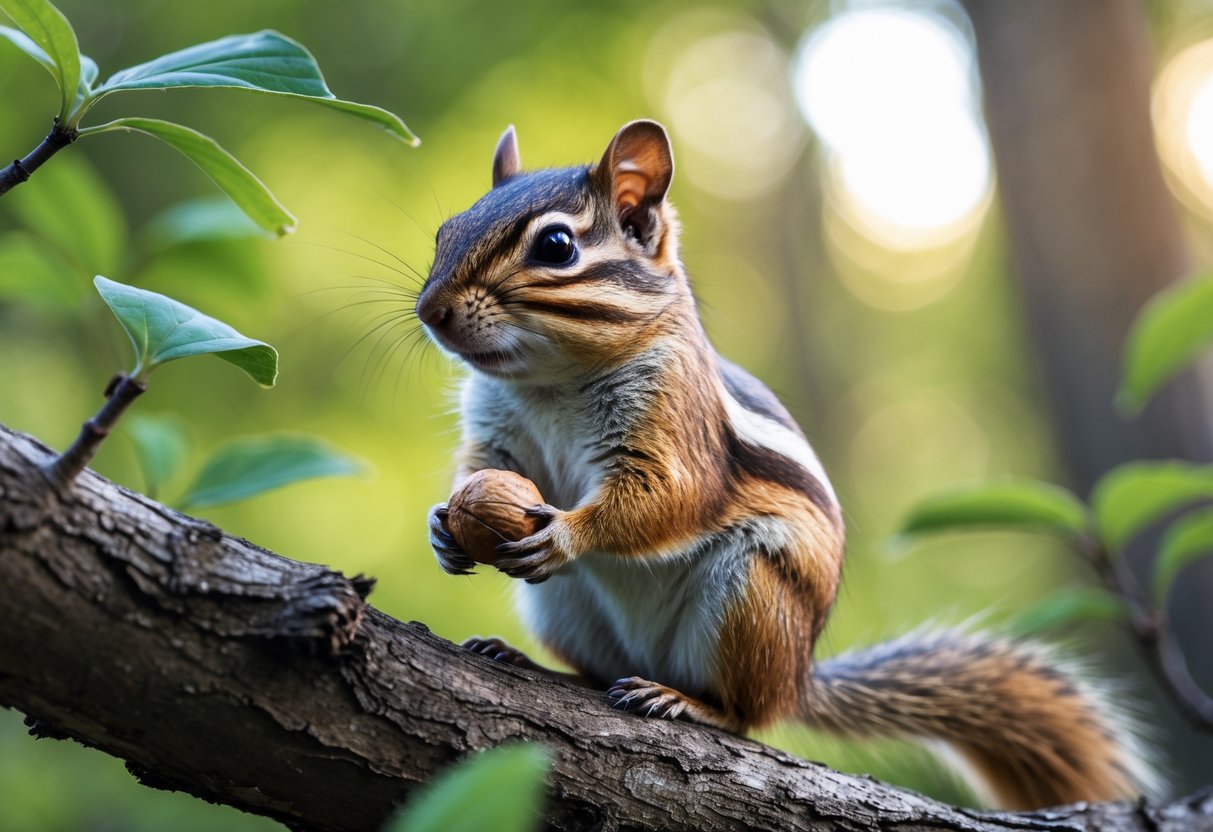
Chipmunks aren’t female squirrels. They’re their own thing, with different behaviors, homes, and looks. Squirrels usually hang out in trees, while chipmunks stick closer to the ground and dig burrows.
Both animals play important roles in the wild, but they’re definitely not the same species. It’s easy to mix them up if you’re just glancing.
Once you know what sets chipmunks apart from squirrels, you can spot them much faster. There’s a lot more to these little creatures than just their stripes.
Are Chipmunks Female Squirrels? Key Differences Explained

Chipmunks and squirrels might look like cousins, but they’re not the same. Both belong to the rodent family, sure, but their habits and traits really set them apart.
Let’s dig into how they’re related, where chipmunks fit in, what they look like, and a bit about the differences between males and females.
Relationship Between Chipmunks and Squirrels
Chipmunks and squirrels both share the Sciuridae family. That family includes tree squirrels, ground squirrels, flying squirrels, and of course, chipmunks.
Chipmunks aren’t female squirrels—they’re a separate branch of the family. Tree squirrels usually hang out up high, while chipmunks spend most of their time on the ground.
People often confuse chipmunks for small squirrels because of their size. But if you look closely, chipmunks have those signature stripes and smaller, less fluffy tails.
Both animals collect food, but only chipmunks have those adorable cheek pouches for hauling snacks. Squirrels don’t have that feature.
Chipmunk Classification in Sciuridae Family
You’ll find chipmunks in the genus Tamias, which makes them different from the squirrel species in the Sciuridae family. There are about 25 chipmunk species, and most of them live on the ground.
Squirrels, like the ones you see in trees, belong to other genera such as Sciurus. So even though chipmunks and squirrels are related, they have different scientific names.
Chipmunks and squirrels both have sharp teeth for chewing, but chipmunks are closer to ground squirrels than to tree squirrels. That’s why chipmunks dig burrows instead of building nests up in the trees.
Rodent Characteristics and Appearance
You can spot a chipmunk by its small size, bold stripes down its back and face, and its short, bushy tail. Squirrels—especially tree squirrels—are bigger and have much fluffier tails.
Chipmunks use their cheek pouches to stuff food like nuts and seeds for later. You won’t see squirrels doing that.
Chipmunks usually measure about 7 to 9 inches long, which is much smaller than most squirrels. Squirrels can get twice as big, both in length and weight.
Chipmunks’ stripes are sharper and more obvious, while squirrels usually have solid or gently shaded fur. If you check out their stripes and tail size, it’s pretty easy to tell them apart.
| Feature | Chipmunk | Squirrel |
|---|---|---|
| Body Length | 7-9 inches | 16-20 inches |
| Tail | Short, less bushy | Long, bushy |
| Stripes | Yes, clear stripes | Usually no stripes |
| Cheek Pouches | Yes | No |
| Habitat | Ground burrows | Trees or ground |
Sex Differences in Chipmunks
It’s tough to tell male and female chipmunks apart just by looking. They look nearly identical—no major size or color differences.
Females usually raise one or two litters a year, with around four or five babies each time. Males mostly just show up to mate and then move on.
Both males and females gather food and stay active during the warmer months. Their lifespans don’t really differ either.
If you want to spot the difference, you’d need to watch them closely or do a scientific check. There aren’t any obvious clues in their looks or behavior.
Chipmunk Species, Biology, and Life Cycle
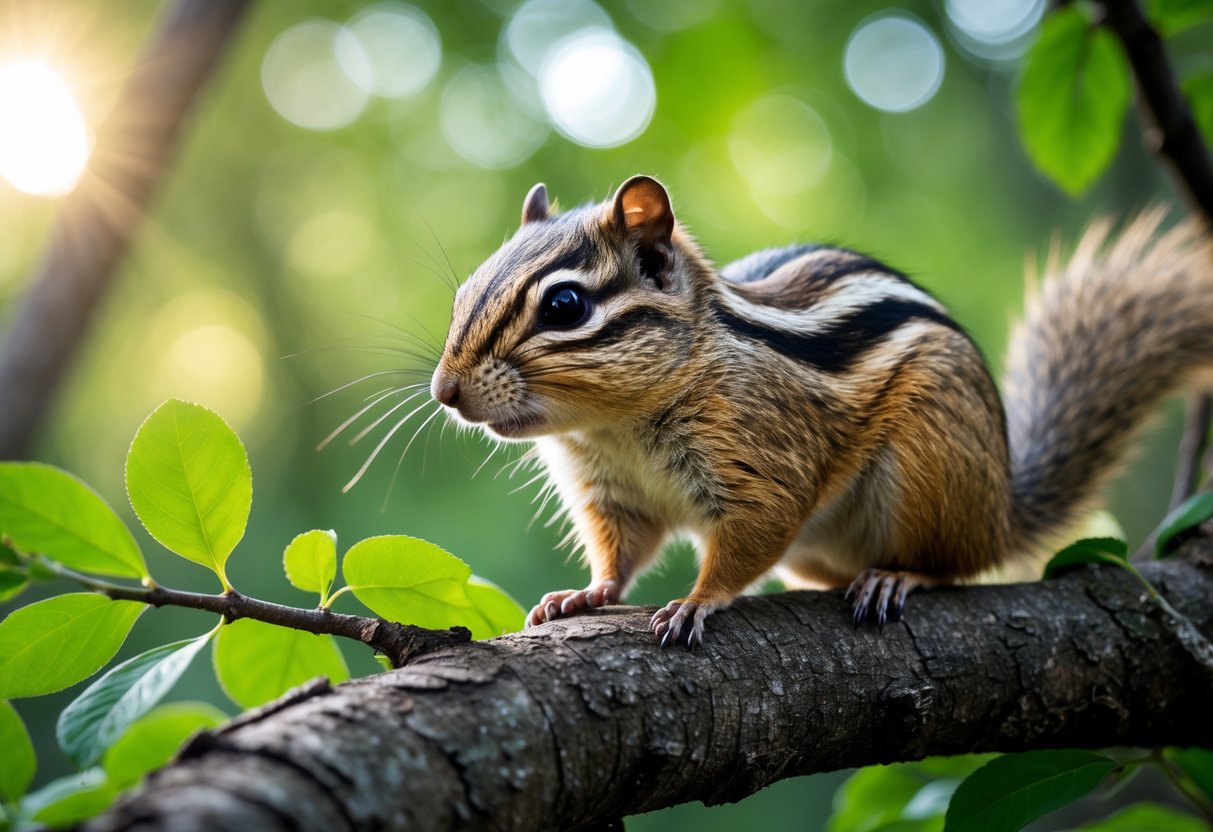
Chipmunks come in a bunch of different species, each with its own quirks and favorite places to live. They’re small, striped, and eat a mix of plants and animals.
Their homes, what they eat, and how they raise their babies are all pretty fascinating.
Overview of Chipmunk Species and Distribution
Most chipmunks live in North America, except for the Siberian chipmunk, which lives in Asia. The eastern chipmunk (Tamias striatus) is the most common in eastern North America.
Out west, you’ll run into types like the least chipmunk and lodgepole chipmunk. The yellow-pine chipmunk shows up in the forested mountains.
There are over 25 chipmunk species in total. Western species usually fall under the genus Neotamias, the eastern chipmunk is in Tamias, and the Siberian one is Eutamias.
Each species looks a little different, but all have those classic stripes.
Typical Habitat and Burrowing Behavior
Chipmunks spend most of their time on the ground, though they can climb trees if they want. They dig underground burrows that can stretch over 3.5 meters and have several hidden entrances.
Inside, they build separate rooms for sleeping and storing food. They keep their sleeping spots clean by putting waste in other tunnels.
The eastern chipmunk hibernates in winter, staying cozy inside its burrow. Some western chipmunks don’t hibernate and just snack on stored food instead.
Burrows keep chipmunks safe from predators. You’ll often see them darting in and out of their tunnels, always on high alert.
Diet and Food Storage
Chipmunks eat a bit of everything—they’re omnivores. Their menu includes nuts, seeds, berries, fruit, insects, and sometimes eggs.
They use their cheek pouches to carry food back to their burrows. Before winter, chipmunks gather and stash a big pile of nuts and seeds in their underground pantries.
Instead of making lots of small food stashes, they usually keep a few big ones. This helps them get by when food is scarce or during hibernation.
Sometimes, chipmunks snack on grains and veggies near farms, which can make them a bit unpopular. Still, they help forests by spreading seeds and fungi, so they do some good too.
Reproduction, Mating Season, and Gestation
Chipmunks usually start breeding in early spring, right after their winter rest. Most females have one or two litters each year, with about four or five babies in each.
Eastern chipmunks often manage two litters, but western species like the cliff chipmunk usually stick to one. The whole process feels pretty fast.
Gestation takes about four weeks. Once the babies arrive, they stay tucked away in the nest for almost six weeks before they even think about venturing outside.
Young females tend to stick close to where they were born. Males, on the other hand, wander off much farther.
The mating season doesn’t last long, but it’s hectic. If you’ve noticed chipmunks darting around more in spring, they’re probably busy finding mates and raising their young.


