
Boxer dogs are known for their energetic and playful personalities, which makes them a favorite among many pet owners. If you’re considering bringing a Boxer into your home, you might wonder, “Can I take care of a Boxer?” These dogs thrive on physical activity and mental stimulation, so you will need to provide them with regular exercise.

It’s also important to be aware of potential health issues that can affect Boxers. Regular vet check-ups and a balanced diet are essential for keeping them healthy and happy. Preparing for these responsibilities can help you feel more confident in your decision to welcome a Boxer into your family. With the right care and commitment, you can enjoy the loving companionship that comes with this breed.
Understanding the Boxer Breed

Boxers are energetic and loyal dogs known for their playful nature and protective instincts. They thrive in a family environment and make excellent companions with the right care and attention.
Origins and Breed Characteristics
The Boxer breed originated in Germany in the 19th century. They were developed from the Bullenbeisser and the English Bulldog. Boxers were initially used for hunting large game and later became popular as loyal family dogs.
This breed is medium to large, with a strong build and a distinctive square jaw. They are known for their intelligence and adaptability, which makes training easier. Boxers are also very affectionate and enjoy being around people. Their friendly nature allows them to get along well with children and other pets.
Temperament and Behavior
Boxers are known for their friendly and playful behavior. They are full of energy and love to engage in games and activities. A well-exercised Boxer is a happy Boxer. Daily exercise, including walks and playtime, helps release their pent-up energy.
They are also protective of their families, making them excellent watchdogs. Boxers are social dogs that crave companionship. If left alone for long periods, they may become bored and develop behavior issues. Early socialization is crucial to ensure they are well-adjusted and friendly around strangers and other animals.
Physical Features and Health Concerns
Boxers have a muscular build and a short coat that requires minimal grooming. They typically have brachycephalic facial features, which can lead to breathing difficulties, especially in hot weather. Boxers are also prone to certain health issues like hip dysplasia, degenerative myelopathy, and heart diseases, including dilated cardiomyopathy.
White Boxers, which lack pigment, can be more susceptible to skin problems and may have a higher chance of developing some genetic conditions. Regular vet check-ups and a healthy diet are essential to ensure your Boxer stays fit and healthy throughout their life. Taking care of their health proactively can help you enjoy many happy years together.
Daily Care and Management

Caring for a Boxer dog involves several important aspects. You’ll need to pay attention to their nutrition, exercise, and grooming to keep them healthy and happy. Each of these areas plays a significant role in their overall well-being.
Nutrition and Diet
Providing the right nutrition is key to keeping your Boxer healthy. They need a balanced diet that includes high-quality proteins to support their strong, athletic bodies. Look for dog food that lists meat as the first ingredient. Puppies should eat puppy food, which is specially formulated for their growth.
Avoid overfeeding, as Boxers can easily gain weight and become obese. Divide their daily food intake into two meals to help manage their appetite. Be cautious of bloat, a serious condition that can affect deep-chested breeds like Boxers, and consult your vet if you notice any unusual behavior around meal times.
Exercise Needs
Boxers are energetic dogs that require a good amount of daily exercise. Aim for at least 60 to 90 minutes of activity each day. This can include brisk walks, playtime in the yard, or engaging in fun games like fetch.
Regular exercise helps prevent weight gain and promotes muscle tone. Since Boxers are large and strong, finding ways to channel their energy is essential. Activities that keep their minds stimulated, such as agility courses or puzzle toys, can also be beneficial for their overall health.
Grooming and Coat Care
Taking care of your Boxer’s coat is relatively simple but essential. They have short, sleek fur that requires minimal grooming. Regular brushing, about once a week, will help remove loose hair and keep their coat healthy.
Bathing should be done every few months or as needed, using a gentle dog shampoo. Be mindful of their ears, as Boxers can be prone to ear infections. Clean their ears regularly and check for redness or odor. Nail trimming is also important, as it prevents discomfort and keeps their paws healthy.
Training and Socialization
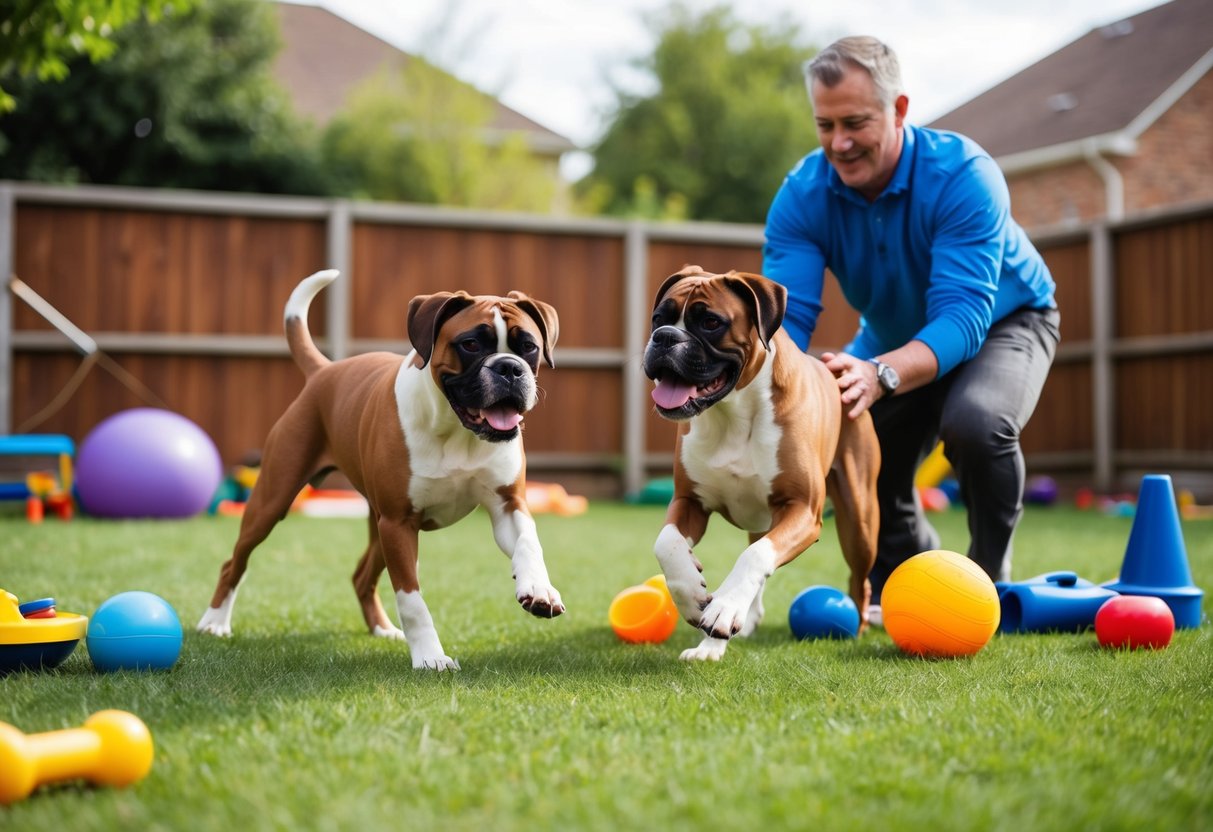
Training and socialization are key parts of raising a happy and well-adjusted Boxer. These playful dogs thrive on structure and guidance, which helps prevent behavioral problems later on. You’ll find that with the right approach, you can develop a strong bond with your Boxer while ensuring they are great with kids and other pets.
The Importance of Positive Reinforcement
Positive reinforcement is an essential method for training your Boxer. This approach rewards good behavior with treats, praise, or playtime. Boxers are intelligent and eager to please, which makes them responsive to this technique.
When your Boxer follows commands, offer immediate rewards. This helps them link their actions with positive outcomes. For example, if your dog sits on command, give them a treat right away. Consistency is crucial, so be sure to use the same commands and rewards each time.
Training sessions should be fun and engaging. Aim for short sessions of about 5–10 minutes to maintain their interest. Incorporating games and mental stimulation can make learning exciting. This way, you’ll avoid rowdy behavior as their excess energy gets channeled positively.
Social Skills and Interaction
Socializing your Boxer is just as important as their training. Early exposure to different people, pets, and environments helps them become well-adjusted. Start socialization as a puppy, if possible. Take them to parks, pet-friendly stores, and training classes. Controlled interactions are vital for building confidence and reducing anxiety.
Consider enrolling your Boxer in puppy training or socialization classes. These structured environments allow for safe interactions with other dogs. You’ll learn how to guide your Boxer to behave appropriately in various situations.
Remember, regular socialization doesn’t stop when your dog is older. Continual opportunities for interaction help prevent behavioral problems and promote a friendly demeanor. Your Boxer will become a confident companion who enjoys the company of kids and other pets.
Healthcare and Preventative Measures

Taking care of a Boxer involves regular healthcare routines to keep them happy and healthy. From routine vet visits to understanding common health issues, taking proactive steps can make a big difference. Below are important areas you’ll want to focus on.
Routine Veterinary Check-ups
Regular veterinary check-ups are crucial for your Boxer. Aim for at least one visit per year. Your vet will monitor your dog’s weight, dental health, and overall wellness.
During these visits, your vet may recommend vaccinations and screenings for common issues like heart problems or infections. Early detection is key. If your Boxer shows signs of separation anxiety, discuss this with your vet for tailored advice.
Also, consider spaying or neutering your dog to prevent unwanted behaviors and reduce health risks ranging from certain cancers to infections.
Common Health Issues and Preventative Care
Boxers are prone to several health concerns. Common issues include heart disease, hip dysplasia, and dental disease. To prevent these, maintain a balanced diet and ensure regular exercise.
Pay attention to your Boxer’s dental hygiene. Brush their teeth regularly and provide dental treats to prevent dental disease. You should also keep an eye on their weight, as obesity can lead to further health problems.
Routine blood tests and screenings can help detect issues early. Make sure you’re aware of signs like lethargy or unusual behavior, and address them with your vet promptly.
Special Considerations for Boxer Puppies
Caring for Boxer puppies requires specific attention. They need regular vet visits to monitor growth and development during their first year. Vaccinations are important for preventing serious diseases.
Socialization is another key aspect. Expose your puppy to various people, pets, and environments to reduce the chances of anxiety later in life.
Start a structured training program early to curb issues like separation anxiety. Ensuring that your puppy is well-adjusted leads to a happier, healthier adult dog.


