
Ever wondered if chimpanzees might eventually evolve into humans? Honestly, the answer’s no. Chimpanzees and humans share a common ancestor from millions of years ago, but each species has gone its own way. Chimps won’t turn into humans, just like your cousin won’t wake up as you one day.

So why is that? Evolution doesn’t work like a straight line where one species simply morphs into another. Species adapt to their own environments and challenges, and they do it in their own style.
Chimps have their own set of skills and traits that suit them perfectly. Humans, well, we’ve got our own quirks too.
If you’re curious about what makes chimpanzees tick and why evolution doesn’t mean “becoming human,” stick around. Scientists have learned a lot, and it’s actually pretty fascinating.
Can Chimpanzees Evolve Into Humans?

Chimpanzees and humans sit close together on the evolutionary tree, but each follows a separate path. It helps to know how species change over time and why chimps won’t just become us.
The idea of a common ancestor plays a big part here. There are a lot of misunderstandings about how humans and apes are related, and it’s easy to get mixed up.
Understanding Evolutionary Branching
Picture evolution as a tree with lots of branches. When two species share a branch point, they both came from the same ancestor, but after that, each branch heads off in its own direction.
Chimpanzees and humans split from a shared ancestor about 6 to 8 million years ago. Since then, both have adapted to different environments and challenges.
So, chimps won’t evolve into humans. They’re on their own path, and so are we.
It’s a bit like cousins—related, but you’re never going to swap places with each other.
Role of Common Ancestors
A common ancestor is just a species from the past that gave rise to two or more new species. You and chimpanzees both came from one, but that ancestor wasn’t a human or a chimp.
That ancestor lived millions of years ago, and over time, its descendants changed in their own ways.
Scientists study chimps to get a sense of what that ancestor might have been like. Both species do things like use tools and form social groups.
But each has picked up unique traits since splitting off. Chimps aren’t “unfinished humans”—they’re their own thing.
Misconceptions About Human and Ape Evolution
A lot of folks think humans evolved straight from chimpanzees. That’s not how it happened. This idea pops up because evolution can be confusing.
Chimpanzees aren’t a step on the way to humans; they’re a parallel branch. Evolution isn’t a ladder—it’s more like a tangled tree.
Some people figure chimps might eventually turn into humans. But evolution doesn’t have a finish line or a goal. Species change depending on what works for them, not because they’re aiming to be something else.
If you get these basics, it becomes pretty clear why chimps won’t just become human someday. If you want to dig deeper, check out why humans and chimps share a common ancestor.
The Evolutionary History of Chimpanzees and Humans
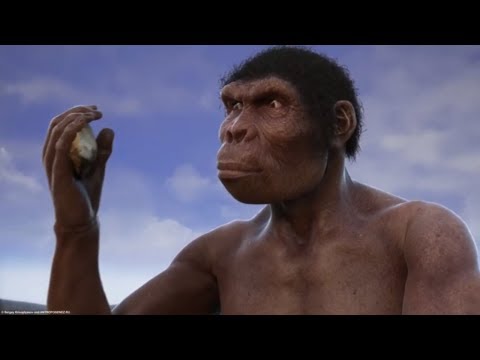
You share a distant past with chimpanzees, bonobos, gorillas, and other great apes. Your journey split from theirs millions of years ago.
The fossil record gives us clues about ancestors that shaped your species into what it is today.
African Apes and Human Divergence
Your closest living relatives are chimpanzees and bonobos—both African apes, along with gorillas. These apes share a common ancestor with you from about 6 to 9 million years ago.
After that split, chimps and humans went their separate ways. Chimps and bonobos mostly stayed in forests, while our ancestors started spending more time on the ground.
That shift led to new traits, like walking upright.
Gorillas and orangutans split from your lineage even earlier. So, while you and chimps are tight on the family tree, you didn’t come from them—you just share an old ape relative.
Fossil Record and Key Ancestors
Fossils help us trace the steps from ape-like creatures to modern humans. One early example, Ardipithecus, lived around 6 million years ago. It could walk upright but still climbed trees.
Later, Homo erectus showed up about 1.9 million years ago. This species had a bigger brain and made simple tools.
Neanderthals came next. They lived in Europe and Asia and were closely related to us, though they looked and acted a bit differently.
Finally, Homo sapiens—that’s us—have been around for roughly 300,000 years, building language and culture along the way.
How Modern Humans Differ From Other Great Apes
You’ve got a few traits that really set you apart from chimpanzees and the rest of the great apes. Walking upright on two legs stands out as a big one.
Your brain’s larger and more complex. That difference lets you think and use language in ways no other ape can.
Sure, other humans and great apes use tools, but you take it to another level. You’ve built entire cultures and technologies around your tools.
Social structures? Those are different too. Chimpanzees, for instance, have unique group behaviors that just don’t show up in human societies.
These changes didn’t happen overnight. They developed over millions of years, shaped by shifts in environment and lifestyle.
Curious about the details? You can dive deeper into evolutionary history and genetics on this page about the chimpanzee-human last common ancestor.


