
If you spend time around bees, you might wonder what to wear to stay safe. Here’s a tip: skip the black clothes and dark colors.
Bees usually see dark clothes as a threat, since they connect those colors with predators like bears or skunks. That’s why they’re more likely to get defensive if you show up in black.

Wearing light-colored clothes helps you blend in better and keeps the bees calmer. Bees notice colors a lot, so picking the right outfit can really make your time outside easier.
Honestly, just knowing this can help you dodge surprise stings and let you enjoy watching bees without worrying too much.
Wearing black might seem harmless, but it can actually attract extra attention from these busy insects. If you want to stay safe, go for lighter shades—they’re just a smarter pick.
If you’re curious about the science behind this, check out this explanation about how dark clothes affect bees.
Why You Should Not Wear Black Around Bees

Wearing black or dark colors can make bees act more aggressively toward you. Bees notice dark clothing and often treat it like a warning sign.
If you understand how bees see color, you can avoid unnecessary stings and keep yourself safer.
How Bees React to Dark Colors
Bees get more defensive when they spot dark colors like black or deep brown. These shades grab their attention fast, especially against lighter backgrounds.
When you wear black, bees might feel threatened and get more alert. This makes it more likely you’ll get stung if you’re close to a hive.
Light colors—think white, pale yellow, or light green—don’t confuse bees as much and keep things calmer.
If you avoid dark clothing, you cut down the chances that bees will follow or sting you near their nests.
Perception of Black as a Threat
To bees, dark colors often mean danger. Many of their predators—animals that want to eat or harm them—have dark fur.
If you show up in black, bees might mistake you for a threat. They’ll get aggressive to protect themselves and their hive.
Even if you’re just passing by, wearing black can put bees on edge, especially if they feel their hive is at risk.
Bee Predators and Color Association
Bees connect dark colors with predators like bears, skunks, or raccoons. Those animals usually have black or dark fur, which triggers a defensive reaction in bees.
Wearing black makes you look like a predator to them. That bumps up the chance bees will sting to defend themselves.
Colors like red can also be risky. Sometimes bees confuse red with black from a distance.
If you go with pale or neutral colors, you avoid this mix-up and help keep bees relaxed.
Want more advice? Check out this page about bee safety and clothing colors.
Safe and Unsafe Colors to Wear Around Bees
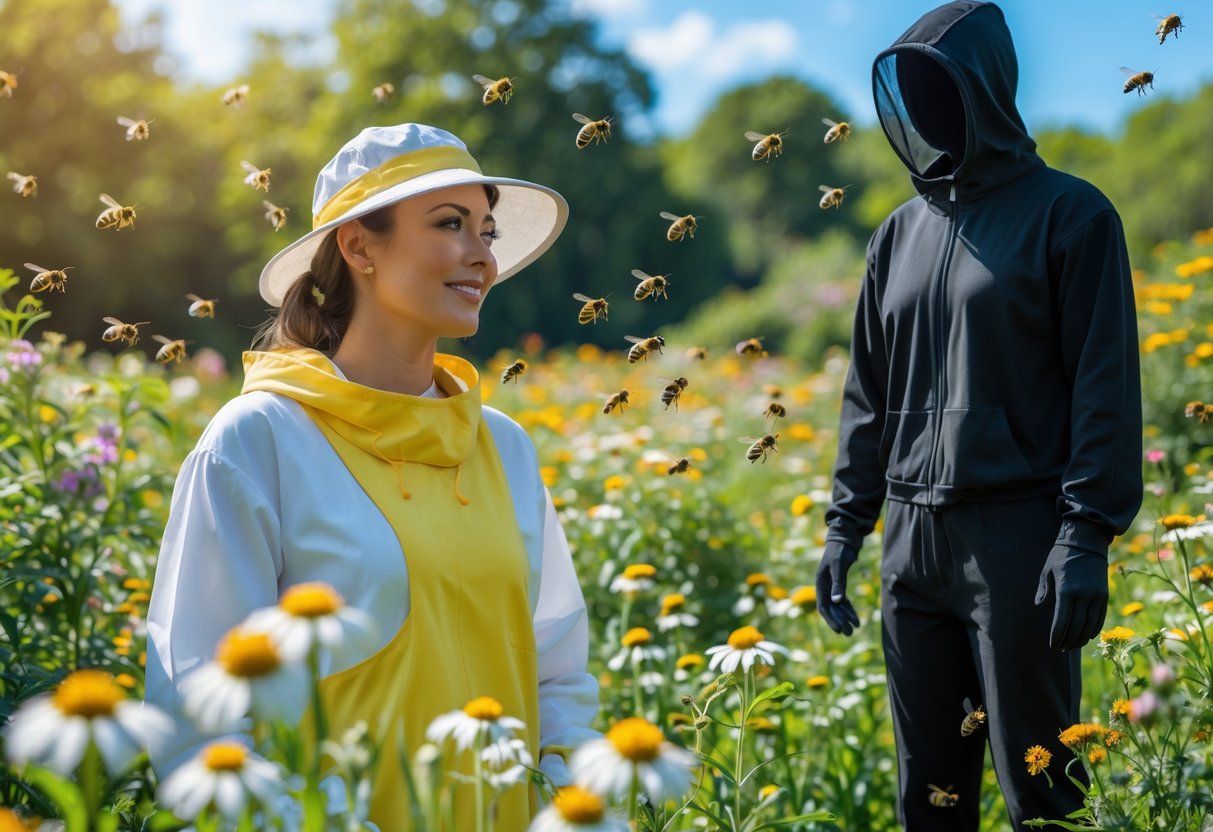
Picking the right colors can help you steer clear of bees. Some shades don’t catch their eye, while others can actually provoke them.
Knowing what to wear makes it easier to avoid stings.
Best Colors to Avoid Bee Attention
Light colors help you blend in and stay off bees’ radar. Shades like white, beige, or soft pastels don’t attract them much.
Bees are less likely to treat you as a threat when you wear these colors.
Light clothes also reflect sunlight, which helps you blend into the background. This makes it less likely you’ll bother a hive or get too close to their activity.
If you spend time outdoors or near flowers, wearing light colors is a simple way to avoid unwanted bee attention.
Colors That May Provoke Bees
Dark colors like black, navy, or dark brown can draw bees in. They look a lot like the natural predators bees worry about, so bees get more aggressive.
Bright colors—red and orange, for example—can also catch a bee’s eye and bump up your risk of getting stung. Bees use their vision to spot threats, so bold colors stand out.
If you know you’ll be in areas where bees hang out, skip the black or dark clothes. That way, you lower the odds of provoking an attack or getting stung.
Tips for Preventing Bee Stings
Pick out clothes with smooth textures and skip anything with loose flaps—bees can get stuck in them, and nobody wants that. I’d also suggest leaving strong perfumes or scented lotions at home, since those can pull bees in like a magnet.
Try to move calmly if you spot bees nearby. Sudden movements? Bees notice. If one lands on you, just stay still or gently brush it off—don’t swat at it.
If you’re planning to work with bees, definitely wear protective gear. Light-colored suits and veils go a long way to keep stings at bay.
Curious about how colors influence bee behavior? Check out the safe clothing advice from Cornell Cooperative Extension Allegany County.


