
If you’ve noticed your garden suddenly buzzing with bees, that’s actually a good sign. Bees show up because your garden gives them food, water, or shelter—things they need to survive.
Flowers packed with nectar and cozy spots to nest make your yard a magnet for these little pollinators.
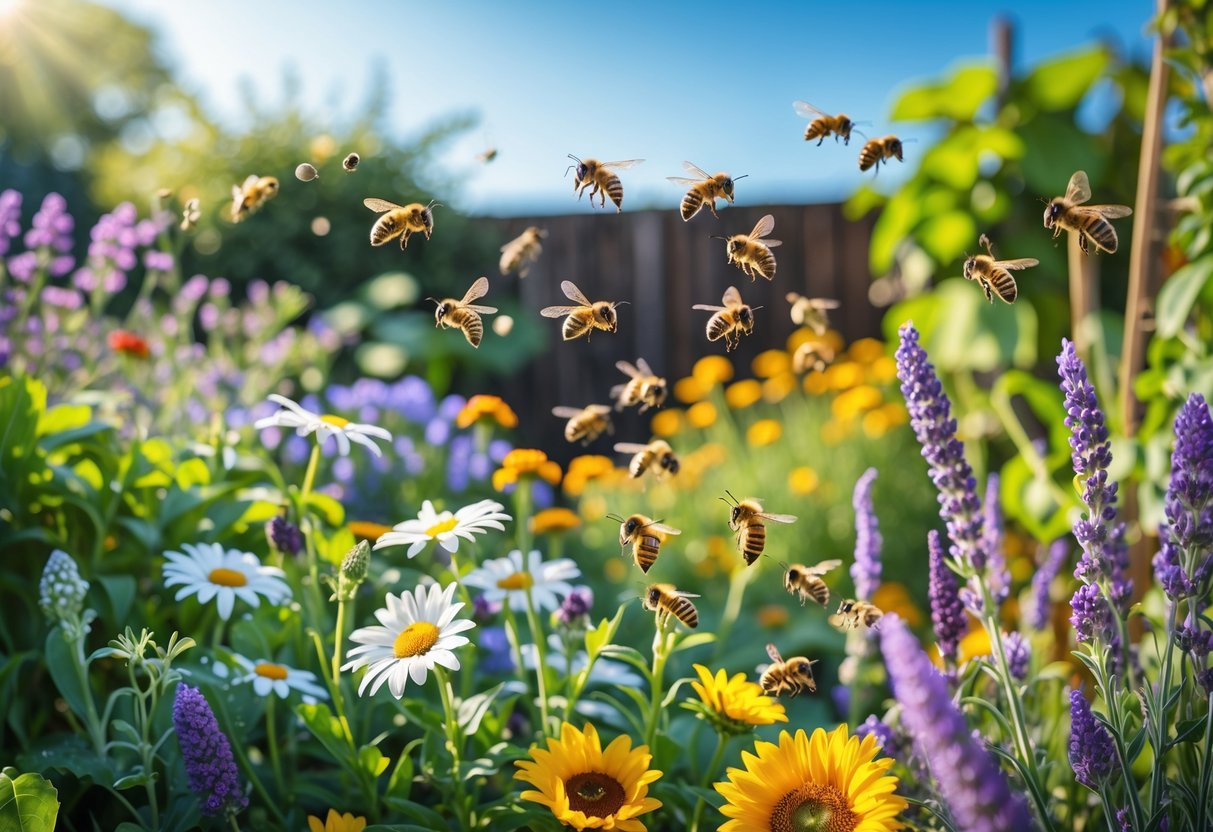
You might also live near a hive or have some ground nests nearby, which means you’ll see even more bees. Sure, it can feel a bit much at times, but a flurry of bees usually means your garden’s healthy and you’re helping plants grow.
When you know why bees love your space, it gets easier to appreciate their role. You can also figure out how to manage them if you need to.
If you want more info, check out why there are lots of bees in my garden.
Main Reasons Your Garden Is Full of Bees

Your garden gives bees what they need, which explains all the buzzing. They come for food, water, safe places to live, and spots free from nasty chemicals.
That mix makes your garden a hangout for all kinds of bees, from honey bees to solitary and ground types.
Food Sources and Bee-Friendly Plants
The plants in your garden attract bees the most. Flowers like sunflowers, lavender, and coneflowers offer nectar and pollen.
Herbs such as mint and fruit trees keep the food coming all season.
Native plants work especially well for pollinators—bees have adapted to them over time. By mixing these into your garden, you give bees a steady food supply.
This means they don’t have to wander far.
A variety of flowers supports different bees. Carpenter bees like sturdy stems, while honey bees collect nectar for honey.
Water Availability and Drinking Spots
Bees get thirsty, too. Puddles, birdbaths, and even damp soil turn into bee watering holes.
They need calm water with easy spots to land, so they don’t risk drowning.
Set out a birdbath with flat stones or keep some shallow water around. Bees will visit to cool their hives or dilute honey.
You’ll probably spot honey bees or solitary bees stopping for a drink.
Water in your garden rounds out the habitat. Without it, bees might not stick around, even if you’ve got loads of flowers.
Nesting Sites and Shelter Options
Bees want safe places to nest. Ground bees dig tunnels in soft soil, and carpenter bees go for holes in wood.
You might already have these hiding in your garden.
Try putting up a bee hotel if you’re curious. These little shelters give solitary bees a place to lay eggs.
It’s a simple way to help the local pollinator crowd.
Thick plants or brush piles can also shelter bees from wind and predators. More nesting options mean more bee visitors.
Lack of Pesticides and Safe Spaces
Bees steer clear of gardens sprayed with chemicals. If you skip pesticides, you make your space safer for them.
This matters even more for sensitive bees like honey bees and native types.
Keeping things chemical-free protects bee health and helps pollination. You’ll also attract a wider mix of bees, including ground and solitary bees.
By skipping sprays and offering safe spots, you’ll keep your garden buzzing. And honestly, you’ll see better fruit and flowers, too.
If you’re looking for more ideas, check out reasons why bees visit your garden.
What to Do If You’re Overwhelmed by Bees or Need Control
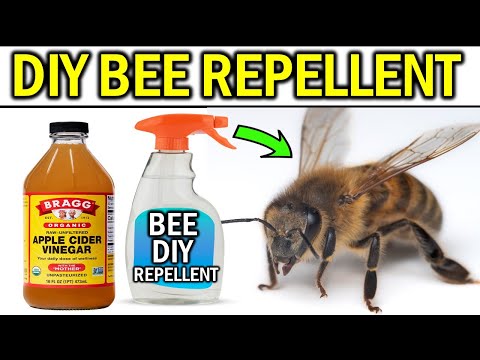
If you feel overwhelmed by all the bees in your garden, it helps to understand their behavior. You can usually manage things without hurting them.
Sometimes, it’s best to call a pro for removal.
Identifying Bees, Wasps, and Their Behavior
First things first—figure out if you’ve got bees or wasps. Bees look furry and round, while wasps are smooth, shiny, and have skinny waists.
Both can sting, but wasps act more aggressively.
Bees play a huge part in pollination and usually won’t bother you unless they feel threatened. Wasps, on the other hand, defend their nests fiercely.
A wasp nest looks papery and often hangs under eaves or in trees. A bee swarm is just a cluster of bees searching for a new home—not usually a threat.
If you know what you’re dealing with, you’ll pick the best way to handle it.
Managing Bee Activity Humanely
If the bees aren’t dangerous but there’s just too many, you can try a few gentle tricks:
- Plant flowers away from patios and play areas. That way, bees hang out elsewhere.
- Try fake wasp nests to keep wasps at bay. Wasps don’t like competing with other colonies.
- Set up water sources far from busy spots so bees stay occupied.
Don’t use pesticides or sprays that kill bees. Instead, keep trash lids tight and avoid leaving sweet drinks outside.
Making your garden less tempting can cut down bee numbers safely.
When and How to Consider Removal
Sometimes, bees just cross the line and become a real problem—think bee infestation near your house or, worse, buzzing inside the walls. If that happens, you probably shouldn’t try to handle a swarm or nest on your own.
Bee stings hurt, and for anyone with allergies, they’re downright dangerous. It’s just not worth the risk.
Reach out to a professional beekeeper for live removal. They’ll know how to capture and move the bees safely, keeping the colony intact.
If things get out of hand, like with wasps or really aggressive nests, you might need a pest control expert instead. They have the right tools for the job.
Only consider removing bees after you’ve tried safer solutions. The pros can keep you—and the bees—out of harm’s way.
You can check out guides like how to get rid of bees in your yard if you want more info.


