
You might imagine a giraffe kneeling to give birth, but honestly, that would put both her and the calf in a tough spot. Giraffes actually give birth standing up—it’s their way of avoiding predators and making sure the calf passes safely through the birth canal.
This upright birth keeps them less vulnerable and gives the newborn a better shot at breathing after its dramatic drop to the ground.

Their tall bodies, those spindly legs, and that long neck? All of it makes lying down during labor a risky move. The fall at birth, surprisingly, actually helps the calf get started in life.
Let’s dive into why standing births just work better for giraffes, both for survival and because of their anatomy.
Why Giraffes Give Birth Standing Up

Giraffe mothers rely on their height, quick action from their newborns, and a few clever safety tricks during birth. By staying on their feet, they help the calf clear the birth canal and start breathing, all while reducing the time they’re stuck in a vulnerable position.
The Role of Gravity in Giraffe Birth
Gravity’s a big player here. When the calf is born, it drops about five or six feet straight down.
That fall? It snaps the short umbilical cord and can break the amniotic sac if it hasn’t already torn. The impact often makes the calf take its first breath, which is crucial since giraffe calves are pretty big and need to get those lungs working right away.
Calves usually come out with their front legs and head first, which makes it easier for them to pass through. The combination of standing birth and the drop keeps their long neck and legs straight, so the calf doesn’t get stuck.
If you want to know more about this wild drop, check out this discussion on giraffe births: (https://a-z-animals.com/articles/baby-giraffes-dramatic-five-foot-birth-drop-explained/).
Protection from Predators During Labor
When a giraffe stands during labor, she can still keep an eye out and run if a predator shows up. Lying down would slow her down a lot, and getting up isn’t exactly quick for such a tall animal.
By staying upright, the mother keeps watch for lions, hyenas, or whatever else might be lurking nearby.
Mothers often pick hidden spots and sometimes wait for quieter times to give birth. Observers in the wild and conservationists have seen females hide or move away from the herd before delivery.
Staying upright means she can move fast if needed, which gives both her and her calf a better shot at escaping danger.
Risks of Lying Down for Giraffe Mothers
If a giraffe tries to give birth lying down, things can go wrong fast. The calf’s long neck might bend or get squeezed in that position, and that could mean a permanent injury right from the start.
There have actually been cases where a sitting birth left a calf with a kinked neck, making it tough for the little one to move later on (https://monartosafari.com.au/facts-giraffe-birth/).
A mother on the ground is also an easy target for predators. She can’t bolt if a lion appears, and getting up takes precious time.
Lying down can also make tricky presentations—like folded legs or a breech calf—more likely, which puts both mother and baby at risk.
Giraffe Anatomy and Birth Challenges
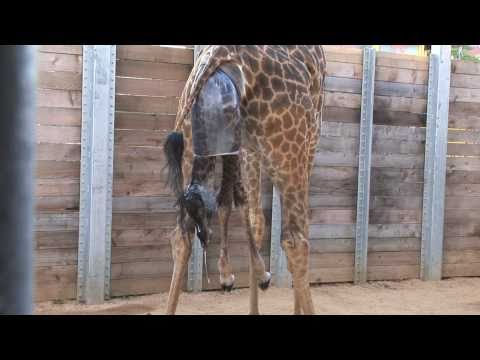
Giraffes have those famously long legs and necks, and they always give birth standing up. Their unique body shape and the size of the calf make delivery a real challenge.
Long Legs and Neck: Impact on Birthing Position
A giraffe’s long legs and neck make lying down to give birth a pretty bad idea. If the mother is on the ground, she can’t get up quickly if there’s a threat nearby.
That delay just makes her an easier target.
The calf’s neck and long front legs also mean it needs to come out in a very specific way. Usually, the calf arrives with its front legs stretched out and its neck extended.
This straight alignment helps the calf fit through the birth canal without bending a limb or its neck, which could block things up and cause real trouble.
The mother’s height matters too. Standing lets gravity do some of the work, lining up and delivering the calf’s long body in a safer, more controlled way.
If she were lying down, the calf’s neck might get bent or squished, and that just ups the risk of injury.
How Standing Birth Helps Newborn Survival
When a mother giraffe gives birth while standing, the calf drops about five feet straight to the ground. That fall actually severs the short umbilical cord and usually breaks the amniotic sac, which kicks off the calf’s very first breath.
You’ll see the calf land hard on its chest and shoulders. Within minutes, it’s already struggling to get upright.
This quick movement helps clear out any fluid from the lungs. The mother steps in to lick the calf, which stimulates both breathing and circulation.
Most newborn giraffes stand and try to nurse within the first hour. That’s huge—it means they’re more likely to get colostrum and some much-needed immune protection.
Standing birth also limits the time predators have to spot them. The mother can either leave the birth site fast or defend her calf right away, unlike if she were lying down.
Giraffe conservation groups point out that calves born standing tend to have a better shot at surviving those first minutes. They start moving and feeding sooner, which makes a real difference (see more from the Giraffe Conservation Foundation at https://giraffeconservation.org/facts-about-giraffe/faqs-about-baby-giraffe/).


