
Ever noticed your dog going a little wild when an opossum wanders by? You’re definitely not the only one. Dogs just seem to hate opossums, probably because they see them as weird or even a bit threatening.
Most dogs dislike opossums because these creatures trigger that natural urge to chase or defend. Dogs see them as possible prey—or maybe just trouble.
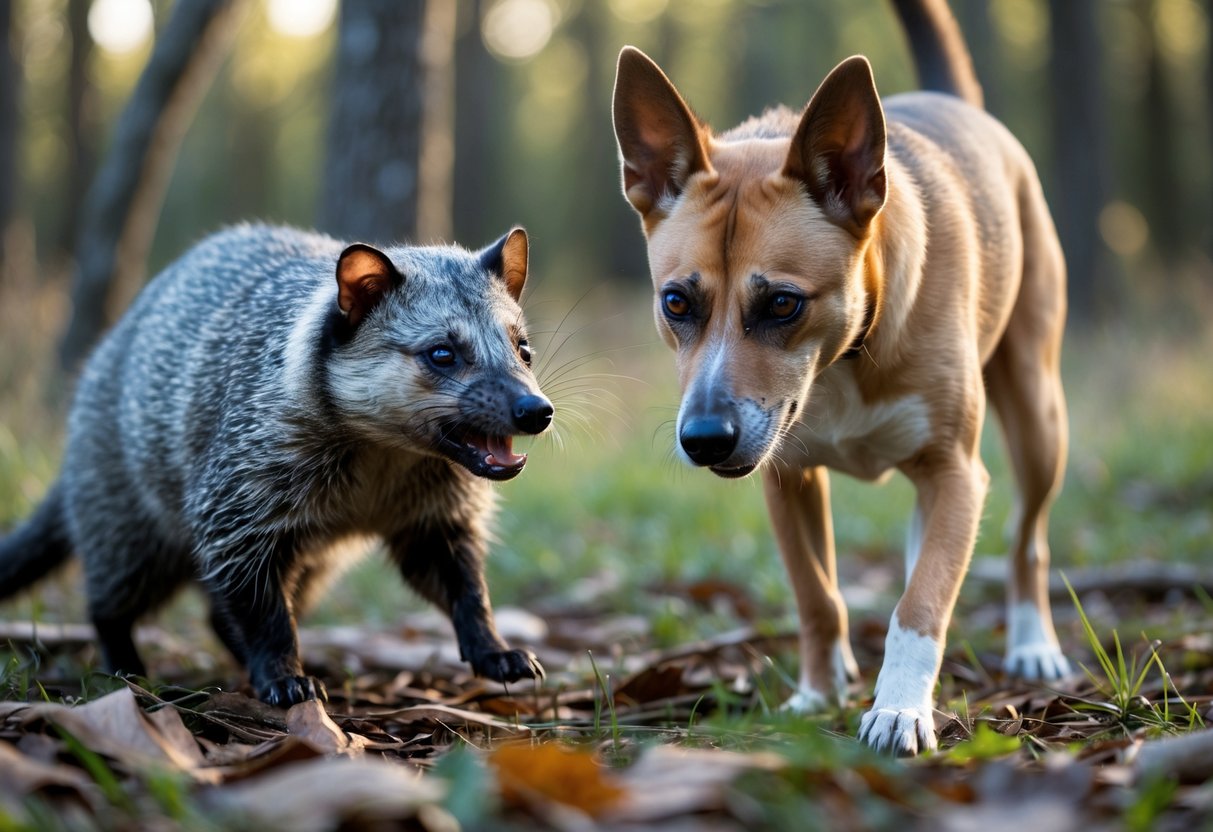
Opossums don’t act like the usual animals your dog meets. They move slowly, play dead, and show off a mouth full of sharp teeth if they feel cornered.
This strange behavior tends to confuse dogs. It makes them more likely to bark, chase, or even attack.
If you want to figure out how to keep your dog calm when opossums drop by, stick around for some simple tips and facts about how dogs and opossums interact.
Why Dogs React Aggressively to Opossums

When your dog spots an opossum, you might see it acting in ways you don’t expect. This reaction comes from a mix of instincts, how dogs and opossums communicate, and the usual dog behaviors during these run-ins.
Predatory Instincts and Territorial Behavior
Dogs have strong hunting instincts. When they see an opossum, especially one that moves slowly at night, dogs often see it as prey.
That urge to chase or attack just kicks in.
On top of that, your dog wants to protect its home turf. If an opossum wanders into the yard, your dog may bark, growl, or try to chase it off.
Opossums usually avoid fights, but your dog’s energy can overwhelm them. This mismatch often leads to aggressive reactions from dogs, even though the opossum just wants to escape.
Differences in Senses and Communication
Dogs and opossums don’t exactly “speak” the same language. Your dog relies a lot on smell and body language to figure out what’s going on.
Opossums? They play dead, hiss, or just freeze. To a dog, that’s super weird.
This odd behavior can make dogs even more curious or aggressive. Your dog might not realize the opossum isn’t looking for a fight.
Dogs also pick up on unfamiliar smells or parasites from opossums, which puts them on high alert. These differences in senses and signals really shape how dogs react in these moments.
Common Dog Behaviors During Opossum Encounters
When a dog meets an opossum, you’ll probably hear loud barking. Some dogs lunge or try to chase, while others might corner the opossum.
Smaller dogs sometimes bite or scratch if they feel threatened. Others just get frustrated or excited because the opossum is hard to catch or figure out.
Dogs often return to the spot where they saw the opossum, driven by curiosity or that urge to protect their space.
It’s a good idea to watch your dog after these encounters. Check for any scratches, bites, or signs of fleas and parasites.
If you want more details about how dogs and opossums interact, you can check out opossums and dogs.
Health Concerns and Dangers in Dog-Opossum Interactions
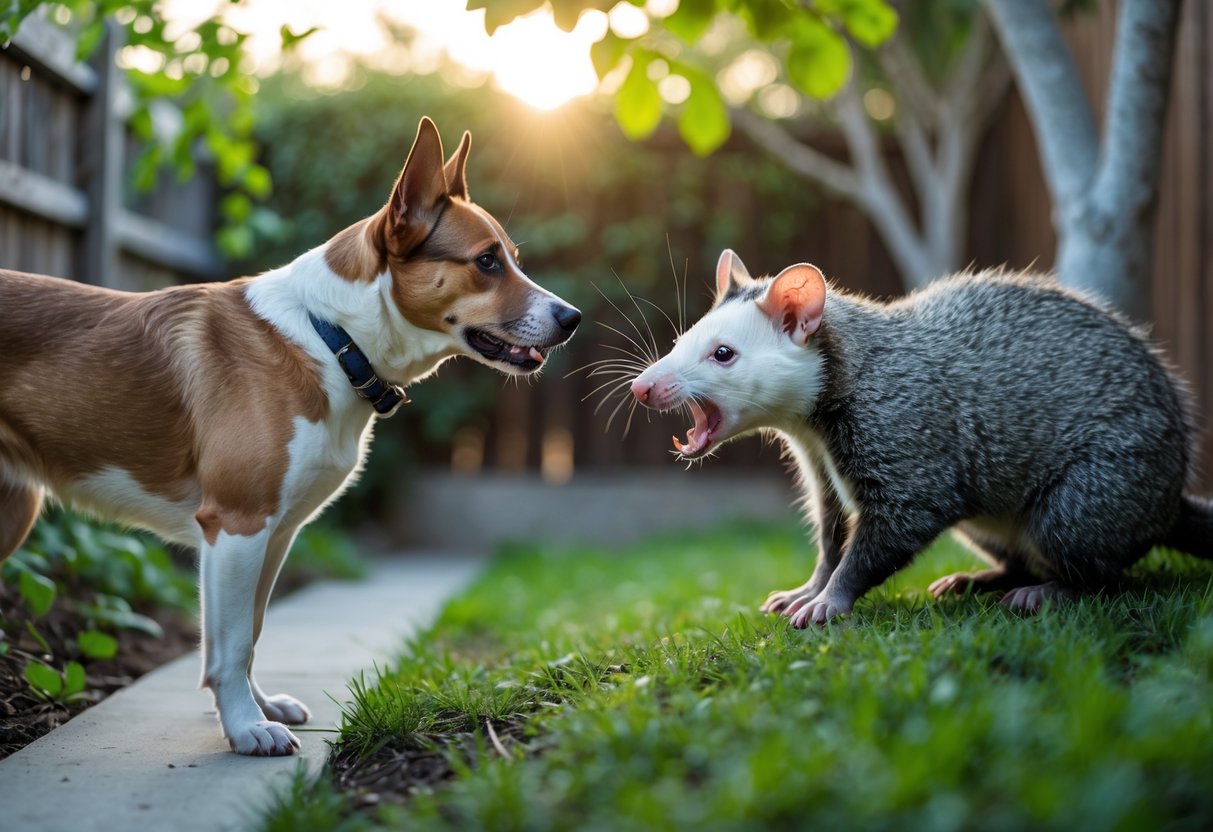
When your dog meets an opossum, a few risks come up. You’ve got to think about bites, possible injuries, and the diseases opossums might carry.
Knowing what to look out for can help you keep your dog safe.
Potential for Opossum Bites and Physical Injury
Opossums don’t usually start fights. But if they feel threatened, they can bite.
Their teeth are sharp and can cause wounds that bleed or get infected. If your dog chases or corners an opossum, the opossum might bite to defend itself.
After any encounter, check your dog for cuts or scratches. If you spot any, clean them up and get your vet involved to prevent infection.
Watch for swelling, redness, or changes in your dog’s behavior. These can be signs of a more serious injury.
Even though opossums prefer to play dead, bites can still happen if they feel trapped.
Diseases and Parasites Carried by Opossums
Opossums can carry fleas and ticks. These pests can jump onto your dog during a close encounter.
They might also carry bacteria like Salmonella, which isn’t great for your dog’s health.
Luckily, opossums almost never have rabies—their body temperature is too low for the virus. Still, they can carry other illnesses like canine distemper or parasites that can affect your dog.
To reduce the risks, keep your dog’s vaccinations current. Watch for signs like vomiting, diarrhea, or unusual tiredness after wildlife encounters.
If you notice any of these symptoms, definitely call your vet.
Prevention Tips and Safe Wildlife Rehabilitation
Keeping your dog safe mostly comes down to preventing direct contact. You can get rid of food sources that attract opossums, like uncovered garbage or pet food left outside.
Try securing trash bins with metal lids or mesh. It’s not foolproof, but it does help.
If you spot an injured opossum and don’t know what to do, don’t handle it yourself. Instead, reach out to a local wildlife rehab group—they’ve got the training to care for wild animals safely.
They’ll know how to keep diseases from spreading and can help the animal without putting your dog or family at risk.
Putting up fencing or barriers can stop your dog from chasing or cornering opossums. That way, you’re less likely to deal with fights or bites.
Leashing your dog during walks is another simple trick to avoid sudden run-ins. Why risk it?
Want more info about opossum risks and safety tips? Check out this opossum danger guide for dogs.


