
When you spot a chimp slapping the ground, it’s not just making noise or fooling around. Chimps slap the ground mostly to send a message, like telling others to back off or give them some space.
This move helps them stand up for themselves without getting into a fight.

You’ll often see chimps slap the ground when they’re frustrated or want to warn others nearby. It’s just one of the many gestures they use, and each gesture has its own meaning if you pay attention.
Learning about these behaviors gives you a glimpse into just how clever and social chimps can be.
The Meaning Behind Ground Slapping in Chimpanzees
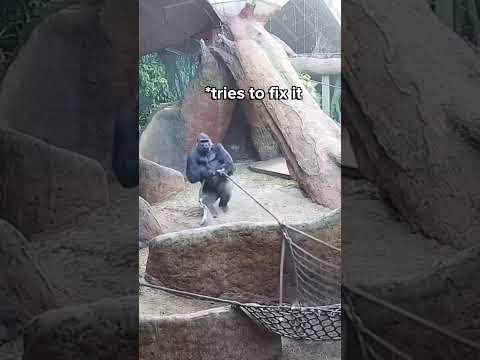
Chimps slap the ground in different ways depending on what’s happening and who’s around. Sometimes it means they want space, sometimes it’s a warning, and other times it’s an invite to play.
You really have to look at the situation and the relationships involved to figure out what the gesture means.
Communication Purposes of Ground Slapping
When a chimp slaps the ground, it usually wants to send a message. That might be “move away,” “stop that,” or even “hey, look at me.”
If a chimp feels threatened or annoyed, a ground slap can warn others to give it space instead of picking a fight.
Wild chimps don’t slap the ground for no reason. They use ground slapping as part of a bigger set of gestures, like arm raises, foot stomps, and hand flings.
Each gesture means something different. Researchers like Dr. Catherine Hobaiter and Professor Richard Byrne from the University of St Andrews spent years studying these gestures to figure out what they’re all about.
Interpreting Gestures in Social Contexts
You can get a better sense of ground slapping when you look at the chimp’s social status and what’s going on around them. If a high-ranking chimp slaps the ground, others usually back off fast.
A younger or lower-ranked chimp might use the gesture to test boundaries or ask others to leave them alone.
Mood plays a role, too. In a playful group, ground slapping could mean “come here” or be an invite to play.
But if food or territory is on the line, it’s more serious—a clear warning. Chimps pay close attention to each other’s eyes and body language to figure out if a ground slap is just a gentle nudge or a strong message.
Intentionality and Understanding Responses
Chimps don’t just slap the ground by accident. They pick this gesture on purpose to get a reaction from others.
If the first slap doesn’t work—like if the other chimp ignores it—they’ll try something else to make their point.
This shows that chimps really think about who they’re communicating with. Dr. Hobaiter and Professor Byrne’s research in Uganda’s Budongo rainforest showed this intentional use in over 80 wild chimps.
You could say ground slapping is a clever tool chimps use to get their message across without fighting.
This careful way of choosing gestures helps chimps manage their social groups and daily challenges. If you want to dig deeper, the University of St Andrews has some fascinating research on these gestures.
Chimpanzee Gesture Communication in the Wild

If you watch wild chimps, you’ll see them using all sorts of gestures to talk without saying a word. These signs help them share how they feel, ask for space, or invite others to play.
Once you start noticing these gestures, you’ll realize just how much chimps rely on them to connect with each other.
Comprehensive Dictionary of Chimpanzee Gestures
You could think of chimps as having their own gesture dictionary with around 66 clear signs. These include ground slaps, arm raises, hand flings, and foot stomps.
Each one means something specific, like asking for space or showing excitement. For example:
- Ground slap: Usually means “move away” or acts as a warning.
- Arm raise: Often means “I want that.”
- Hand fling: Tells others to “move away.”
Chimps mix up these gestures to make sure others get the message. Sometimes a ground slap with a playful face says “let’s play.”
It’s kind of amazing how chimps use these signals on purpose to shape their social lives.
Role of Researchers in Decoding Gestures
Dr. Catherine Hobaiter and Professor Richard Byrne at the University of St Andrews actually built this gesture dictionary themselves. They spent years watching over 80 wild chimpanzees in Uganda’s Budongo forest.
They noticed that chimps pick their gestures based on who’s watching. If one gesture falls flat, chimps just try something else.
Their research shows that chimps use gestures as intentional signals. These aren’t just random movements—they’re clear ways to start, stop, or change social interactions.
Because of their work, you can now figure out what many chimp gestures mean. Ever wonder why a chimp slaps the ground or raises an arm? There’s a reason behind it.
This kind of research really shines a light on just how clever and social chimps are.
Want to dig deeper into how wild chimps communicate? Check out this link and this one.


