
Ever had a bee zoom right up to your face? It’s a little unnerving, isn’t it? Most of the time, bees do this because they’re curious—maybe you’ve got something sweet nearby, or you just smell interesting. Bees pick up on the scents coming off your skin, like perfume, sweat, or even a bit of sugary food, and that’s why you’ll notice them buzzing around your face and hands.
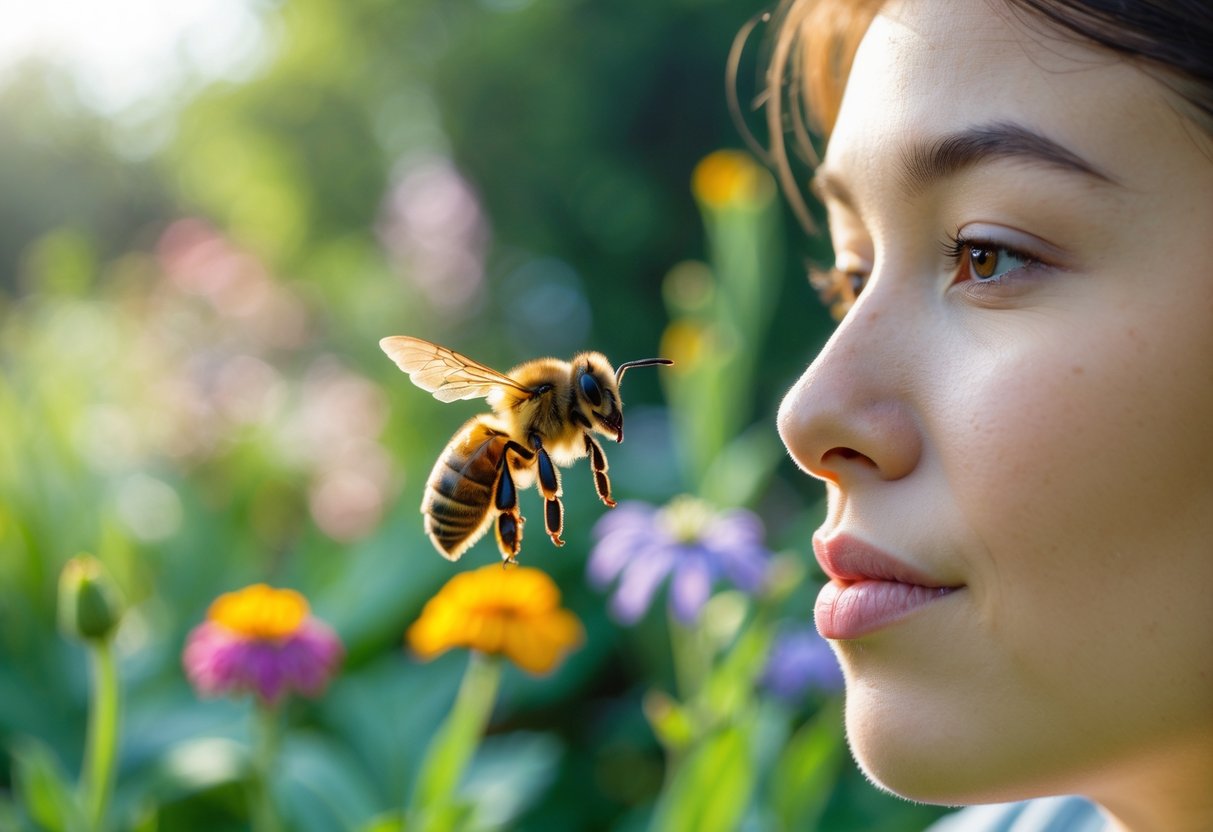
Bees rely on their sharp sense of smell and vision to check things out. Your face? That’s just a convenient landing spot for a little investigation.
They might just want to know if you’re a threat or something new in their world. Once you realize this, it’s a bit easier to stay calm when a bee gets close.
Sometimes, bees hover near you because you’re close to their hive or a favorite garden. If you know what draws them in, you can dodge a lot of the stress and maybe even avoid their attention. Want to dig deeper into why bees go for your face? Here’s more: why bees fly towards you.
Why Bees Fly Towards Your Face

Bees often head for your face because of the smells and colors you’re wearing. They get curious about what you’ve got going on and want to check it out.
Most of their behavior revolves around searching for food or keeping their hive safe.
Attraction to Scents and Fragrances
Bees love sweet smells—think perfumes, lotions, or even just the scent of your sweat. Floral fragrances really catch their attention since they remind bees of flowers.
Their sense of smell is no joke; they use it to hunt down nectar. If you’re snacking on something sugary or sipping a sweet drink, bees might show up thinking you’ve got food.
Sweat can attract them too, since it has salts they need. Some bees seem more interested in sweat than others, oddly enough.
If you’d rather not have bees buzzing around, skip the strong perfumes or scented stuff when you’re outside.
Impact of Bright Colors and Clothing
Bees spot bright colors like yellow, white, or floral prints right away. To them, those colors scream “flowers,” so you might look like a snack.
Dark colors—black or blue—can get their attention too, but not as much as lighter shades. Bees use color vision to find flowers, so your outfit might just confuse them.
If you want to blend in, go for muted or darker clothes. Maybe leave the floral patterns at home if you’re hanging out near hives or gardens.
Curiosity and Exploratory Bee Behavior
When bees zip near your face, they’re usually just curious. They use their antennae, eyes, and sense of smell to figure out if you’re a threat or maybe hiding something tasty.
Honeybees can even recognize familiar faces, like their keeper’s. They’ll fly close to check your breath, scent, and how you move.
Most bees won’t sting unless you provoke them. They’re just investigating.
If you’re hanging around a hive, watch out. Guard bees can get defensive and might buzz your face as a warning. Usually, though, they’re just poking around, not looking for trouble.
You can read more about bee behavior here: Why Do Bees Fly Towards You.
Bee Defense, Risks, and How To Prevent Encounters

Bees fly near your face when they notice movement or pick up on certain smells. If they think you’re a threat to their hive, they’ll defend their home—sometimes with stings and alarm signals.
Knowing a bit about how bees act can help you avoid painful run-ins.
Proximity to Hives and Defensive Reactions
If you wander too close to a hive or a bunch of resting bees, they might see you as a threat. Bees guard their hive fiercely, especially if hornets or other bugs are around.
When bees sense danger, worker bees let off an alarm pheromone that smells like bananas. That’s their way of calling in reinforcements.
They’ll protect their queen and larvae by stinging whoever gets too close. Honeybees usually lose their stinger after one sting, but bumblebees? They can sting more than once.
If you step near a hive or mess with a cluster of bees, they might swarm your face to drive you away.
Preventing Bee Attraction to Your Face
If you don’t want bees coming for you, skip strong perfumes or scented lotions that smell like flowers. Bees love sweet scents and might think you’re carrying nectar.
Avoid bright or floral clothes, since those can make bees extra curious. If a bee gets in your face, try to stay calm and don’t swat at it.
Pull your shirt over your head or use your arms to cover your face—especially your eyes, nose, and ears. Those are the spots bees tend to go for.
Running or flailing your arms usually just makes things worse. Bees react to sudden motion, so staying still is your best bet.
There’s plenty more advice out there if you want to learn how to avoid bee run-ins—just look up some trusted beekeeping tips.
Bee Stings and Health Concerns
Bee stings hurt—a lot, honestly. The venom usually leads to swelling and redness.
Most folks just deal with some minor irritation that fades pretty quickly. Still, there are people who react more seriously.
Some people might even experience anaphylaxis, which can turn dangerous fast. If that happens, you need to get medical help right away.
If a bee stings you, try to get the stinger out as soon as you can. That helps limit how much venom gets into your skin.
Clean up the area, then slap some ice on it to help with the swelling. Keep an eye out for things like trouble breathing, hives, or swelling that spreads past the sting.
Those symptoms mean you should seek emergency care. If you hang out outdoors or near beehives, it really pays to know what to do about bee stings.


