
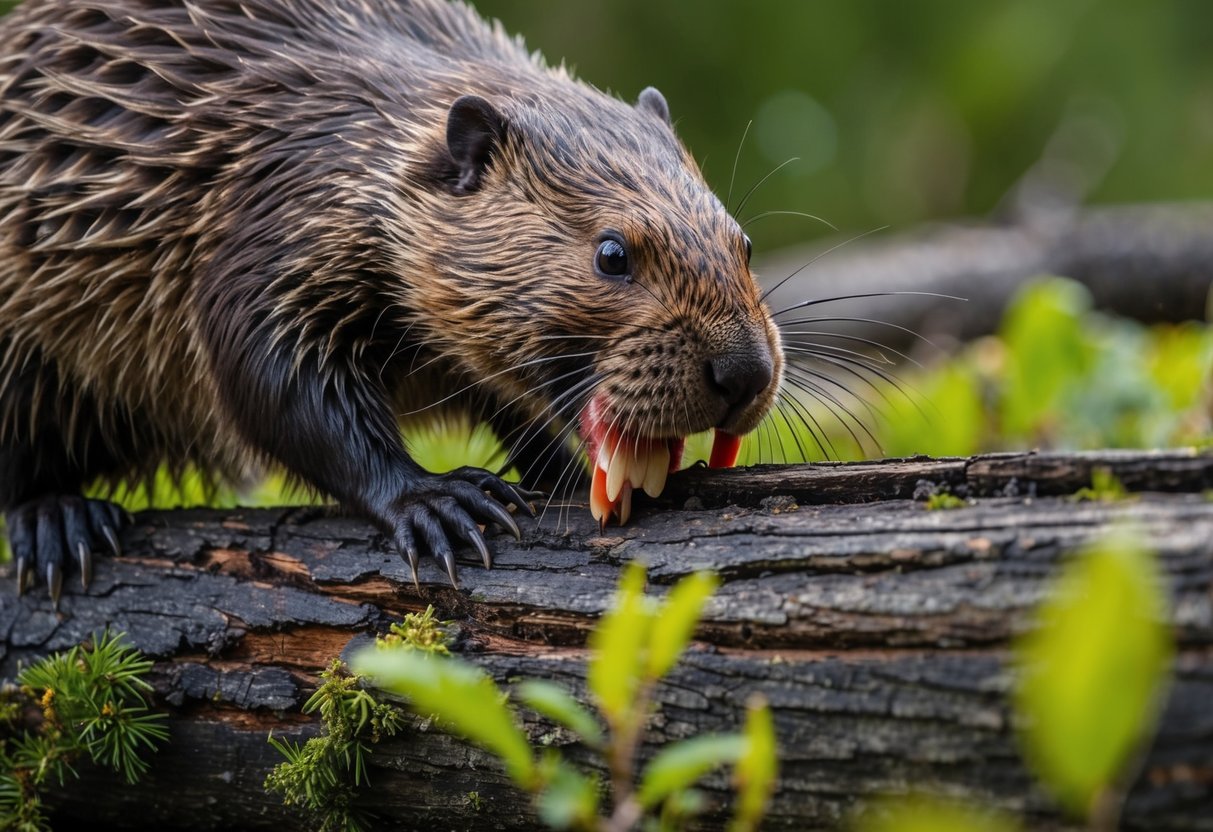
Have you ever wondered why beavers have red teeth? Beavers have red teeth primarily because of the iron content in their tooth enamel. This makes their teeth both strong and resistant to decay. This unique trait helps them as they gnaw through trees and plants to create their homes and gather food.

Their diet, rich in fibrous plants, contributes to the wear and tear on their teeth. The strength of their red teeth is crucial since beavers face predators and need reliable teeth for survival.
Anatomy of Beaver Teeth

Beaver teeth have unique structures that help them adapt to their environment. Understanding these features gives you insight into how beavers thrive.
Their teeth are specifically designed for their diet and lifestyle, making them strong and effective for chewing through tough materials.
The Structure of Tooth Enamel
Beaver teeth are distinct because of their enamel. Unlike other rodents, beaver enamel contains iron, which gives their teeth an orange hue. This iron-rich enamel provides increased strength and resistance to wear.
Normally, tooth enamel is made up of minerals, with magnesium being common in many animals. However, beavers have a special composition that protects against tooth decay. The dentin beneath the enamel is softer, but the hardened layer keeps the teeth sharp.
This unique arrangement means that their incisors can withstand significant stress while cutting through wood and other tough materials.
Unique Features of Incisors
The beaver’s incisors are remarkable for their size and shape. They are long, chisel-like teeth that are perfect for gnawing. The front of the incisors remains sharp as they wear down, thanks to the differential wear between the hard enamel and softer dentin.
These incisors grow continuously throughout the beaver’s life. This is essential since they wear down quickly from constant use. Their orange color not only looks unique but also indicates their strength against mechanical stress.
This adaptation allows beavers to fell trees and gather food efficiently.
Role of Molars in Beaver Diet
Behind the incisors, beavers have molars that support their herbivorous diet. Molars are broader and flatter, designed for grinding plant material. This helps in breaking down tough fibers from bark and leaves.
The unique structure of molars provides durability and resilience while chewing. They can effectively grind down food to aid in digestion, making it easier for the beaver to extract nutrients.
Strong molars complement the incisors’ role, allowing beavers to consume a varied diet.
The Mystery of the Red Coloration

Beavers are known for their unique teeth, which have a striking red or orange hue. This color comes from specific characteristics in their teeth that provide them strength and durability. Let’s explore these features more closely.
Iron Content and Chemical Structure
The reddish color of beaver teeth is primarily due to their iron content. Unlike many other rodents that have magnesium in their enamel, beavers have iron embedded in their teeth’s chemical structure. This iron gives their teeth an orange color.
The presence of iron strengthens their teeth against wear and tear. So, while you might notice that their teeth are red, it’s the iron that makes them tougher and better able to handle the demands of gnawing on wood and other tough materials.
Pigmented Enamel and Its Benefits
Beaver teeth feature a pigmented enamel, which is essential for their survival. This enamel is not only colored due to iron but is also harder and more resilient compared to regular enamel.
The tough enamel helps beavers maintain sharp edges on their teeth as they chew through wood. It offers protection against the acidic environment inside their mouths and reduces the risk of damage. The unique combination of iron and pigmented enamel contributes to the overall durability, ensuring their teeth remain effective tools for construction and foraging.
Beaver Behavior and Tooth Maintenance

Beavers have unique behaviors that help maintain their teeth. Their natural activities involve chewing and gnawing, which contribute to keeping their incisors sharp. Additionally, their diet plays a significant role in their dental health, as they primarily consume plants.
Natural Sharpening Activities
You might know that beavers constantly chew on wood. This behavior is essential for their tooth maintenance.
By gnawing on logs and branches, they keep their incisors from growing too long. Each time they chew, the harder wood creates a natural sharpening effect. This process prevents overgrowth and ensures their teeth remain functional for cutting through tough materials.
Beavers also engage in activities like gnawing on tree bark and stripping leaves. This variety helps maintain their teeth and provides necessary wear.
Diet and Its Impact on Dental Health
Beavers are herbivores, primarily eating a diet of aquatic plants, leaves, and tree bark. This plant-based diet provides essential nutrients.
The high fiber content in their food promotes chewing, which keeps their teeth sharp. Furthermore, their diet contains minerals important for dental strength.
Interestingly, beavers’ teeth are naturally reddish due to the presence of iron. This addition offers more resistance to decay, especially against their fibrous and sometimes acidic diet. By focusing on different plant materials, they contribute positively to their healthier teeth.
The Beaver’s Role in the Ecosystem
Beavers play a crucial part in their ecosystem, especially through habitat construction and their remarkable building activities. Their efforts lead to significant environmental changes that benefit many other species.
Habitat Construction and Maintenance
Beavers, known as Castor canadensis in North America, are expert builders. They create impressive dams using logs, branches, and mud. These dams create wetlands, which serve as homes for many plants and animals.
When beavers build a dam, they change the landscape. This helps maintain water levels in rivers and streams. The resulting ponds can also provide essential habitat for creatures like ducks, fish, and amphibians.
Their presence supports a diverse ecosystem. As a monogamous species, beavers often work together to care for their young, known as kits. This teamwork is vital for the survival of their species, ensuring that they continue to create and maintain essential habitats.
Environmental Impact of Dams
The dams built by beavers have a wide range of environmental impacts. They help control water flow, which can reduce the risk of floods during heavy rains.
By slowing down water movement, these structures also improve water quality by allowing sediments to settle.
Beaver ponds can capture carbon, helping combat climate change. The wetlands they create are among the most biologically productive ecosystems, comparable to coral reefs and rainforests.
They provide a safe haven for numerous species, protecting them from predators.
In addition to promoting biodiversity, beaver activity contributes to soil moisture, benefiting surrounding vegetation. Their paddle-shaped tails assist in swimming and provide balance, which is essential as they carry materials for their dams.


