
You’ve probably seen wild stories or movies suggesting humans and chimps could have babies together. In reality, that’s just not how things work.
Humans can’t breed with chimps because our chromosomes don’t match up, making it impossible to create viable offspring. Even though our DNA is incredibly similar, this mismatch in chromosome numbers shuts the whole process down.

Chromosomes aren’t the only roadblock here. Our DNA is organized differently, and a bunch of genetic factors make it nearly impossible for human and chimp cells to work together and form a developing baby.
Scientists have poked at this question over the years, but no one has ever verified a human-chimp hybrid.
If this stuff fascinates you, there’s a lot to dig into about genetics, old experiments, and what it all means for evolution. Understanding why this can’t happen really highlights how unique each species is, even when we look so much alike at first.
Genetic and Biological Reasons Humans Can’t Breed With Chimps

Humans and chimps might look similar, but big genetic and biological differences block them from breeding. These differences pop up in how our cells divide, how our DNA lines up, and how embryos would develop.
It’s kind of wild to see how these details make a human-chimp cross totally out of reach.
Differences in Chromosome Numbers
Humans have 23 pairs of chromosomes. Chimps have 24 pairs.
That one-pair difference sounds tiny, but it’s a dealbreaker. Human chromosome 2 actually comes from two chimp chromosomes fusing together at some point in our evolutionary past.
Because of this, chromosomes wouldn’t pair up right during reproduction.
When chromosomes can’t match, cells can’t build healthy embryos. That’s a huge barrier.
Hybrid Incompatibility
Even if fertilization somehow happened, the embryo would hit major roadblocks. Our bodies rely on loads of chemical signals to guide how cells grow.
Hybrids usually get mixed signals because those instructions come from two different species.
This confusion can make the embryo stop developing early or cause it to form incorrectly. On top of that, our immune systems might attack hybrid cells, making survival pretty much impossible.
DNA Divergence Between Humans and Chimps
Humans and chimps share somewhere between 95% and 99% of their DNA, depending on who you ask. But the small differences are scattered in areas that control development and reproduction.
These differences really matter—they decide whether offspring can grow.
Some genes and chromosomes have changed enough to set up hard barriers to reproduction. That affects how traits pass down and how cells interact as things develop.
So, even with all that shared DNA, these differences keep humans and chimps from having kids together.
If you want to get nerdy about the details, check out Doubts about complex speciation between humans and chimpanzees.
Scientific Attempts and Common Myths About Human-Chimpanzee Hybrids
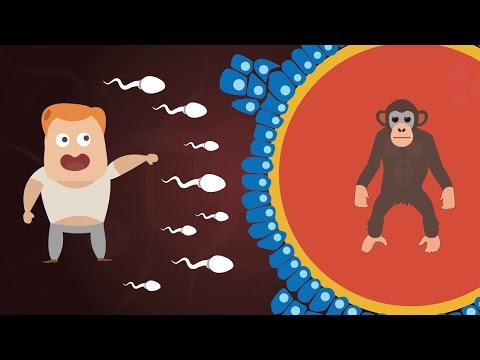
You might have heard rumors about scientists trying to create human-chimp hybrids or wondered if it could ever happen. These stories raise a lot of scientific, ethical, and even legal questions.
It’s worth knowing what’s actually been tried, what science really says, and what boundaries nature and society have set.
Debunking the “Humanzee” Myth
The word “humanzee” pops up a lot online—it’s supposed to mean a half-human, half-chimp hybrid. The idea grabs attention, but it’s basically a myth.
No one has ever verified a human-chimp hybrid.
Back in the early 1900s, some scientists tried to inseminate female chimps with human sperm. Nothing ever came of it.
That’s not surprising, considering all the genetic barriers.
Even though humans and chimps share about 98–99% of their DNA, the differences in chromosome numbers and structures are critical. Human chromosome 2, for instance, comes from two ape chromosomes fusing together, which makes pairing for reproduction a nonstarter.
Most claims about hybrids are just rumors, not backed by any real science. It’s smart to stay skeptical.
If you want to go deeper, Science Focus has a good breakdown of what’s really involved.
Ethical and Legal Considerations
Even if it were somehow possible, ethical and legal rules make human-chimp hybrids a major issue.
Scientists and governments have strict guidelines to stop these kinds of experiments.
Creating a hybrid would raise tough questions about rights, identity, and the welfare of any resulting being. It also pushes the boundaries of what’s considered morally acceptable, especially when humans are involved.
Many countries have banned experiments that might lead to human-animal hybrids for these reasons.
Groups that oversee research put a big focus on respecting all life forms and avoiding suffering or exploitation.
Before anyone even thinks about trying something like this, strict ethical reviews have to approve the research. These rules are there to protect both humans and animals.
Differences in Reproductive Physiology
Humans and chimpanzees have some pretty big differences in how their reproductive systems work. These differences make it almost impossible for fertilization and development to happen between them.
Humans have 46 chromosomes, while chimps have 48. Their reproductive cells also look and function differently, which makes it tough for sperm and eggs to actually combine.
Species-specific genetic instructions control how embryos develop. Humans and chimps just don’t have matching control systems, so an embryo wouldn’t survive.
Even if fertilization did happen somehow, a viable pregnancy wouldn’t stand much of a chance because of all these biological mismatches.
Want to dig deeper? Check out Wikipedia’s Humanzee article for more on the biology and challenges of hybrid creation.


