
If you have ever wondered why ticks jump, the direct answer is simple: they cannot. Ticks do not leap, fly, or launch themselves through open air.
They crawl, climb, and grab onto you or your pet when you brush against vegetation, leaf litter, clothing, or another host.
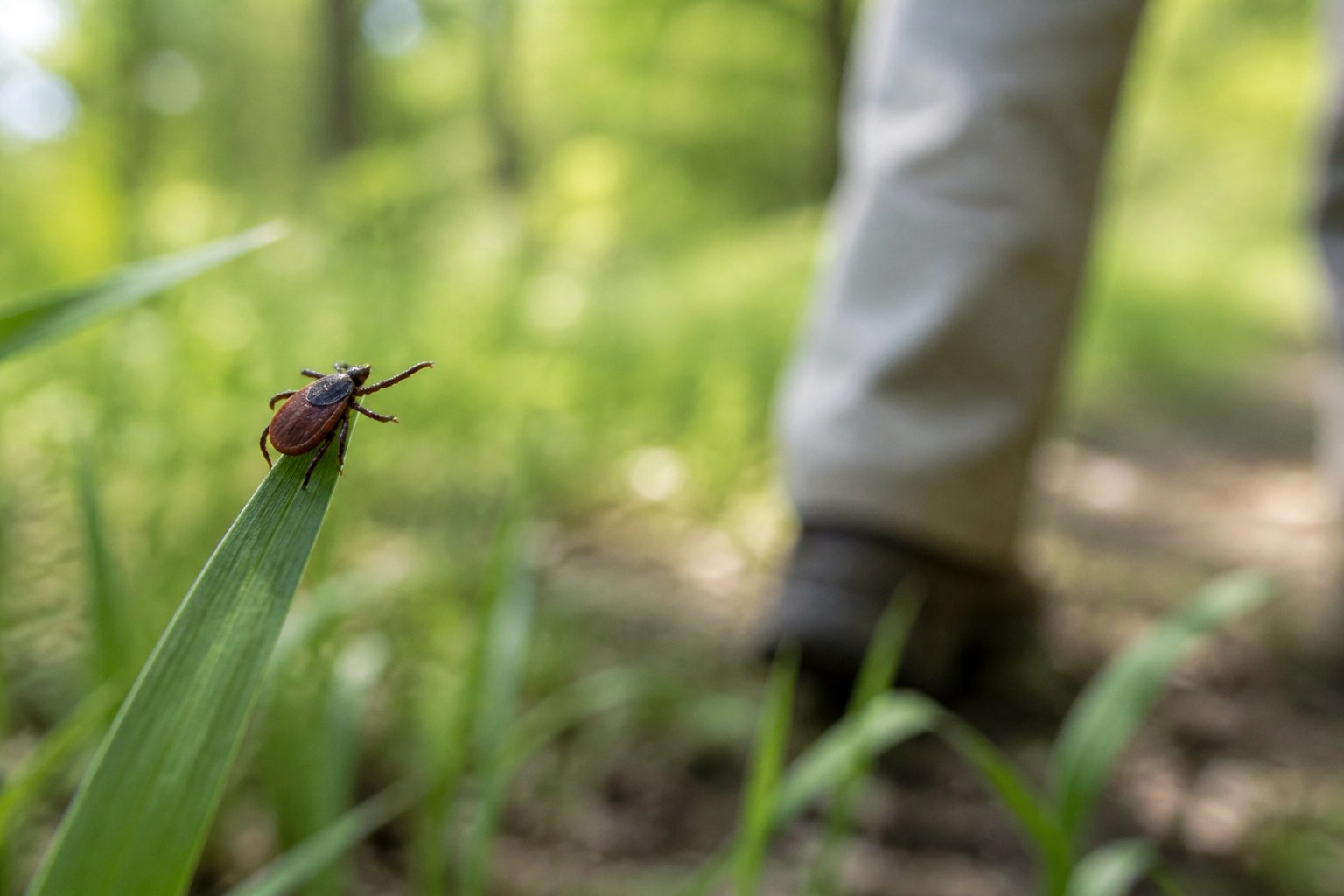
A tick can still seem to appear suddenly because its movement is quiet and easy to miss. Once a tick attaches, it may crawl upward toward a warm, protected area, which can make you think it fell from a tree or jumped from nearby.
You can reduce tick encounters by avoiding dense ground vegetation. Check your clothing and skin, and inspect pets after outdoor activity.
What Actually Gets Ticks Onto People And Pets
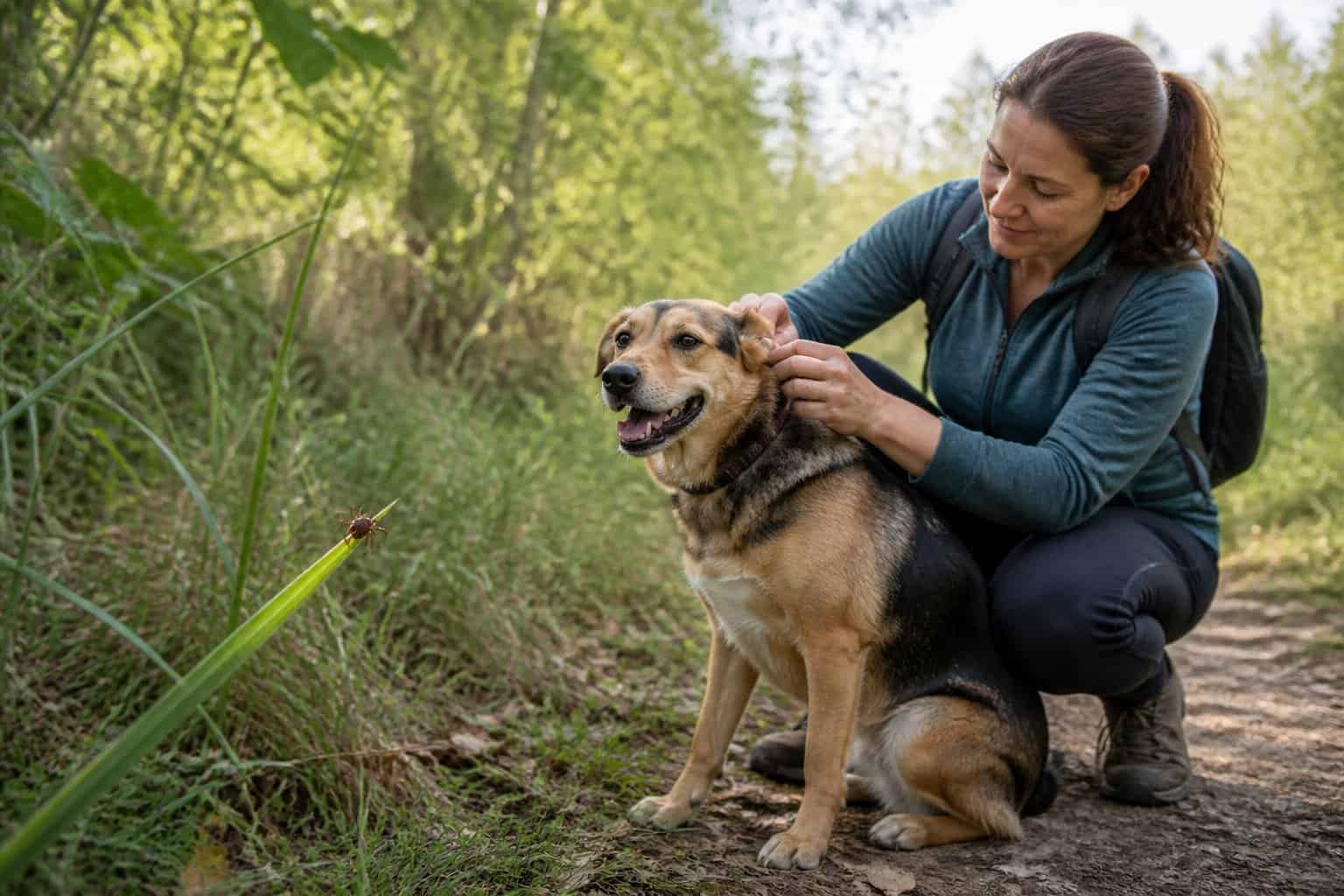
Ticks rely on questing behavior, a contact-based ambush strategy that brings them close to people, dogs, and other hosts. They wait on vegetation, sense nearby signals, and grip anything that brushes past.
Questing Behavior Is A Contact Ambush
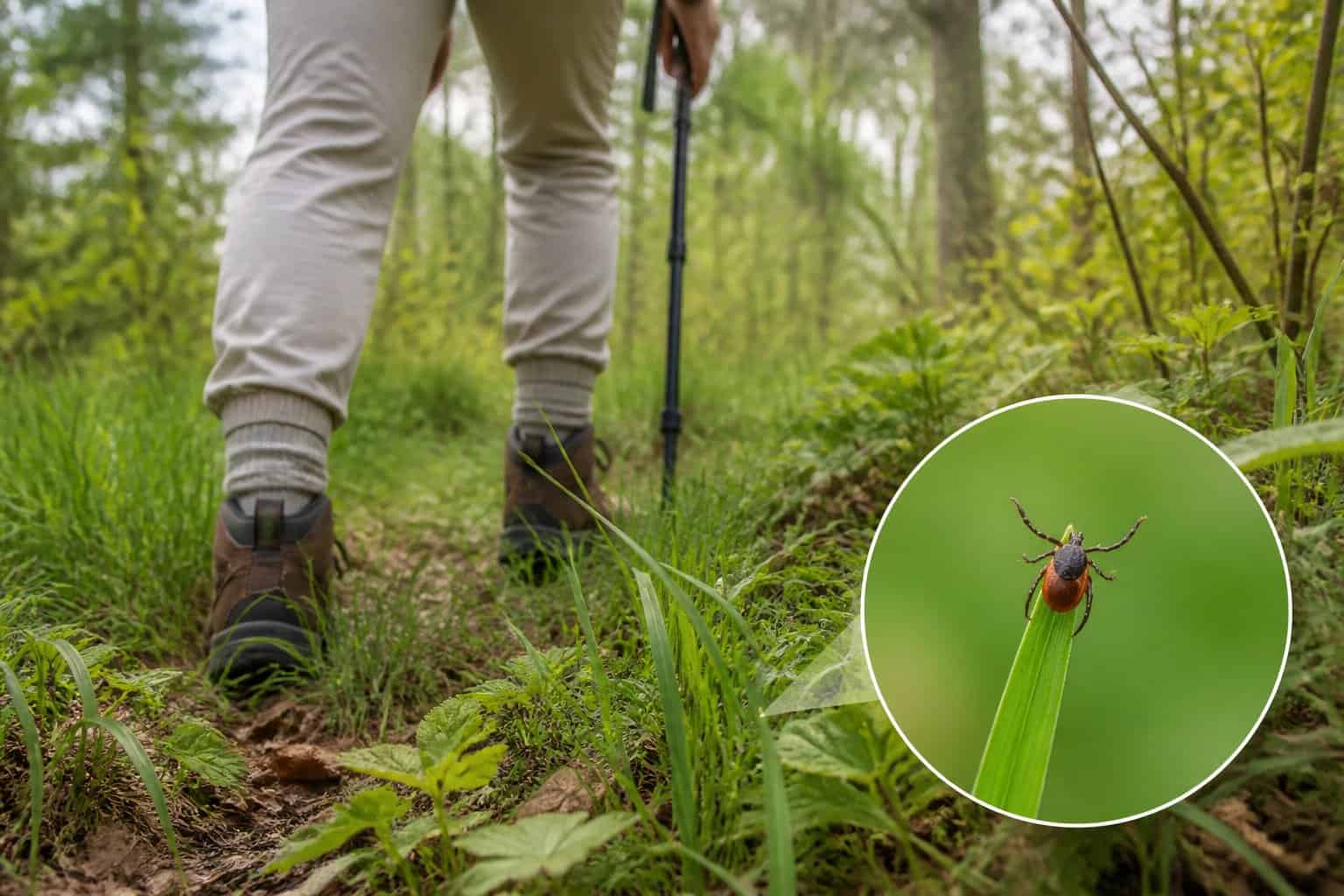
A tick climbs grass, brush, or a low leaf and holds on with its rear legs. It extends its front legs outward, ready to catch fur, skin, clothing, or gear.
This behavior does not involve jumping. The host must come close enough for direct contact, so walking through tall vegetation or leaf litter creates more opportunity for a tick to transfer.
Hard ticks in the family Ixodidae use this strategy during the search for a blood meal. They do not chase people across open ground.
How Haller’s Organ Detects A Nearby Host
A tick’s Haller’s organ, located on its front legs, helps it detect cues associated with a nearby host. These cues can include carbon dioxide, body heat, odors, moisture, and vibrations.
When a dog, person, deer, or another animal passes within reach, the tick stretches outward. Its movement may look sudden, yet it is still a crawl and grip response.
From Fur Or Clothing To A Blood Meal
After contact, a tick crawls through fur, hair, or clothing until it finds a suitable attachment site. Warm, tight, moist areas, such as around a pet’s ears or a person’s waistband, may be attractive locations.
The tick attaches and feeds for an extended period. Prompt checks can find it before or soon after attachment, reducing the time available for transmission of certain tick-borne pathogens.
Why A Tick Can Seem To Appear From Nowhere
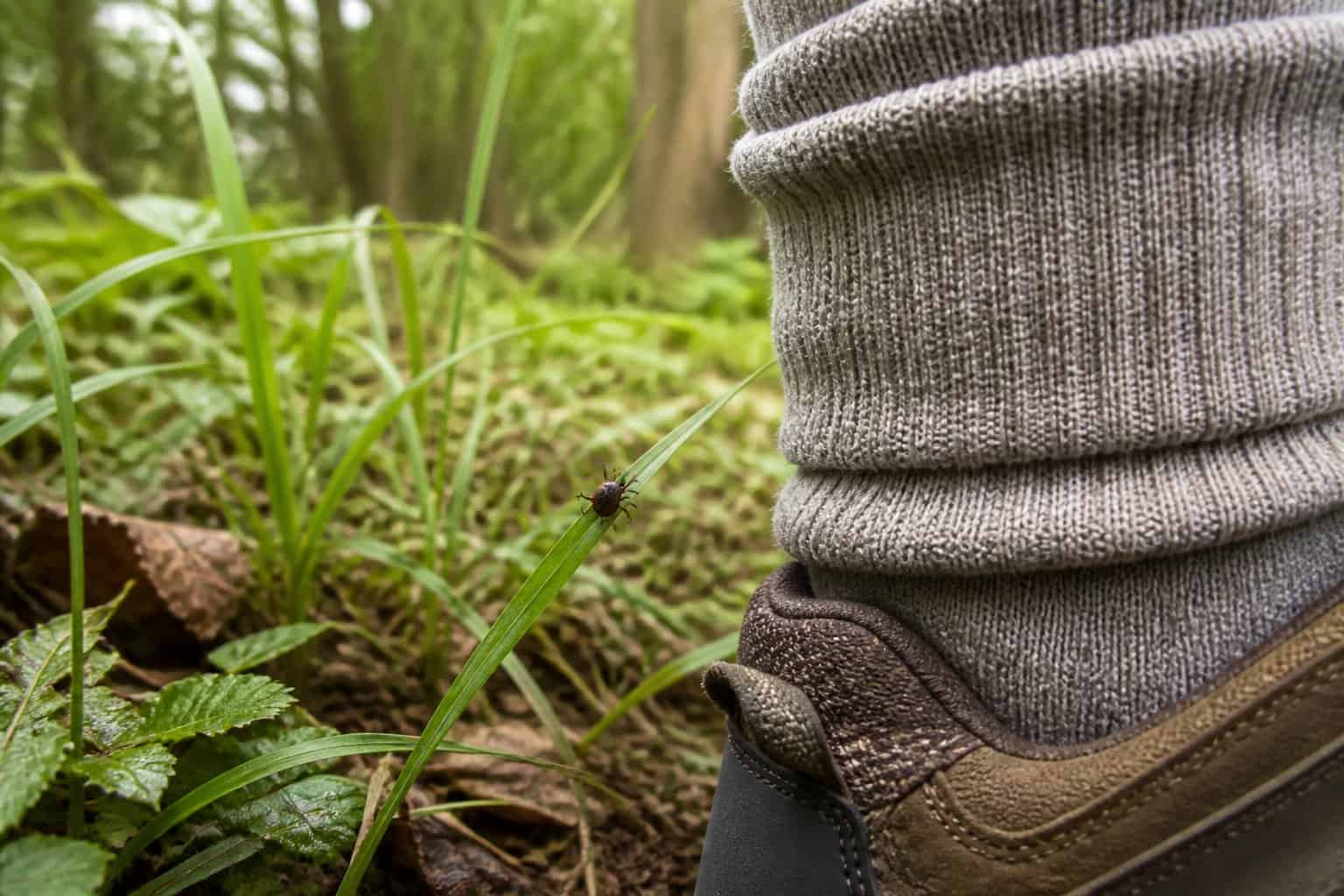
A tick may seem to materialize because it is tiny, moves slowly, and blends into fabric, fur, and plant debris. It may also crawl from your shoes or a pet’s coat to another part of your body.
How Ticks Differ From Fleas
Fleas have enlarged hind legs built for powerful leaps. Ticks are arachnids with legs adapted for gripping, climbing, and crawling, so they cannot jump like fleas or fly like mosquitoes.
If you see a tiny parasite move quickly across a room, a flea is more likely to be jumping. A tick usually arrives through contact with vegetation, wildlife, clothing, or a pet.
Why Ticks Usually Crawl Upward
A tick that reaches your pants, socks, or shoes may crawl upward toward covered skin. The scalp, hairline, ears, neck, waist, underarms, groin, and backs of the knees can provide protected attachment sites.
This upward movement explains why you may find a tick far from the place where it first contacted you. A tick on your head likely crawled there rather than dropping from a tree.
Species And Life Stages Affect Positioning
Different tick species and life stages use different parts of the environment and prefer different hosts. Deer ticks, also called black-legged ticks, may be carried by birds, deer, rodents, and other wildlife.
Lone star ticks and American dog ticks can use additional mammal hosts. Nymphs are especially easy to miss because of their small size.
Adult ticks are larger, yet their dark bodies can still blend into clothing or fur.
Where Ground-Level Tick Contact Is Most Likely
Your greatest exposure usually occurs where shade, moisture, vegetation, and host traffic overlap. Tall grass, brush, leaf litter, shrubs, wooded edges, and stone walls can all support conditions that bring ticks and hosts together.
Yard Features That Support Tick Activity
A yard provides tick habitat when it contains untrimmed grass, dense shrubs, brush piles, damp leaf litter, stacked wood, or shaded borders. Stone walls also provide sheltered travel routes for wildlife that carry ticks.
Keep grass trimmed, clear leaf litter, and place play areas away from brush and wooded edges. A strip of wood chips or gravel between lawn and woodland can reduce direct contact with ground vegetation.
Woodland Edges And Walkways
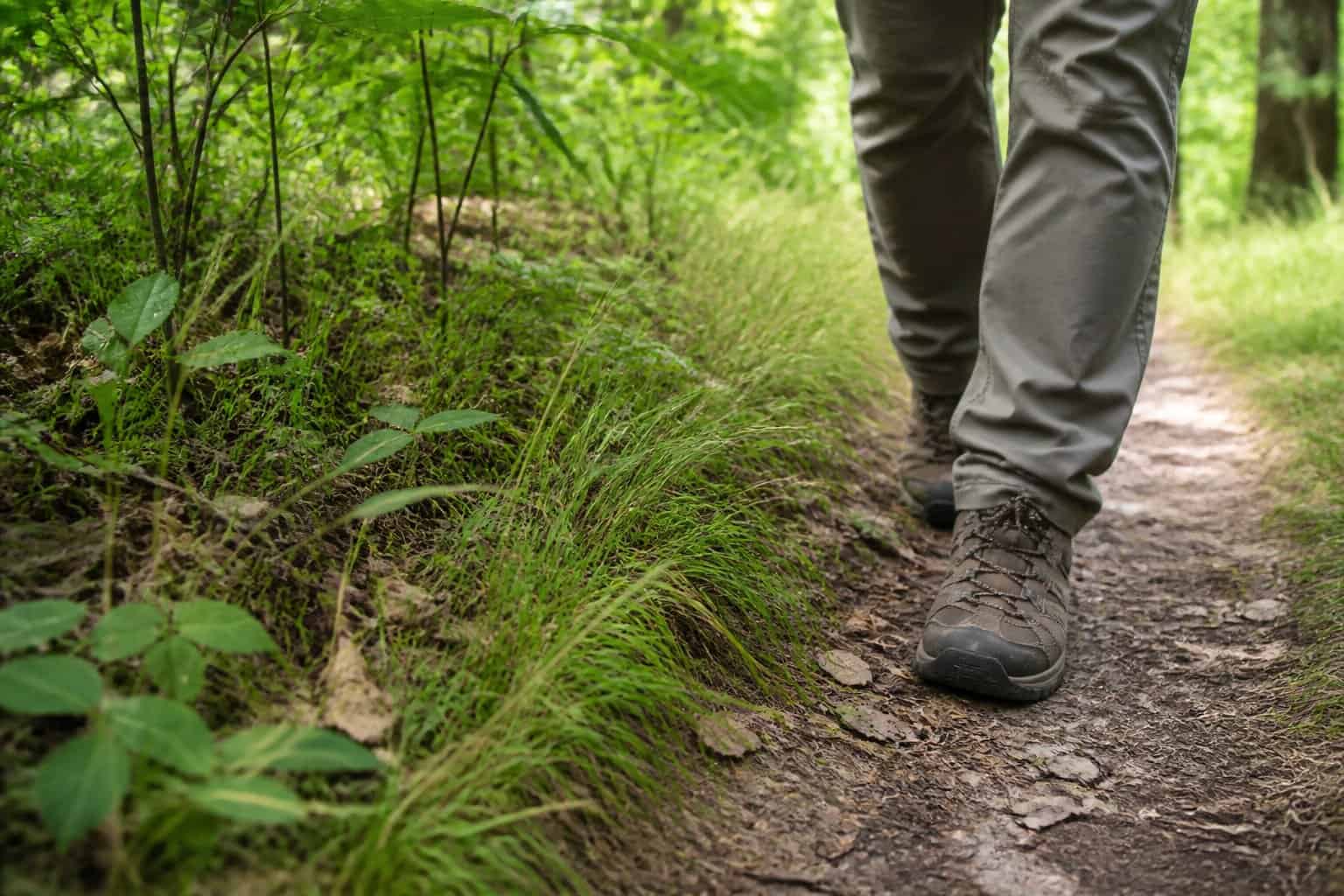
Ticks often wait near the boundary between maintained paths and tall grass, low shrubs, or brush. These locations offer moisture and frequent contact with people, dogs, deer, and other wildlife.
Stay on the center of maintained trails when practical. Avoid brushing against vegetation, and keep pants and shoes from dragging through leaf litter.
Ticks do not fall from high trees. Shade beneath trees can still keep ground-level conditions favorable for tick activity.
Managing Pet Exposure At Home
Dogs may collect ticks during walks and bring them indoors on their fur. Check your pet after outdoor time, paying special attention to the ears, collar area, toes, between the legs, and around the tail.
Limit dense vegetation near patios, kennels, and frequently used play areas. Secure food and trash to discourage wildlife from entering spaces where your pets spend time.
Prevention That Matches Tick Behavior
Effective tick prevention targets contact points rather than imagined jumps. Protective clothing, EPA-registered tick repellent, regular tick checks, pet prevention, and sensible yard maintenance can all reduce exposure.
Clothing And Repellent Strategies
Wear long pants, long sleeves, and closed-toe shoes in brushy or wooded areas. Tuck your pants into your socks, and choose light-colored clothing so crawling ticks are easier to spot.
Use an EPA-registered repellent containing DEET, picaridin, IR3535, or oil of lemon eucalyptus according to its label. Permethrin-treated clothing and gear provide additional protection, especially when you spend time in dense vegetation.
Tick Checks And Pet Prevention
Check your clothing, skin, hair, gear, and pets after outdoor activity. Pay close attention to the scalp, hairline, ears, waist, underarms, groin, backs of knees, and between toes.
Ask your veterinarian which tick-control products suit your pet’s species, age, weight, health, and lifestyle. Remove an attached tick with fine-tipped tweezers by gripping it close to the skin and pulling upward steadily.
When To Seek Professional Advice
Seek medical advice if you develop fever, headache, fatigue, muscle aches, a rash, or other concerning symptoms after a tick bite.
Tick-borne diseases include Lyme disease, Rocky Mountain spotted fever, anaplasmosis, and ehrlichiosis.
Contact a veterinarian if your pet has numerous ticks, skin irritation, unusual tiredness, weakness, fever, or reduced appetite.
If you notice persistent tick activity around your property, a qualified pest control professional can assess the yard and recommend appropriate tick-control products.


