
When a lion roars, you feel it deep in your chest. Your house cat? Its purr is gentle—almost the opposite, really.
Lions roar because their throats and vocal cords have a special structure that creates deep, booming sounds. Domestic cats, on the other hand, have a different setup that allows them to purr instead.

Let’s get into why these small differences in bones, ligaments, and vocal tissue lead to such wildly different noises.
The next few sections break down the anatomy, explain why cats can’t do both, and show which big cats actually belong to the roaring club.
What Makes Lions Roar and Cats Purr?
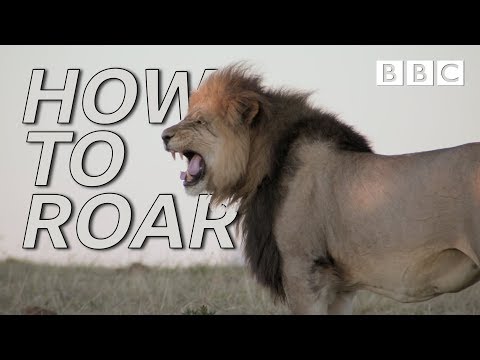
Lions have a flexible throat setup, so they can produce those massive, echoing roars.
House cats? Their throats work differently, letting them purr in that soothing, steady rhythm.
Let’s look at what’s actually going on inside their necks.
Key Differences in Vocal Anatomy
Start with the larynx and vocal cords. Lions and other big cats have thick, heavy vocal cords packed with muscle and tissue.
These cords vibrate at lower frequencies, creating the powerful roars you hear from across the savannah.
Their size and heft mean lions can hit those deep, rumbling notes.
Small cats, though, have thinner, shorter vocal cords. Their larynx and nearby tissue support a rapid, repeated vibration.
That’s how your house cat manages that continuous, rhythmic purr—on both the inhale and exhale.
The shape and size of the throat matter too. Big cats have a larger resonating chamber, which cranks up the volume.
Small cats, with their more rigid throats, favor steady vibration over sheer loudness. So, the physical differences really decide which sounds each animal can make.
The Special Role of the Hyoid Apparatus
The hyoid apparatus sits at the base of the throat, connecting the tongue, larynx, and skull.
In small, purring cats, the hyoid is mostly bone and doesn’t flex much. That setup lets the larynx and muscles vibrate for a continuous purr, both breathing in and out.
Lions and other roaring cats have a section of the hyoid that’s long and flexible, made from cartilage. You might hear people mention the epihyal bone and its bendy extensions.
This flexible hyoid allows the larynx to move around more freely. That movement, paired with big vocal cords, lets lions create those low, drawn-out roars.
The hyoid’s design also changes how the throat resonates. When it’s flexible, the throat can shift shape as the lion roars, giving the sound that deep, traveling quality.
A rigid hyoid, on the other hand, supports the steady vibration needed for purring, but it really limits the ability to roar.
Why Roaring and Purring Are Mutually Exclusive
Honestly, you can’t do both well. The throat needs different hardware for each job.
To roar, you need big, heavy vocal cords and a flexible hyoid, so the larynx can shift and create those low, powerful sounds.
But that setup stops the steady, two-way vibration needed for true purring.
To purr, you need a more rigid hyoid and a larynx built for rapid, repeated vibration on both breaths. That design cuts down on the vocal cords’ mass and flexibility, so roaring just doesn’t happen.
Nature picked a lane for each. Lions evolved to roar for long-distance communication and territory defense.
Your pet cat? It purrs for close-up bonding and comfort. Both designs fit their lifestyles, so you rarely see a cat that can do both.
Roaring, Purring, and the Big Cat Family

Lions, tigers, leopards, and jaguars use deep roars to claim territory, attract mates, and warn off rivals.
Other big cats, like cheetahs and pumas, stick to softer calls or purrs because their throats just aren’t built the same way.
Which Big Cats Can Roar?
You’ll hear true roars from the Panthera crew: lions, tigers, leopards, and jaguars.
These cats have an elastic ligament in their larynx, so their vocal cords can vibrate at low frequencies. That’s how they belt out those loud, far-carrying roars.
Roaring helps them find their pride or mate from a distance. It also shows strength to rivals, so they don’t have to fight as much.
Tigers and jaguars use their roars for territory and to reach out to other individuals. Lions, though, tend to roar more often for group cohesion.
Not All Big Cats Roar: Cheetahs, Snow Leopards, and Others
Surprisingly, not every big cat can roar. Cheetahs, for example, have a rigid hyoid bone like smaller cats, so they purr and chirp but never roar.
Snow leopards also lack that flexible ligament, so roaring’s out for them too.
Pumas (mountain lions) and some other large cats follow this non-roaring design. They use hisses, growls, purrs, and even screams for close-range communication.
These sounds work just fine for animals that hunt alone or live in rugged places where a big roar wouldn’t help much anyway.
Communication and Evolutionary Advantages
Roaring showed up as a way to help animals survive when they needed to signal across long distances. If you’re living out on the open plains—think African savannah—a roar really carries. It can warn off rivals or call your pride together.
But in dense forests or up in the mountains? Short, sharp calls or even scent marks usually work better. Roaring just doesn’t cut through thick trees or winding terrain the same way.
Anatomy and lifestyle play a big role here. Cats that need to send territory-wide warnings evolved these elastic laryngeal structures. Meanwhile, solitary hunters or those who rely on stealth kept anatomy that lets them purr or use quieter calls.
Honestly, each system offers a clear edge in the places these cats call home. It’s kind of fascinating how their bodies and voices match their environment so well.


