
Seahorses might look like adorable ocean oddballs, but honestly, they do stuff no other animal even attempts. Male seahorses get pregnant and carry the babies. That flips the whole parenting script and totally changes how these fish survive and reproduce. This wild fact connects to their weird bodies, quiet habits, and the fragile coastal places they call home.
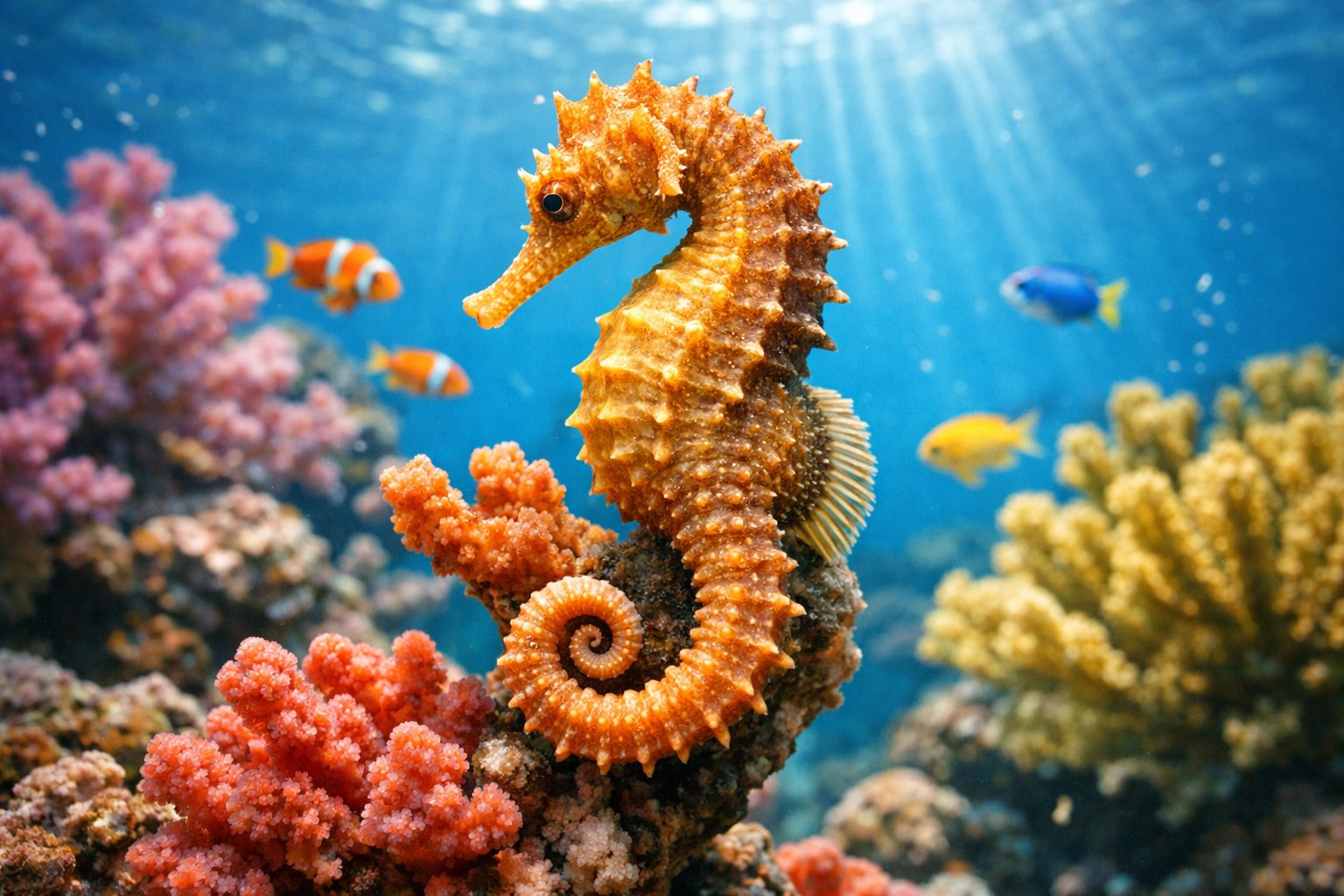
If you stick around, you’ll see how their upright swimming, armor-like plates, and color-changing skin help them blend in and hunt. Curious about why seagrass beds and mangroves matter so much? Or what dangers put these creatures at risk? We’ll get into that, too.
What Makes Seahorses So Unique?

Seahorses show off odd body shapes, quirky behavior, and a rare approach to parenting. Their bones and fins, their color magic and camouflage, even the way males carry and birth young—there’s a lot going on.
Fascinating Physical Features
Seahorses (genus Hippocampus) have rigid bodies built from bony plates, not scales. That gives them an armored, ringed look and keeps them from swimming fast.
You’ll notice a horse-like head, a long snout for sucking up tiny prey, and eyes that swivel around independently—each one watching something different.
Their tails work like little hands. You’ll spot them gripping sea grass or coral, holding on tight in the current.
They swim mostly with a teeny dorsal fin on their back, which beats like crazy. Pectoral fins near their head help them steer.
Sizes vary a lot. Some pygmy seahorses are barely the size of your fingernail, while others stretch over 30 cm. They all belong to the Syngnathidae family, which also includes pipefish and seadragons.
Here’s a quick rundown:
- Bony plates, upright posture
- Prehensile tail for grabbing
- Tubular snout and eyes that move on their own
- Dorsal fin for moving, pectoral fins for steering
Camouflage and Color Changing
Seahorses use color and texture tricks to disappear into their surroundings. Many match seagrass, coral, or sponges so predators can’t spot them—and prey doesn’t see them coming.
Their colors can shift over hours or days, depending on mood, light, or social vibes.
Some species even grow skin filaments and bumps that look just like nearby plants. This combo of physical mimicry and color change makes them nearly invisible.
If you ever care for seahorses, you’ll notice they lose color in poor lighting or when stressed. Giving them the right habitat helps.
Their camouflage fits their sit-and-wait hunting style. They stay still until tiny crustaceans swim close, then snatch them up.
Male Pregnancy and Reproduction
Seahorse dads do the heavy lifting when it comes to babies. During courtship, the female places eggs into the male’s brood pouch at the base of his tail.
He fertilizes and protects the eggs in that pouch until they hatch.
Inside, the male keeps the salt levels right and supplies oxygen and nutrients to the embryos. Gestation lasts anywhere from about 10 days to six weeks, depending on species and temperature.
When the babies are ready, the male contracts and squirts out fully formed juveniles. The young look like miniature adults and get no further help from their parents.
This weird male pregnancy really stands out among animal facts. It probably boosts the survival odds for their offspring, especially in unpredictable coastal environments.
Seahorses in the Wild: Habitats, Diet, and Conservation

Seahorses live in shallow coastal spots. They anchor themselves and search for tiny prey.
They depend on protected habitats and steady water quality to feed, hide, and raise their young.
Diversity of Seahorse Species and Habitats
You’ll find around 50 seahorse species along temperate and tropical coasts. Some, like the pygmy seahorse (Hippocampus denise), hide on corals. Others, like Hippocampus abdominalis (the big-belly seahorse), grow much larger.
Common European species include Hippocampus guttulatus and Hippocampus hippocampus.
Seahorses prefer sheltered places—seagrass beds (like Posidonia oceanica meadows), mangroves, coral reefs, sponges, and estuaries. These areas give them something to hold onto so they don’t get swept away.
Seagrass meadows and mangroves also provide the tiny crustaceans and plankton they love to eat.
Species like the dwarf seahorse and short-snouted seahorse have adapted to specific habitats and even certain types of microalgae or coral.
Feeding Habits and Role in Marine Ecosystems
Seahorses act as ambush predators. They eat almost nonstop because they don’t have a true stomach.
You’ll see them sucking in copepods, amphipods, tiny shrimp, and plankton with their long snouts.
They help control numbers of small crustaceans and plankton in seagrass beds and reefs. This keeps food webs in check and supports marine biodiversity.
Different species go after different prey sizes. Pygmy seahorses snack on smaller plankton near corals, while big-belly seahorses catch larger crustaceans.
Since they aren’t strong swimmers, they rely on structure and camouflage to catch their food.
Threats to Survival and Conservation Efforts
Seahorses face a lot of pressures these days. Overfishing, bycatch, and collection for traditional medicine or the aquarium trade all take a toll. Habitat loss from coastal development doesn’t help either.
Pollution, poor water quality, and warming seas shrink seagrass beds and coral reefs. These changes make it even harder for seahorses to survive.
Conservation groups like Project Seahorse step in to protect habitats and push for fishing rules that actually reduce bycatch. They also promote marine protected areas whenever possible.
Some organizations try captive breeding for certain species. Others focus on promoting ecotourism instead of collecting wild animals, and they work to enforce trade limits.
You can help too. Supporting efforts to protect seagrass meadows and mangroves, backing sustainable fishing, or choosing ecotourism over other options—all of these actions make a difference for seahorses and the marine ecosystems they need.
- Key habitats: seagrass beds, mangroves, coral reefs, estuaries.
- Main diet items: copepods, amphipods, small shrimp, plankton.
- Main threats: overfishing, bycatch, traditional medicine trade, aquarium trade, habitat loss.
If you’re curious, you can learn more about seahorse habitats from Project Seahorse’s work: Habitats – Project Seahorse.


