
Ever wonder who’d win if a coyote and a human squared off? Honestly, the answer’s pretty straightforward. A healthy adult human almost always has the size and strength to fend off a single coyote. Coyotes might be quick and sharp with their teeth and claws, but they’re just not as big or heavy as we are.
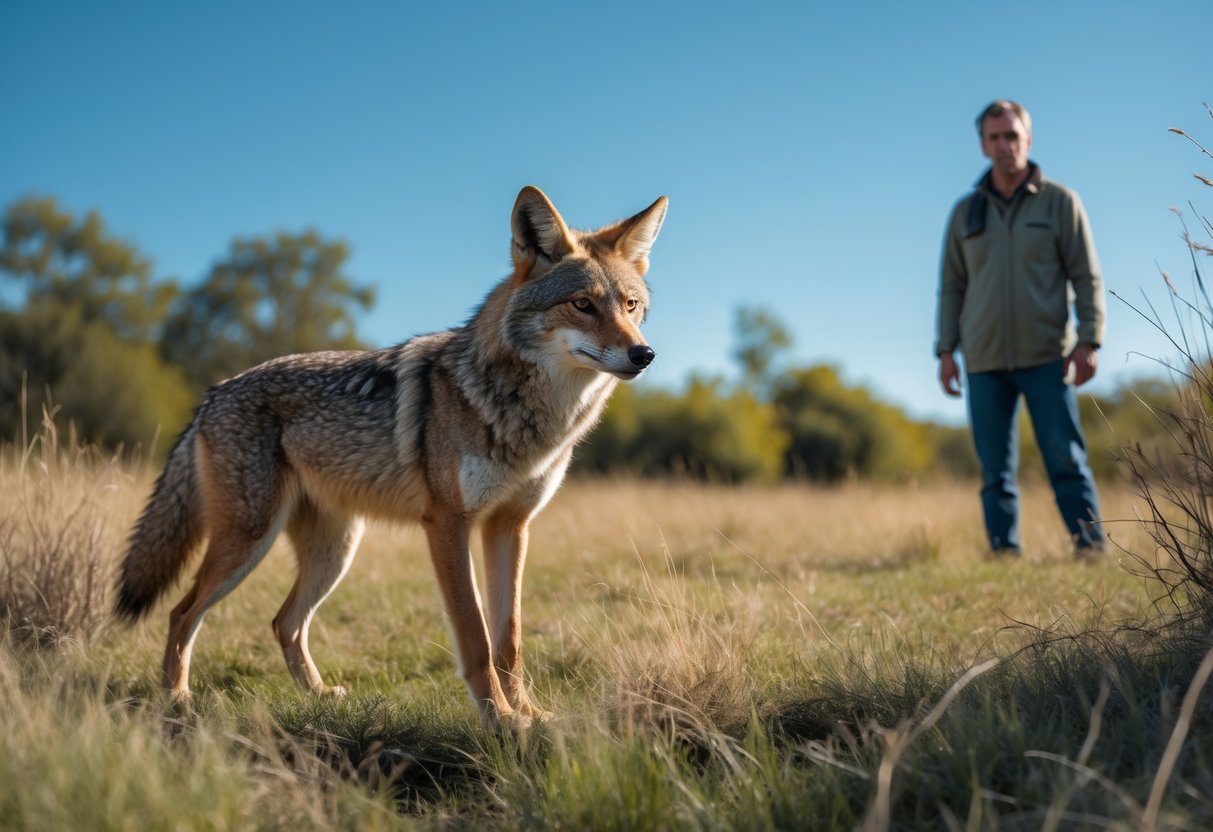
Things can get dicey, though, if you’re dealing with more than one coyote or if you accidentally corner one. Coyotes are clever, fast, and sometimes hunt in groups, which really changes things.
If you know how to stay calm and use whatever’s around you, you’ve got a much better shot at coming out okay.
Let’s dig into what really decides the winner and how you can keep yourself safe if you ever cross paths with one. You might be surprised by what coyotes can do—and how much your own instincts and quick thinking matter.
Direct Comparison: Coyote vs Human

If you compare a coyote and a human, you’ll notice some obvious differences in size, speed, and the way each thinks. Both have their own strengths that could change how a fight plays out.
Size, quickness, and smarts all show up in a head-to-head.
Physical Strength and Size Advantage
Humans just have more size and muscle than coyotes. Most adults weigh around 195 pounds, while coyotes usually top out at 45 pounds or so.
That’s a pretty big gap, and it gives you a real edge in strength.
Coyotes do have sharp teeth and claws, and their bite can break bones if they really clamp down. But your bigger muscles and weight let you hold on or shove the coyote away if you keep your balance.
Wearing pants and shoes gives your legs some extra protection from bites, which is honestly a huge plus.
So, if you use your size and strength, you’re in a much better spot.
Speed, Agility, and Reflexes
Coyotes are built for speed and quick moves. They can hit 40 mph, leap, and turn on a dime. Most people can sprint at maybe 28 mph if they’re really athletic, but let’s be real, most of us are slower.
Coyotes use their speed to catch prey and dodge danger. In close quarters, they can snap or swipe before you even react.
Their quickness is tough to deal with, no question.
But coyotes sometimes rely too much on timing and reading your body language. If you stay calm and keep your eyes on them, their speed isn’t always enough to win.
Intelligence and Strategic Abilities
Humans definitely have the upper hand here. We can plan, use tools, and come up with new ways to solve problems.
Coyotes are smart, too—they learn fast and adapt—but their brains are wired mostly for survival and hunting.
In a fight, your brain is your best weapon. You can yell, wave your arms, throw stuff, or just make yourself look bigger, and most coyotes will back off if they think you’re a threat.
Confidence and a good plan can really tip things in your favor.
That said, coyotes have sharp instincts and react fast to danger. Don’t get cocky, but your ability to think things through gives you a real shot at staying safe.
Want more details? Here’s an in-depth guide comparing humans and coyotes.
Key Factors That Decide the Outcome
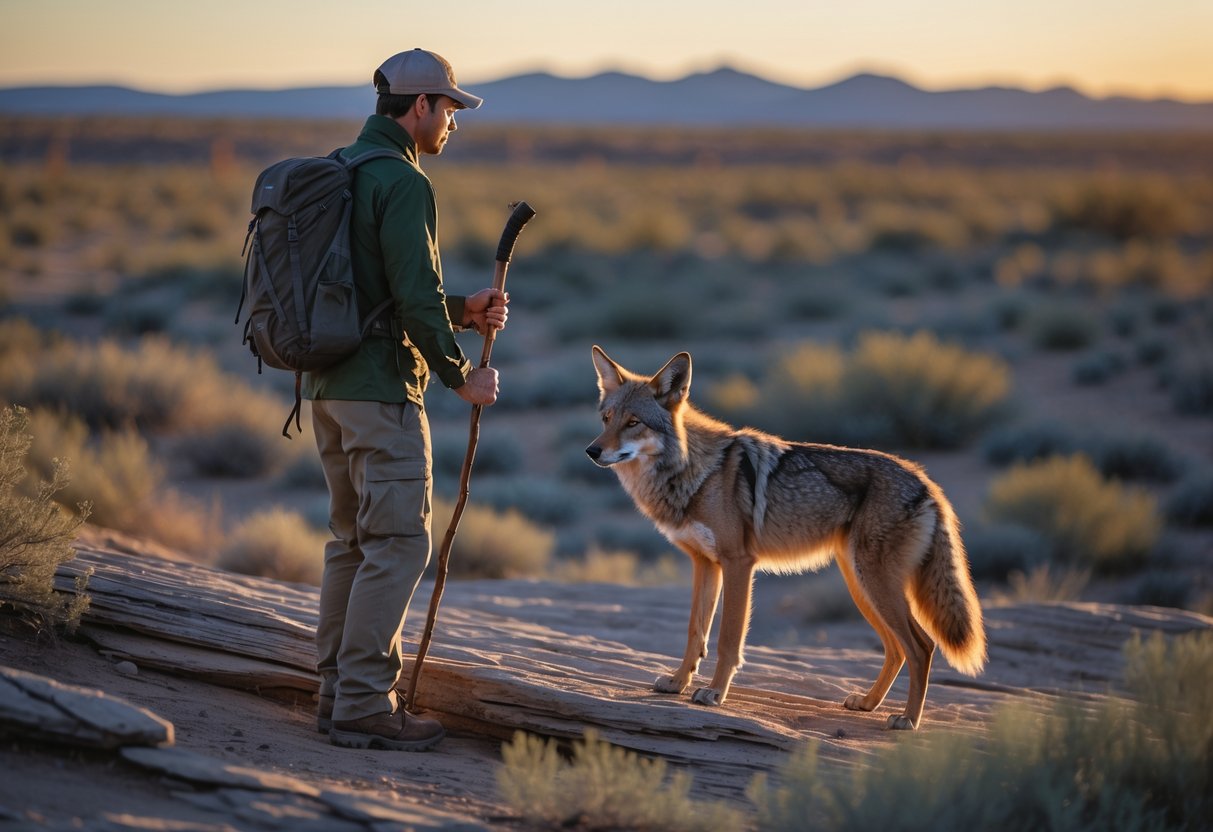
When a coyote and a human cross paths, a few big things matter. Your physical abilities, the coyote’s natural weapons, and how both of you act in the moment all play a role.
Knowing these factors helps you guess what might happen if you ever run into one.
Natural Weapons and Defenses
Coyotes come equipped with sharp teeth and claws made for hunting. Their bite isn’t as strong as a bear’s or a big cat’s, but it’s still enough to do some real damage.
They latch on with quick bites and shake their prey.
Humans don’t have those kinds of built-in weapons, but you’ve got strength, hands, and whatever’s nearby. You can punch, kick, or grab something to swing if you need to.
Your skin isn’t as tough as an animal’s hide, but pants and shoes do help.
Coyotes count on their speed and agility to attack or escape. They can run up to 40 mph, which is wild.
You might not outrun one, but you can use your head to find a way out or put something between you and the animal.
Typical Human and Coyote Behavior in Encounters
Most coyotes would rather avoid people. They might watch from a distance, but attacks are rare unless they feel trapped or are protecting their pups.
If you spot a coyote, try to stay calm and make yourself look bigger. Shout and wave your arms—show you’re not easy prey.
Running away can trigger their chase instinct, so it’s usually not the best idea.
Coyotes sometimes act differently if they’re sick or if people have fed them before. In those cases, they might come closer and act more aggressive.
Knowing how coyotes behave helps you react the right way if you ever meet one in the wild.
Risk Factors and Real-World Scenarios
A coyote attacking a healthy adult? It’s rare, but it can happen if you stumble across one near its den or while it’s hunting.
If you’ve got small children, pets, or someone injured around, they’re at higher risk. Coyotes tend to go after easier targets than healthy grown-ups.
The best thing you can do is keep food indoors and watch your pets when they’re outside. If a coyote does get too close, making loud noise, waving sticks, or using sprays usually scares it off.
If you know what puts you at risk, you can actually do a lot to avoid running into trouble with coyotes. Want to dig deeper? There’s more on coyote encounters and defenses if you’re curious.


