
When you picture the first bird, maybe you imagine a feathered dinosaur, something tiny and kind of odd-looking. Archaeopteryx stands out as the most famous early bird—this creature lived about 150 million years ago and mixed features from both birds and dinosaurs. But honestly, it’s more complicated than that. Scientists keep finding even older feathered animals that make the line between bird and dinosaur pretty fuzzy.
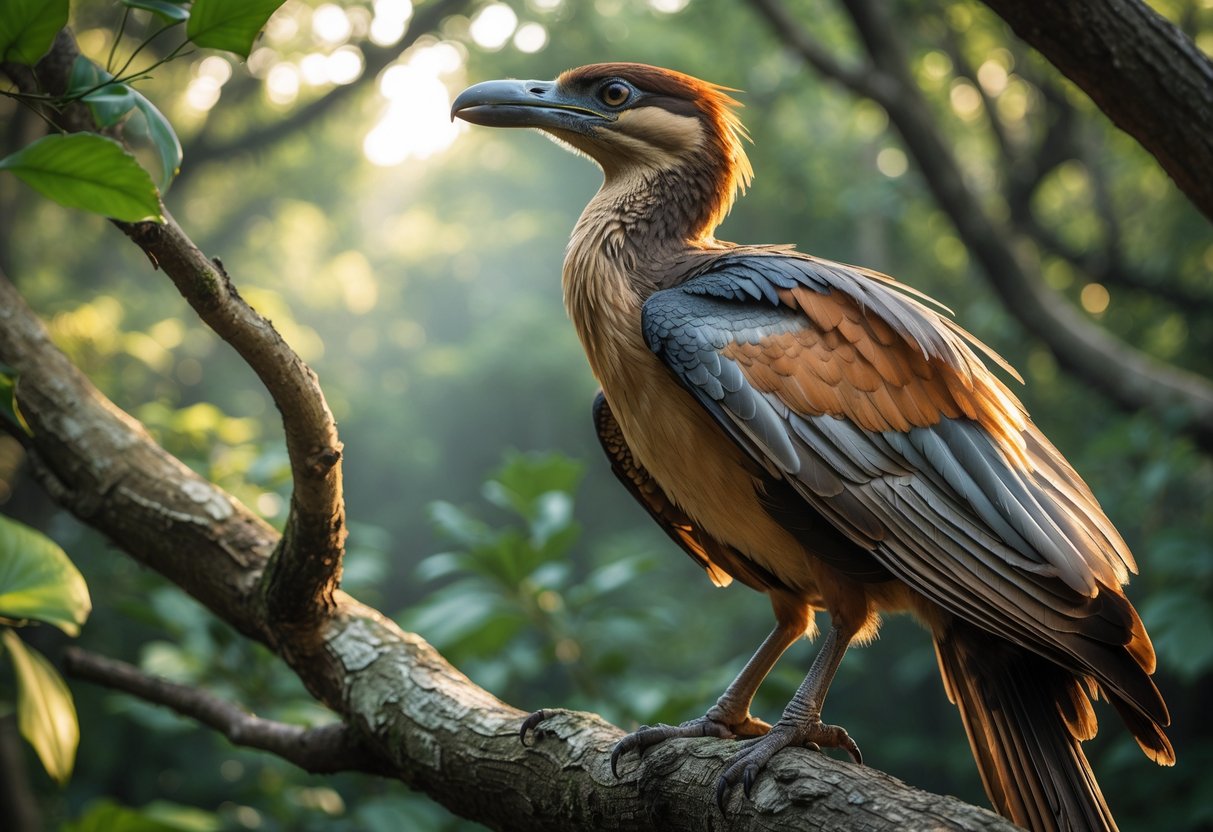
Birds didn’t just pop into existence one day. Instead, they slowly evolved from small, feathered dinosaurs over millions of years.
Some ancient animals, like Aurornis, might even deserve the title of “first bird.” The debate goes on, honestly. Figuring out who the first bird was helps you understand how flight and bird-like traits came about, step by step.
As you read, you’ll see how feathers, wings, and flight slowly developed. The story isn’t just about one weird animal, but a whole group of fascinating creatures. It might just change how you look at birds altogether. If you’re curious, you can dive deeper into the early bird-dinosaur world here.
Identifying the First Bird: Archaeopteryx and Its Rivals

At first, naming the “first bird” might sound like an easy job. But it’s really not—there are several fossils in the running, and they all blur the boundaries between dinosaur and bird.
Each fossil shares some traits with both groups, so it’s tough to pick a clear winner.
The Discovery of Archaeopteryx
Scientists discovered Archaeopteryx in Germany’s Solnhofen limestone during the 1800s. This fossil is about 150 million years old, from the Late Jurassic.
It shocked researchers because it mixed bird and dinosaur features in one animal.
Archaeopteryx had feathers, wings, and a wishbone, just like modern birds. But it also had teeth, clawed fingers, and a long, bony tail—definitely dinosaur stuff.
This fossil became a key piece in figuring out how dinosaurs turned into birds.
The first find was just a single feather, but later they found full skeletons. These showed that Archaeopteryx could probably glide, or maybe even make short flights.
Today, it’s still one of the oldest and most famous fossils tied to the origins of flight.
Key Fossil Contenders: Xiaotingia, Microraptor, and Others
Other fossils challenge Archaeopteryx for the title of first bird. Xiaotingia, for example, turned up in China not too long ago.
It shares a lot of traits with both birds and small feathered dinosaurs. Some scientists even argue Xiaotingia might be closer to the real “first bird.”
Microraptor is another interesting one. It had feathers on all four limbs, kind of like a small gliding dinosaur.
Microraptor lived around the same time as Archaeopteryx. Its body shows that flight might have evolved in a few different ways among feathered dinosaurs.
Fossils like these, especially those coming out of China, keep adding new twists to the story. They show that the evolution of flight was messy, involving lots of different species.
Defining Features of Early Birds
Scientists look for certain traits when they try to decide if a fossil counts as an early bird. The big ones are feathers, wings shaped like those of modern birds, and a wishbone (furcula) for flight muscle attachment.
Early birds often kept some dinosaur features too, like teeth or clawed fingers. Archaeopteryx, for instance, had a long, bony tail, while today’s birds have short tails with just feathers at the end.
Flight is another big clue. Some fossils show strong wing feathers and lightweight bones—these are needed for flight or at least gliding. But proving full-on flight isn’t always easy.
When you compare these traits, you can see why Archaeopteryx gets called the first bird. But fossils like Xiaotingia and Microraptor really make you wonder about that title.
Honestly, it all depends on how you define “bird” in the fossil record. If you want more details about Archaeopteryx and its role in bird evolution, check out the University of California Museum of Paleontology.
From Dinosaurs to Modern Birds: The Evolutionary Path

So how do dinosaurs connect to the birds you see flitting around today? It all began with small, meat-eating dinosaurs and a few crucial changes—feathers, a wishbone, and eventually, the ability to fly.
These changes didn’t happen overnight. It took millions of years for birds to show up.
Theropod Dinosaurs and the Origin of Birds
Birds evolved from a type of dinosaur called theropods. These dinosaurs were mostly small, walked on two legs, and ate meat.
They lived during the Jurassic Period, about 150 million years ago.
Theropods already had a bunch of bird-like features. For example, they had hollow bones, and some even sported feathers.
These traits helped make them lighter and quicker.
Archaeopteryx is a famous example from this group. It lived in the Late Jurassic and mixed dinosaur and bird traits.
This gradual change from theropods to birds is pretty clear if you look at the fossils.
Evolution of Feathers and Wishbone
Feathers didn’t start out for flying. At first, they probably kept these animals warm or helped them attract mates.
Over time, feathers got tougher and more complex. Eventually, they became useful for gliding and then for real flight.
The wishbone, or furcula, is another key feature. Think of it as a spring that helps birds flap their wings.
Theropods had an early version of this bone, and it got more specialized in early birds. Without a wishbone, flapping wings with power would be pretty tough.
Together, feathers and the wishbone let these animals start experimenting with flight.
Development of Powered Flight
At the start, early birds probably just glided from trees or cliffs. Gliding let them move through the air without much effort.
Being light made this easier.
Over millions of years, their wing muscles grew stronger, and their feathers improved. Eventually, they started flapping their wings for real powered flight.
This didn’t just require wings, though. Their bodies changed on the inside too.
Early birds became warm-blooded, which let them keep a steady body temperature. That’s a big deal because flying uses a ton of energy.
As their flying skills got better, they could catch prey or escape danger much more easily.
The Rise of Modern Birds
Modern birds actually trace their roots back to a group called Ornithuromorpha. This group popped up during the Late Jurassic and Early Cretaceous periods.
These early birds had shorter tails. Their bones worked better for flight, too.
You can spot many familiar traits in them, like hard-shelled eggs and surprisingly lightweight skeletons. Over the years, they spread into all sorts of habitats and slowly turned into the thousands of bird species around today.
Fossils like Baminornis—a tiny bird from about 150 million years ago—reveal that modern bird features showed up way earlier than researchers once guessed. The journey from dinosaurs to birds? It was anything but simple, full of unexpected turns and new adaptations.


