
When you think of a lioness choosing a mate, you might imagine her picking just one partner. But honestly, her choices mostly revolve around survival and the pride’s rules.
Female lions usually mate with the dominant males in their pride. Sometimes, they’ll also mate with other males to confuse paternity and help protect their cubs. This sheds light on who fathers the cubs and how lion groups manage to stay stable.

Let’s look into how pride dynamics, male takeovers, and the lioness’s reproductive cycle all shape her mating partners.
You’ll find some real examples of mating behavior, timing, and why having multiple partners can matter so much for cub survival.
Who Female Lions Mate With in the Wild
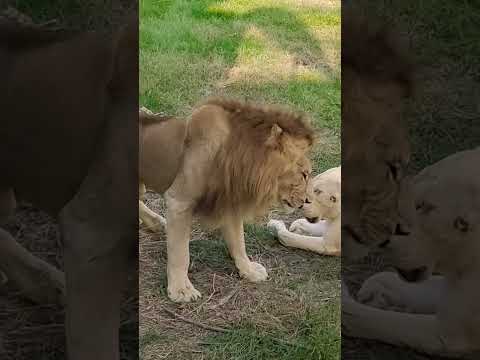
Female lions pick the males that control access to their pride.
These males might be the pride’s dominant leaders, new guys after a takeover, or even several males during one estrus to keep paternity a little mysterious.
Their choices affect cub survival, pride stability, and keep the gene pool from getting too narrow.
Role of Dominant Males in Lion Prides
Dominant males claim mating rights by guarding females and defending territory.
You’ll notice them sticking close to a lioness in heat, chasing off rivals, and mating again and again for days while she’s receptive.
By staying so close, they keep other males away and boost their chances of fathering the next generation.
Dominant males also patrol the pride’s boundaries and mark their turf with scent.
If you watch a pride for a while, you’ll see dominant males mate more often than the younger or less important ones, simply because they have the muscle and the status.
Their success ties directly to the pride’s stability and shapes the genes of cubs born during their reign.
Coalitions and Pride Takeovers
Male coalitions—basically two or more males teaming up—shift the whole scene when it comes to mating with a lioness.
Coalitions show up all the time with African lions, and sometimes with Asiatic lions too.
When a coalition takes over, you might see them kill the existing cubs. It’s brutal, but it happens a lot.
This pushes females back into estrus, so the new males can father their own cubs.
During takeovers, females might resist at first, but eventually, they mate with the new males.
Coalition members share mating, which helps keep their alliance strong.
You’ll probably notice these new males fiercely defending the pride and territory as they settle in.
Multiple Mating and Paternity Confusion
Female lions often mate with several males during a single estrus.
You’ll see them mate every 20–30 minutes, and this can go on for days.
By mating with multiple males, a lioness ups her chances of getting pregnant and makes it tough for any male to know which cubs are his.
This confusion actually keeps cubs safer, since males hesitate to kill cubs that might be their own.
Sometimes, females even mate with males outside their pride, especially in small or fragmented populations.
That helps keep genes flowing between groups, which matters for long-term survival.
Inbreeding and Its Impact on Lion Populations
In small or isolated populations, females sometimes end up mating with close relatives.
Inbreeding can cause health issues, lower cub survival, and shrink genetic variety.
You’ll want to pay special attention to African or Asiatic lion groups that don’t have many males coming or going.
Conservation managers keep an eye on these situations and might move lions around to avoid inbreeding.
Understanding who females mate with shows why it’s so important to keep habitats connected and allow males to roam.
Lioness Mating Behavior and Reproductive Cycle

A lioness lets everyone know when she’s ready to mate.
She attracts males and follows a pretty set timeline from mating to birth.
Let’s see how she courts males, how often she mates, and what happens during pregnancy and raising cubs.
Mating Rituals and Courtship Displays
A lioness uses scent, body language, and her voice to show she’s in the mood.
She’ll rub and roll to spread scent from her glands, and she marks her territory with urine to signal estrus.
She stays close to the males and gets more relaxed about their company.
Males respond by following her, nuzzling, and sometimes scuffling with each other to get access.
Dominant males do their best to guard her.
You’ll see mounting attempts that last just a few seconds but happen over and over.
These quick, repeated matings raise the odds of fertilization.
If new males take over, they’ll mate quickly with any receptive females to make sure their genes get passed on.
During these periods, the savannah can get pretty noisy and busy for a few days.
Estrus Cycles and Mating Frequency
A lioness goes into heat for a few days up to a week when she’s ovulating.
If she doesn’t get pregnant, estrus comes back every two or three weeks.
When she’s in heat, mating happens a lot—sometimes several times an hour, for days.
This high frequency really helps with conception.
A dominant male tries to keep rivals away and holds onto his mating rights.
If she mates with more than one male, paternity gets mixed up, which can help protect cubs from infanticide.
You’ll spot changes in her behavior: she gets restless, scent-marks more, and pairs off with males for long stretches.
These signs are usually a good clue that she’s fertile.
Gestation, Litter Size, and Cub Survival
Lions carry their young for about 110 days. Usually, a lioness gives birth to one to four cubs, though three seems pretty common.
Lion cubs arrive completely blind and helpless. Their mother keeps them hidden for several weeks, nursing them quietly away from the rest of the pride.
Cub survival really comes down to a few things: enough food, a stable pride, and keeping new males at bay. When a pride gets new males, those newcomers often kill cubs so the females cycle back into estrus faster.
Related lionesses often step in to help. They’ll nurse each other’s cubs and work together to defend the little ones from threats on the savannah.
Keep an eye on weight gain and growth in the early months. Cubs start trying meat after a few months and join group hunts a bit later. If the pride stays stable and food keeps coming, their odds of making it to adulthood go way up.


