
You might think this question has a straightforward answer, but honestly, myths and scriptures tell it in a bunch of different ways. In Greek myth, Heracles (or Hercules, if you prefer the Roman name) famously took down the Nemean Lion. The Bible, though, describes a lion killing a prophet as a sign of divine judgment, not a god battling a beast.

Let’s look at both kinds of stories. There’s the heroic hunt, where a godlike figure faces off against a monster, and then there’s the biblical tale, where a lion acts out God’s will as punishment.
It’s honestly fascinating to see how lion-slaying pops up in different cultures to talk about power, fate, or what’s right and wrong.
So, let’s dig in and see how this one question leads to such wildly different ideas about gods, judgment, and what it means to be a hero.
The Lion and the Man of God: The Story in 1 Kings 13

This story really shows a dramatic clash between God’s command and human words. It ends with a wild scene—a lion, a donkey, and a prophet’s grave.
Context of King Jeroboam and the Altar at Bethel
Jeroboam ruled Israel’s northern kingdom after it split from Judah. He put up two golden calves so people wouldn’t go to Jerusalem.
One of those calves stood on an altar at Bethel, where priests offered sacrifices at the high places. That altar basically turned into a center for official idolatry, and God’s prophet came to announce judgment on it.
The prophecy even named a future king from David’s line—Josiah—who’d destroy these altars someday.
Jeroboam’s actions affected the whole nation. That’s why a man of God from Judah came to confront both the altar and the king.
The Man of God’s Mission and Prophecy
A man of God traveled from Judah to Bethel, following God’s word. He stood in front of King Jeroboam and loudly announced God’s judgment on the altar.
He predicted that Josiah, a descendant of David, would eventually tear the altar down and burn human bones on it.
To prove his message, the man of God gave a sign: the altar would split apart and its ashes would spill out.
That sign was supposed to show that this message really came from God. His target was the idolatry at the altar and the priests serving there.
Disobedience, Deception, and Divine Judgment
God told the man of God not to eat, drink, or return home the same way he came. But on his way back, an old prophet in Bethel lied to him, saying an angel told him to bring the man of God home for a meal.
The man of God believed the lie and broke God’s command.
After he ate, a lion met him on the road and killed him. The lion and the donkey just stood there by the body.
When the old prophet heard what happened, he said the man of God died because he disobeyed, and that this fulfilled God’s word. The story even notes the man’s body wouldn’t be buried in his family’s tomb.
Significance of the Lion, Donkey, and the Miraculous Sign
The lion acts as a direct tool of God’s judgment in this story. It kills the man of God right after his disobedience, making it clear that God’s command isn’t to be ignored.
The donkey stands next to the body, making the whole thing even stranger and more public.
Earlier, the altar split and its ashes poured out—pointing ahead to Josiah, who would fulfill the prophecy. The detail about the man’s bones not returning to his family tomb, but later being buried beside the man of God’s bones, adds another layer about legacy and the truth of prophecy.
All these details really stress how important it is to obey God’s word, and how risky it is to trust people over God’s direct command.
Divine and Mythological Lion Slayers Beyond the Bible
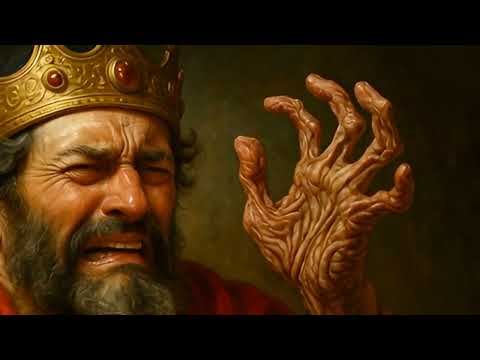
Let’s jump to some famous lion-slayers from other myths. It’s kind of wild how these stories show up in so many cultures.
You’ll get the basics—who fought the lions, how they did it, and what the stories meant to people back then.
Heracles and the Nemean Lion in Greek Mythology
Heracles starts his Twelve Labors by facing the Nemean Lion. The beast’s hide couldn’t be pierced by any weapon.
So, Heracles strangles the lion with his bare hands. Then he uses the lion’s own claws to skin it.
That hide becomes Heracles’ signature cloak—a symbol of his strength and toughness. The Nemean Lion trial really shows his cleverness, not just brute force. When weapons didn’t work, he figured out another way.
This first labor sets the stage for all the other stories where Heracles proves himself again and again.
If you’re curious about the original myth, you can always look up the classic Greek tales and the full list of his Twelve Labors.
Other Deities and Figures Associated with Killing Lions
You’ll spot lion-slayers in plenty of other traditions too. In Mesopotamia, the goddess Inanna (or Ishtar) stands on or overpowers lions, and it’s a striking image—she’s showing off royal power and a sense of protection.
Her image really ties divine rule to the idea of controlling wild danger. It’s not subtle, but it works.
In Indian mythology, Vishnu’s avatar Narasimha—half-man, half-lion—rips the demon Hiranyakashipu apart. That act feels brutal, but it’s all about restoring cosmic order.
Some heroes and gods run into lions elsewhere as well. Sekhmet in Egypt sometimes appears as a lioness, connected to war and protection.
Greek poets toss in lion-fighting feats for later heroes, not just Heracles. Every one of these stories hands the figure a sense of authority, bravery, or maybe even a divine mandate—defeat the lion, prove your worth.
- Some key motifs you’ll notice: the impossible hide or wild strength, beating the beast in hand-to-hand combat, and the lion as a symbol of chaos or a royal challenge.
- These ideas help explain why killing a lion became a classic test for heroes and gods.


