
As winter approaches in the UK, you might wonder where squirrels go to escape the cold. Squirrels seek shelter in tree cavities, nests, and sometimes even in attics or sheds to stay warm during harsh weather conditions. These clever creatures don’t hibernate like some other animals; instead, they rely on a mix of nesting and storing food to survive the winter months.
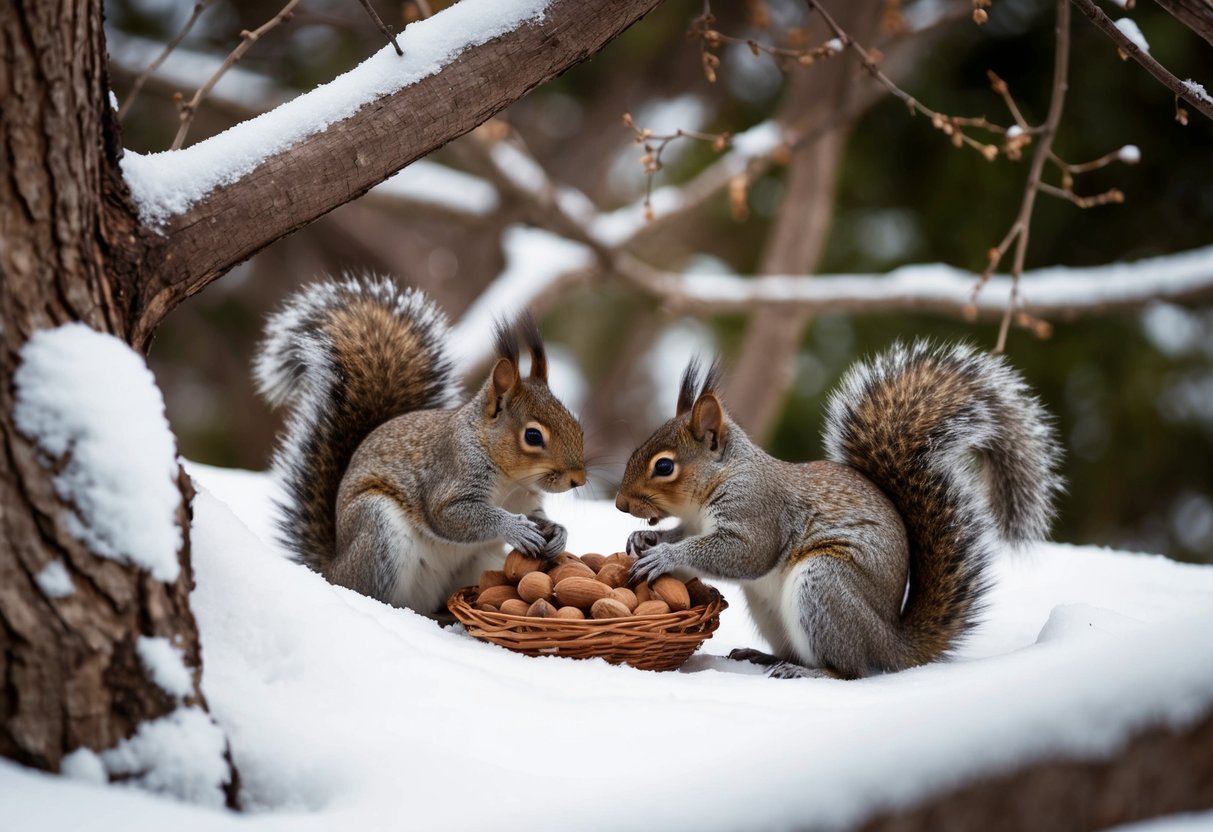
During this chilly time, squirrels use their memories to find the food they’ve hidden, such as nuts and seeds. They are active and may venture out on milder days, searching for food and ensuring they have enough energy to last until spring. Understanding their winter behavior can help you appreciate the resourcefulness of these small animals and how they adapt to their environment.
By learning about where squirrels go in the winter, you can gain insights into their survival strategies, making your observations of these fascinating creatures even more enjoyable. As you read on, you’ll discover more about their habits and habitats during the colder months.
Hibernation Habits and Winter Adaptations

In winter, squirrels adapt in several ways to survive cold weather. Understanding their hibernation practices, physical changes, and nesting habits can help you appreciate these creatures more.
Understanding Hibernation and Torpor
Many people think squirrels hibernate. In reality, most species, like grey squirrels, do not. Instead, they enter a state called torpor. This means they reduce their activity and metabolism.
During torpor, they may sleep deeply for hours but will wake up to eat from their fat reserves or stored food. This energy-saving method helps them cope with freezing temperatures. Ground squirrels, however, do hibernate more deeply. They significantly lower their body temperature and can become inactive for weeks.
Physical and Behavioral Adaptations
Squirrels prepare for cold weather with several physical changes. For one, they grow a winter coat that’s thicker and offers better insulation. This coat helps retain body heat, crucial for survival in chilly months.
Their diets also change during winter. They rely on stored nuts and seeds, which provide essential energy. You might notice them foraging more actively on mild winter days to maintain their body weight. Their bodies instinctively know to slow down and conserve energy, which is especially important when food is scarce.
Nesting and Sheltering
Squirrels use nests, called dreys, and tree cavities to stay warm during winter. A drey is typically made of leaves, twigs, and fur, creating a cozy environment. In tree cavities, squirrels find additional protection from harsh winds and cold.
When the temperature drops significantly, you may see them sharing nest spaces to stay warm together. This huddling behavior helps maintain body heat. Some species also benefit from melanistic traits; darker coats provide better insulation against cold temperatures. By creating safe, insulated nests, squirrels are well-equipped to face winter challenges.
Strategies for Food Storage and Foraging
Squirrels have unique methods for storing food to survive the cold winter months. Understanding these strategies will give you insight into their foraging behavior and food preferences.
Food Caching and Scatter Hoarding
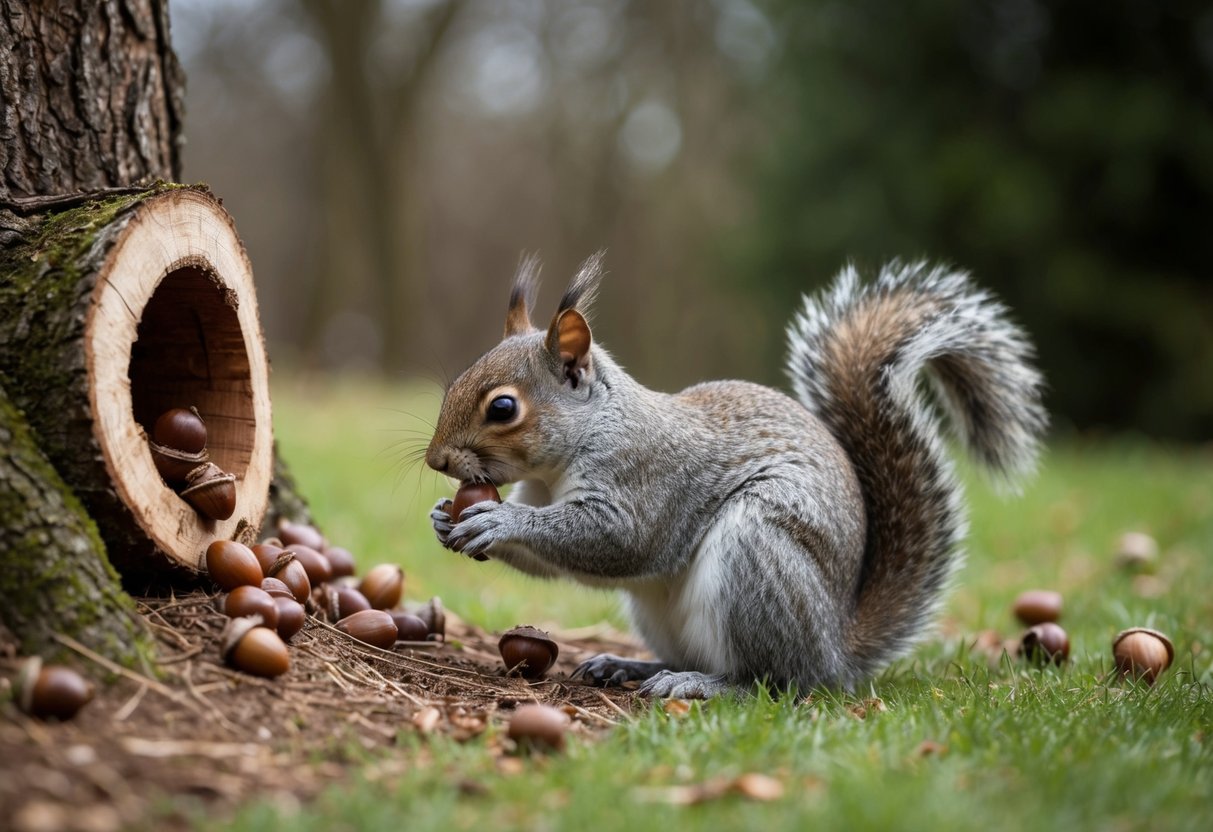
Squirrels use a technique called food caching to prepare for winter. They gather and hide food in various locations. This practice is known as scatter hoarding. By burying nuts and seeds in multiple spots, they reduce the risk of losing all their food to predators or bad weather.
Each squirrel has a strong sense of smell to help them find these hidden caches later. For example, grey squirrels often cache acorns and nuts in tree roots or burrows. This strategy ensures they have enough food throughout winter when fresh supplies are scarce.
Types of Foods and Foraging Techniques
Squirrels are not picky eaters. They enjoy a wide variety of foods. Their diet includes nuts, berries, and even tree bark. During the autumn months, they focus on gathering mast, which refers to the seeds and nuts produced by trees.
When foraging, squirrels use their sharp eyesight and agility to locate food quickly. They climb trees, search under leaves, and dig in the ground to uncover buried treasures. This adaptability helps them find food even in urban areas where natural resources may be limited.
Squirrel Species and Food Preferences
Different squirrel species have their own food preferences. For example, the eastern gray squirrel (sciurus carolinensis) mostly eats nuts, such as acorns and walnuts. They excel in urban settings, often raiding bird feeders.
On the other hand, red squirrels prefer conifer seeds and are more likely to be found in wooded areas. Fox squirrels also enjoy a diet heavy in nuts but are adaptable in their food choices. Understanding these differences can help you identify which species visit your garden or local park.


