
During the day, rats usually hide out in quiet, dark spots inside your home where they feel safe from people and predators.
You’ll often find them tucked away inside walls, attics, basements, or behind heavy furniture as they rest and try not to get noticed. Since rats are mostly active at night, you probably won’t see them out and about when the house is busy.
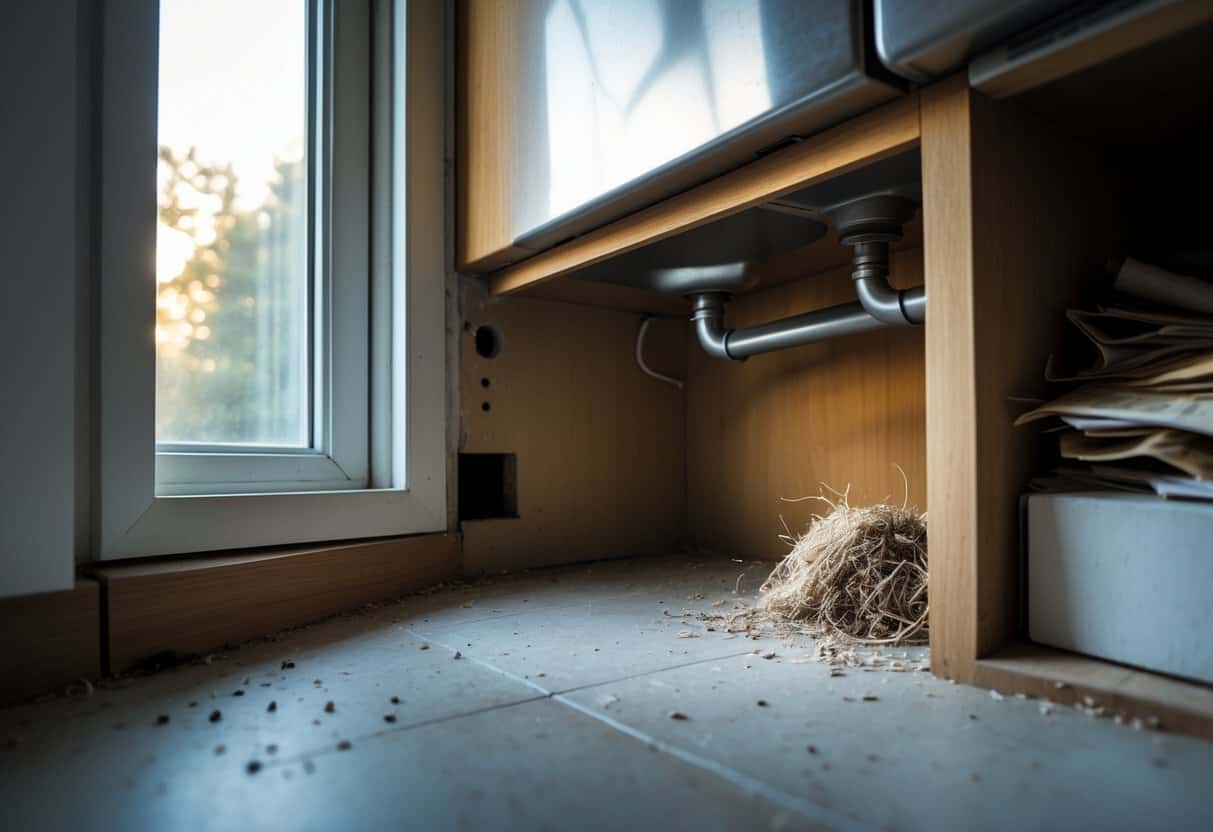
If you look closely, you might spot signs of where they’re hiding—like scratching noises in the walls or little droppings in corners.
Knowing where rats go during the day makes it easier to track down their nests and stop them before they do any real damage or spread germs. Curious about their favorite spots or how to keep them out? Let’s dig in.
Where Do Rats Hide During the Day Indoors?
Rats love dark, quiet places where they can build nests and stay out of sight. They stick to areas that offer shelter, warmth, and easy access to food and water.
If you think rats are inside your home, here are some main places you should check.
Attics and Roof Spaces
Attics attract roof rats, especially since these spots are warm and usually left alone.
You might hear scratching at night or early in the morning, or spot droppings up there.
Check corners or behind boxes for nests made from shredded fabric or paper. Roof rats climb really well, so they slip into attics through gaps near the roof or vents.
If you seal up these entry points, you can make it much harder for them to get in.
Basements and Crawl Spaces
Norway rats love basements and crawl spaces because they’re dark, warm, and sheltered.
You might notice gnawed boxes, droppings, or even that classic musty smell.
Basements with food storage or clutter just invite rats in. Look for holes near pipes or cracks in the foundation where they might sneak through.
If you keep the basement tidy and seal up gaps, you’ll lower your risk of a rat problem.
Behind and Inside Furniture
Rats squeeze into hidden corners behind or inside furniture, especially if nobody moves it much.
Old couches, cabinets, and storage units give them great shelter and nesting material.
You could find bite marks or small holes in furniture where rats slip in and out. Setting traps near these spots can catch them off guard.
Try keeping furniture away from walls and check under cushions now and then for any rat signs.
Inside Walls and Ceilings
Rats often crawl into wall and ceiling spaces to hide from people.
They build nests in insulation or empty spaces between walls. If you hear scratching or squeaks at night, that’s a pretty good clue.
Norway rats especially like burrowing through walls and sometimes chew on electrical wires, which is honestly dangerous.
Look for small holes or gaps and seal them up tight. If you catch a bad smell, it could mean there’s a dead rat in the walls.
Why You Might See Rats During the Daytime
It’s honestly a bit jarring to see rats during the day since they usually stick to the shadows at night.
When you spot a rat in daylight, something’s probably driving it out of its usual hiding place, or maybe it just feels bold enough to wander. Figuring out why can help you tackle the problem before it gets worse.
Signs of a Rat Infestation
If you see rats in the daytime, there’s a good chance you’re dealing with a serious rat infestation.
Rats usually avoid people and only show up when there are too many of them or if nighttime food runs out.
Look for these clues:
- Droppings near food or trash
- Gnaw marks on wires, furniture, or packaging
- Scratching noises in walls or ceilings
- Nests made from shredded stuff in hidden corners
If you spot several of these, it’s probably time to call a pest control company or set up some rat traps.
Rats multiply fast, so waiting just makes things harder to handle.
Food Scarcity and Nest Disturbance
Rats might come out during the day if they can’t find enough food at night.
When their usual sources dry up, they start taking more risks and search during daylight hours.
If pets, cleaning, or other activity disturbs their nests, rats head out in the day to look for new hiding places. That’s when you might catch them moving around.
To cut down on daytime rat activity, keep food sealed up, clean up crumbs, and take out garbage often.
A pest control service can help seal off entry points and keep rats from getting in or reaching food.
Daytime Activity and Species Differences
Not all rats act the same way. You’ll usually come across either the brown rat or the black rat.
Brown rats like to dig burrows near buildings. Sometimes, they’ll wander out during the day if the weather feels right or they sense it’s safe.
Black rats, on the other hand, prefer climbing up to attics or higher places. They act more cautious, but if they feel secure, you might spot them in daylight too.
Rats change their habits depending on what’s around them. If you keep seeing rats during the day, they’ve probably gotten comfortable in your home—definitely a sign that it’s time to step up your rodent control.


