
Rats are a worldwide group of rodents, and their origin starts long before city sewers or ships ever existed. If you have ever wondered where rats first came from, their deepest evolutionary roots lie in ancient rodent lineages in Asia.
Modern rat species later branched out across the world.

Rats first evolved from ancient rodent ancestors in Asia. The rats you know today spread much later through trade, travel, and human settlements.
That history helps explain why some rat species thrive in forests and fields, while others live so closely alongside people.
The Earliest Evolutionary Roots

Rats make up only one branch of a much older rodent family tree. Their history begins with small, adaptable mammals that developed traits for digging, climbing, and surviving in changing environments.
How Rats Fit Within The Rodent Family Tree
Modern rats belong within the broader rodent group. Their closest ancestors formed part of the line that produced the murids.
Rodent evolution stretches back tens of millions of years. Early forms showed the tooth structure and rapid reproduction that still define rodents today.
From Anagalids To The Muridae Family
Scientists often discuss the anagalids, rodent-like mammals that led to true rodents. Over time, the Muridae family emerged as the home of mice, rats, and their close relatives.
Fossil and molecular evidence place this split in deep time, setting up the rise of later murids and other rodent species.
When The Rattus Genus Appeared
The Rattus genus appeared much later, after murid lineages had diversified in Asia. From that branch came the old world rats that became familiar around homes, farms, and ports.
These rats became the ancestors of today’s rat species.
How Black Rats And Brown Rats Began
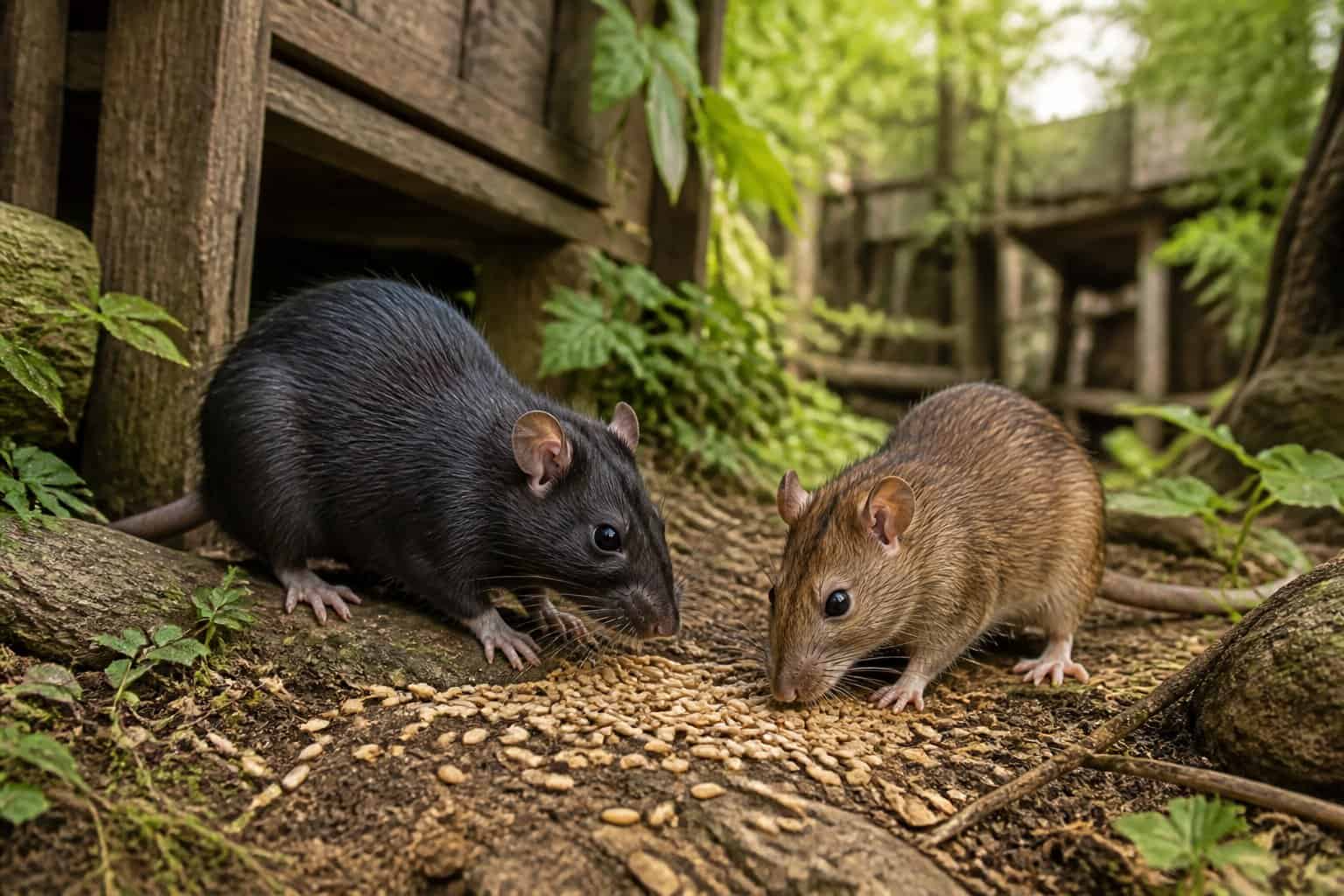
The black rat and brown rat did not arise in the same place or at the same time. Their native ranges are tied to Asia, where different habitats shaped different rat species and behaviors.
Black Rat Origins In South And Southeast Asia
The black rat, also called the roof rat or ship rat, traces its roots to South and Southeast Asia. Its scientific name is Rattus rattus.
Its climbing ability helped it exploit trees, roofs, and stored food in human settlements.
Brown Rat Origins In Northern Asia
The brown rat, or Rattus norvegicus, likely originated in northern Asia before spreading widely. In many places people call it the Norway rat, a name tied to its later European history rather than its true geographic origin.
Its larger body and burrowing habits helped it thrive in dense human environments.
Other Asian Relatives Such As The Polynesian Rat
Other rat species also began in Asia, including the Polynesian rat, Himalayan field rat, and Malayan field rat. These relatives show how varied the Rattus lineage became before humans carried some of them far beyond their native ranges.
How Rats Spread With Humans

Human settlement, food storage, and travel drove the spread of rats. Once rats and humans began sharing grain, ships, and towns, rat populations found easy ways to expand.
Commensalism And Early Settlements
Rats and humans developed a close ecological relationship called commensalism with humans. Rats benefited from human food stores and shelter.
That relationship turned wild rats into city rats and made them expert survivors near farms, villages, and ports.
Trade Routes, Ships, And The Global Spread Of Rats
As trade expanded, rats spread too. Ships carried black rats and brown rats across oceans, while caravans and grain routes moved them across land.
European colonists brought black and brown rats to the Americas on ships, as noted by AAAS. Later, laboratories reused this adaptability, which made laboratory rats important in research, and some people kept pet rats.
Rats, Cities, And Disease
Dense cities gave rats food, cover, and constant movement opportunities. That closeness also made them relevant to diseases such as leptospirosis and historical outbreaks linked with yersinia pestis.
Rats In Australia And The Brisbane Context

Australia has its own native rodents. Introduced rats changed many urban and coastal habitats.
In places like Brisbane, you see both the ecological success of introduced rats and the pressure they place on native species.
How Introduced Rats Reached Australia
Black rats and brown rats arrived in Australia with European settlement, as noted in a recent overview of rats in Australia. Once they established themselves, rats spread through ports, cities, and transport corridors.
Food and shelter were easy to find.
Rats In Brisbane And Other Australian Cities
In Brisbane, rats often live near waterways, backyards, drains, and commercial districts. Brown rats are common in older inner-city areas.
Black rats are also widespread in Australian cities, creating a familiar urban pest mix.
Native Rodents And Pressure From Introduced Predators
Australia’s native rodents include species such as hydromys chrysogaster, the water rat. Another example is pseudomys delicatulus, the delicate mouse.
Introduced predators, especially foxes and feral cats, put many native rodents under pressure. These predators increase the effects of habitat loss and competition from invasive rats.


