
If you’ve ever wondered which ape acts more aggressively—chimps or gorillas—the answer might catch you off guard. Chimpanzees usually act more aggressive than gorillas, especially when fighting for food, mates, or social standing.
They use violence pretty often in their complicated social groups. Gorillas, though, usually try to steer clear of conflict whenever they can.
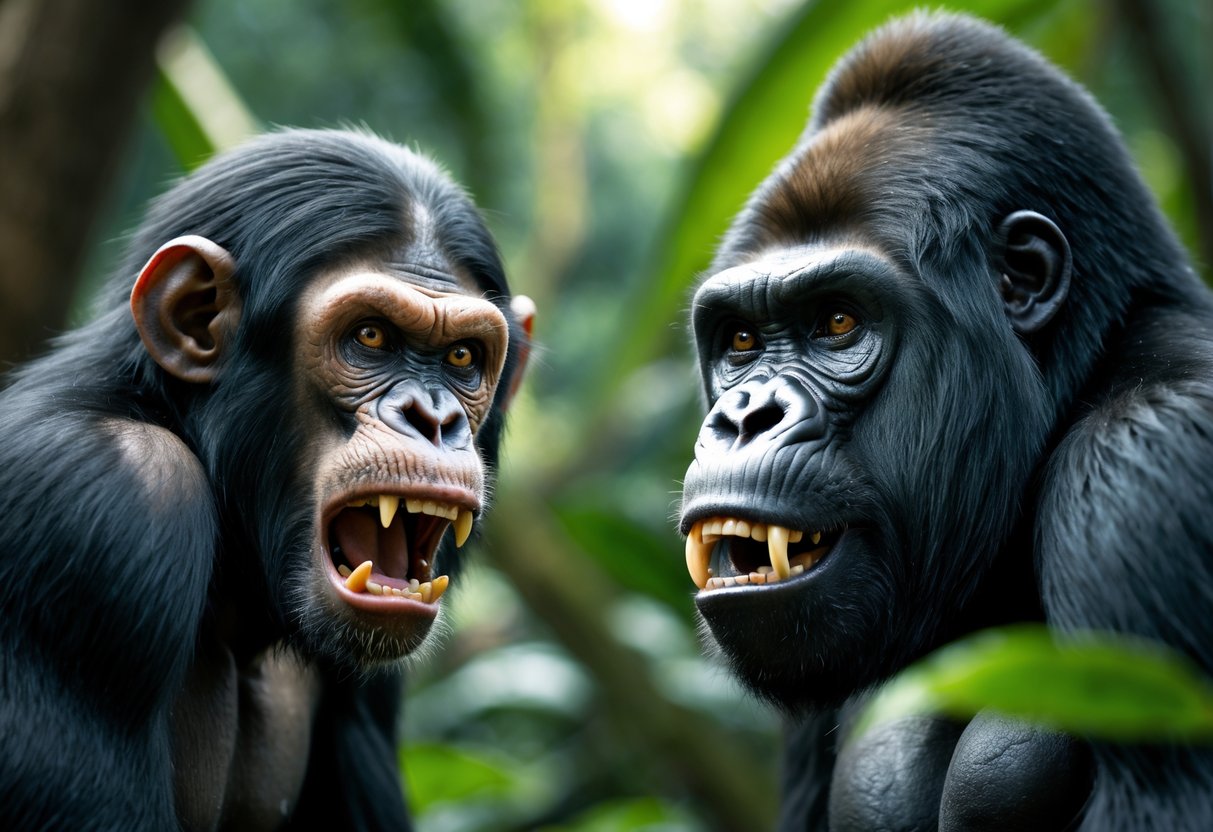
You might think the bigger gorilla would be the more dangerous one, but their strength mostly helps them keep the peace and protect their families. Chimps, though smaller, rely on quick, aggressive moves and sometimes even team up to win fights.
These differences really shape how each species acts, even though they both belong to the great ape family.
Curious about what drives their aggression and how it changes their lives? Let’s dig into the world of these fascinating animals.
Comparing Aggression: Chimpanzees vs Gorillas

Chimpanzees and gorillas show aggression in pretty different ways. You’ll notice their social lives and group structures play a big role in how often and how intensely they act out.
General Aggression Levels
Chimpanzees act more aggressive than gorillas, no doubt about it. They’ll use violence to settle arguments or compete for food and mates.
You might catch them biting, hitting, or even using sticks during a fight. Gorillas, on the other hand, are bigger and stronger but really don’t like to fight.
They mostly warn others by beating their chests or making loud noises. Actual fights are rare and usually only happen if they need to defend their family or territory.
This comes down to how they live. Chimps react fast and often with aggression, while gorillas usually wait until it’s absolutely necessary.
Social Structure and Group Dynamics
Chimpanzee groups are complicated and always changing. You’ll see a lot of rivalries and shifting alliances as chimps fight for higher social rank.
Aggression helps them move up or hang onto resources. Gorilla groups look different.
A silverback leads, and that strong leadership keeps fights to a minimum. If there’s a challenge, the silverback usually scares off rivals without needing to attack.
This steady setup keeps things peaceful. These social differences really explain why chimps use aggression more often, while gorillas stick with strength and calm authority.
Behavior in the Wild
Chimpanzees defend their territory and food quickly. You’ll see them attack in groups, act tough, and then back off if things get too risky.
Since they eat a little bit of everything, there’s more competition for food, which just adds to their aggression.
Gorillas stick to plants and live in close family groups. Their size alone scares away most threats, so they use warning signs and avoid fighting when they can.
When chimps and gorillas cross paths, gorillas rely on their size to keep safe. Even though chimps act more aggressive, gorillas’ strength usually keeps things from getting out of hand.
Want to know more? Check out this page on chimpanzee and gorilla behavior.
Physical Traits and Adaptations

Chimpanzees and gorillas look and act very differently. Their bodies and habits shape how they live, eat, and interact.
These traits help explain why chimps show more aggression, even though gorillas are stronger.
Size and Strength Differences
Gorillas are way bigger and stronger than chimps. A male mountain gorilla, or silverback, can reach up to 450 pounds and stand about 5 feet tall.
Chimps are smaller, usually around 150 pounds and between 3 to 5 feet tall. Gorillas have a heavy, muscular build, while chimps are leaner.
That makes chimps quicker and better at climbing. Sure, gorillas have raw power, but chimps use their speed when there’s trouble or when moving through the trees.
Diet and Feeding Habits
Chimpanzees eat a mix of fruits, leaves, seeds, and sometimes insects or small animals. They often compete for food, which leads to more aggressive behavior.
You might even see them hunting or using sticks to fish out termites. Mountain gorillas mostly eat plants—leaves, stems, and fruit.
Their plant-based diet doesn’t cause as many fights. Gorillas spend a lot of time eating to get enough food, but they usually stay calm while feeding.
Their size lets them move easily through thick forests, and they rarely need to get aggressive about it.
Cognitive Abilities
Both species are smart, sure, but chimpanzees really stand out for their tool use and problem-solving abilities. You can actually see chimps grabbing sticks to fish out termites or smashing nuts open with rocks.
They plan ahead. They adapt to whatever their environment throws at them.
Gorillas, on the other hand, have their own way of communicating—mostly through gestures and sounds within their groups. They don’t use tools as often as chimps do, but they definitely learn from each other.
Gorillas form strong social bonds, which is honestly kind of fascinating. When you look at how chimps sometimes use aggression to keep order in their groups, it makes sense considering how intelligent they are.
If you want to dive deeper into their behavior, here’s a comparison of chimpanzee and gorilla aggression and behavior.


