
Ever noticed a tiny bird with a yellow stripe while wandering around the UK? You’re probably curious about what you saw. Chances are, you spotted a Goldcrest. It’s actually the smallest bird in the UK, and that bold yellow or orange stripe on its head stands out once you know what to look for.
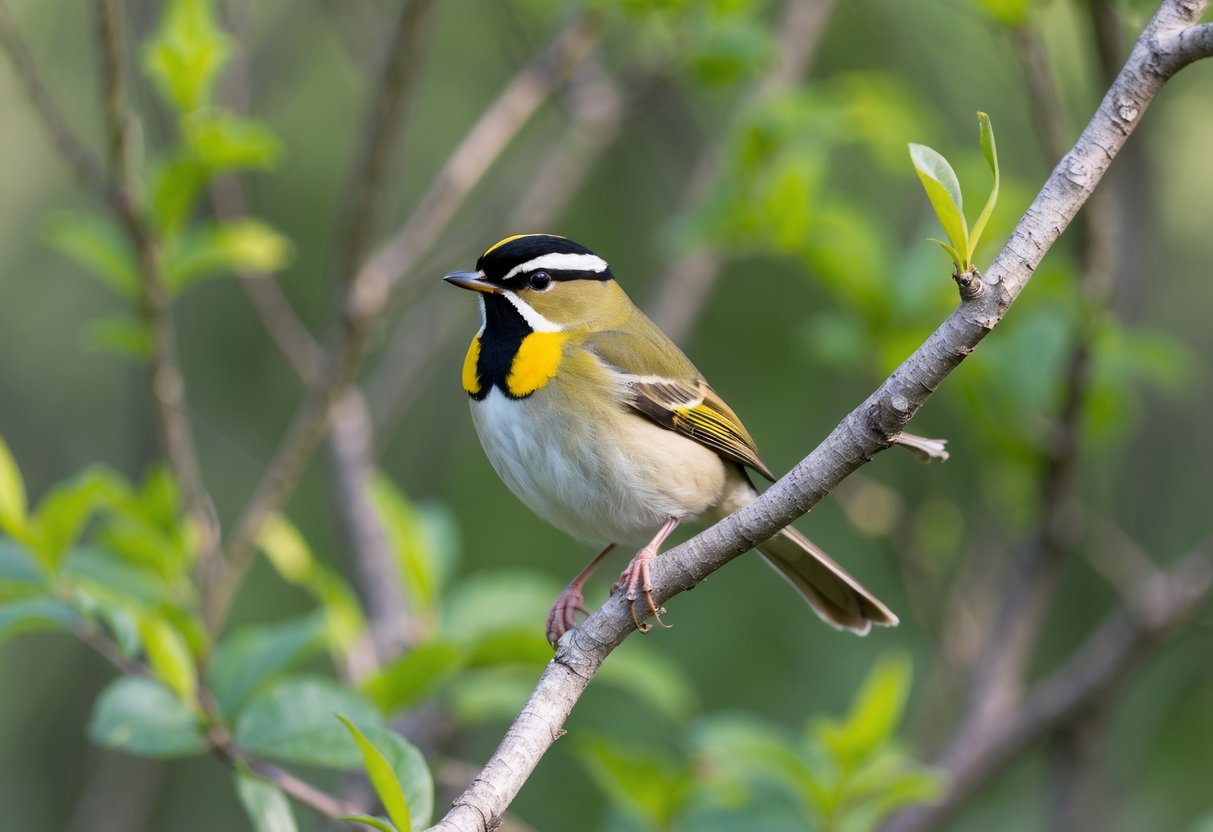
Goldcrests are tiny, mostly greyish-green, with pale bellies and a thin, sharp beak. They use that beak to pick insects right off tree branches. You’ll often catch them darting around in woodlands or gardens, their bright head stripes flashing as they move.
Curious about other birds with yellow stripes? Let’s get into some details.
Identifying Small UK Birds With a Yellow Stripe
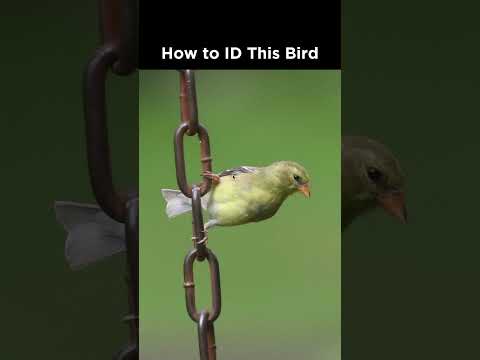
When you spot a tiny bird with a yellow stripe or crest, it helps to know the main features that set these birds apart. Some look really similar, but you can use small details to tell them apart.
Other birds have more subtle yellow markings, so it pays to watch closely.
Goldcrest: The UK’s Smallest Bird With a Yellow Crest
Goldcrests measure just about 9 cm long, making them the UK’s tiniest bird. They show off a bright yellow or golden crest right on top of their heads.
The crest usually stays flat, but if the bird feels excited or alert, it pops up.
They have greenish-grey backs and pale bellies. Their wingspan stretches out to about 14-15 cm.
A thin black stripe runs across the crest, and sometimes you’ll notice a faint greenish-yellow stripe near the eye.
You’ll find Goldcrests in woods, gardens, or even city parks. They mostly eat tiny insects, spiders, and moth eggs.
If insects are hard to find, they might even visit your suet feeder. Despite their size, Goldcrests move quickly and are pretty entertaining to watch.
Firecrest Versus Goldcrest: Key Identification Differences
At first glance, Firecrests look almost like Goldcrests. The main giveaway is the crest: Firecrests have an orange crest with a bold black stripe, while Goldcrests stick with a yellow one.
Another thing to watch for is the black eye stripe. On the Firecrest, it’s thicker and much clearer than on the Goldcrest.
Firecrests tend to look slimmer and less round overall.
You’ll usually find Firecrests in southern England, especially in woodlands with conifer trees. Their diet is much like the Goldcrest’s.
If you spot a bird with an orange and black crest in the south, you’re likely looking at a Firecrest.
Other Small Birds With Yellow Markings: Yellow-Browed Warbler and Wood Warbler
The Yellow-browed Warbler stands out thanks to its bright yellow eyebrow stripe. Its feathers are a mix of brown, grey, and white, which helps it blend in with trees and shrubs.
It’s a bit bigger than a Goldcrest and usually pops up in UK gardens in autumn.
The Wood Warbler has a yellowish-green streak on its head and pale underparts. It’s more olive overall, and you’ll mostly find it in broadleaf forests during spring and summer.
Neither bird has a crest like the Goldcrest or Firecrest. Their yellow stripes make them easier to spot if you know where to look.
If you get the hang of these details, birdwatching becomes a lot more fun. For more info, here’s a handy guide to the smallest birds in the UK.
Similar British Garden Birds and How to Spot Them
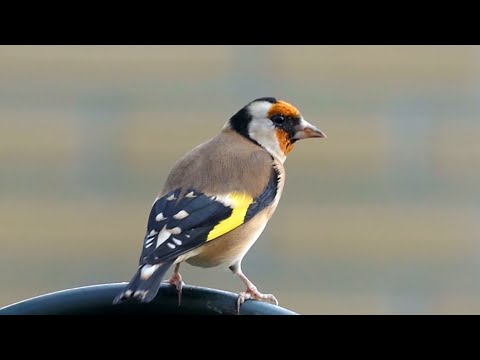
Plenty of small UK birds share similar colors and shapes, which can make spotting that yellow stripe a bit of a challenge. If you know their size, markings, and favorite hangouts, you’ll have an easier time telling them apart.
Watching how they move also gives you good hints.
Common Confusion Species: Wren, Blue Tit, and Coal Tit
The wren is tiny and brown, with a short tail that sticks straight up. It doesn’t have a yellow stripe, but you’ll see it darting through bushes all the time.
The blue tit is bright and cheerful, with a blue cap and wings. It’s got a yellow chest but no yellow stripe on the head.
The coal tit looks a bit more reserved. It has a white spot at the back of its black head and a faint yellowish belly.
The white patch sits on the back of the neck, not as a stripe.
If you catch sight of a small bird with a clear yellow stripe on its head, you’re almost certainly looking at a goldcrest. That stripe—yellow or orange, edged with black—is the big clue. The wren, blue tit, and coal tit just don’t have it.
Habitats and Behaviours of Small Yellow-Striped Birds
Goldcrests and other yellow-striped birds usually stick to conifer woods or gardens with pine trees. You’ll see them hopping quickly along branches or squeezing into tight spaces.
They mostly eat tiny insects, picking them off pine needles with their sharp beaks. This feeding style keeps them close to evergreen trees.
Because they’re so small and move fast, you’ll need to watch carefully to spot them.
Unlike a robin or starling, which prefer open lawns or wide gardens, yellow-striped birds stay hidden in thick leaves. If you pay attention to where you see them and how they act, you’ll get better at guessing which bird you’ve found.
Role of Bird Feeders in Attracting Yellow-Striped Birds
Bird feeders usually bring in a bunch of common garden birds. You’ll probably spot tits, robins, and sparrows pretty often.
But goldcrests and other yellow-striped birds? They don’t show up much at typical feeders because they go for insects instead.
If you want to see these birds, try adding feeders with fat balls or suet. Those tend to draw in insects, which might tempt the yellow-striped birds closer.
Set up your feeders near conifer trees if you can. That little trick seems to help your odds of spotting these more elusive visitors.
Other small birds, like the long-tailed tit or great tit, drop by feeders all the time. Take a moment to watch the crowd—do you see any yellow stripes, or none at all? That can be a fun way to figure out who’s visiting.
So, watch carefully and offer the right food. You might get to enjoy a surprising mix of small birds, some with yellow stripes and some without, right in your own garden.


