
Bed bugs are stubborn, but temperature can give you a real advantage. If you raise a space, item, or sealed treatment area to the right bed bug temperature for long enough, you can kill bed bugs at every life stage, including eggs.
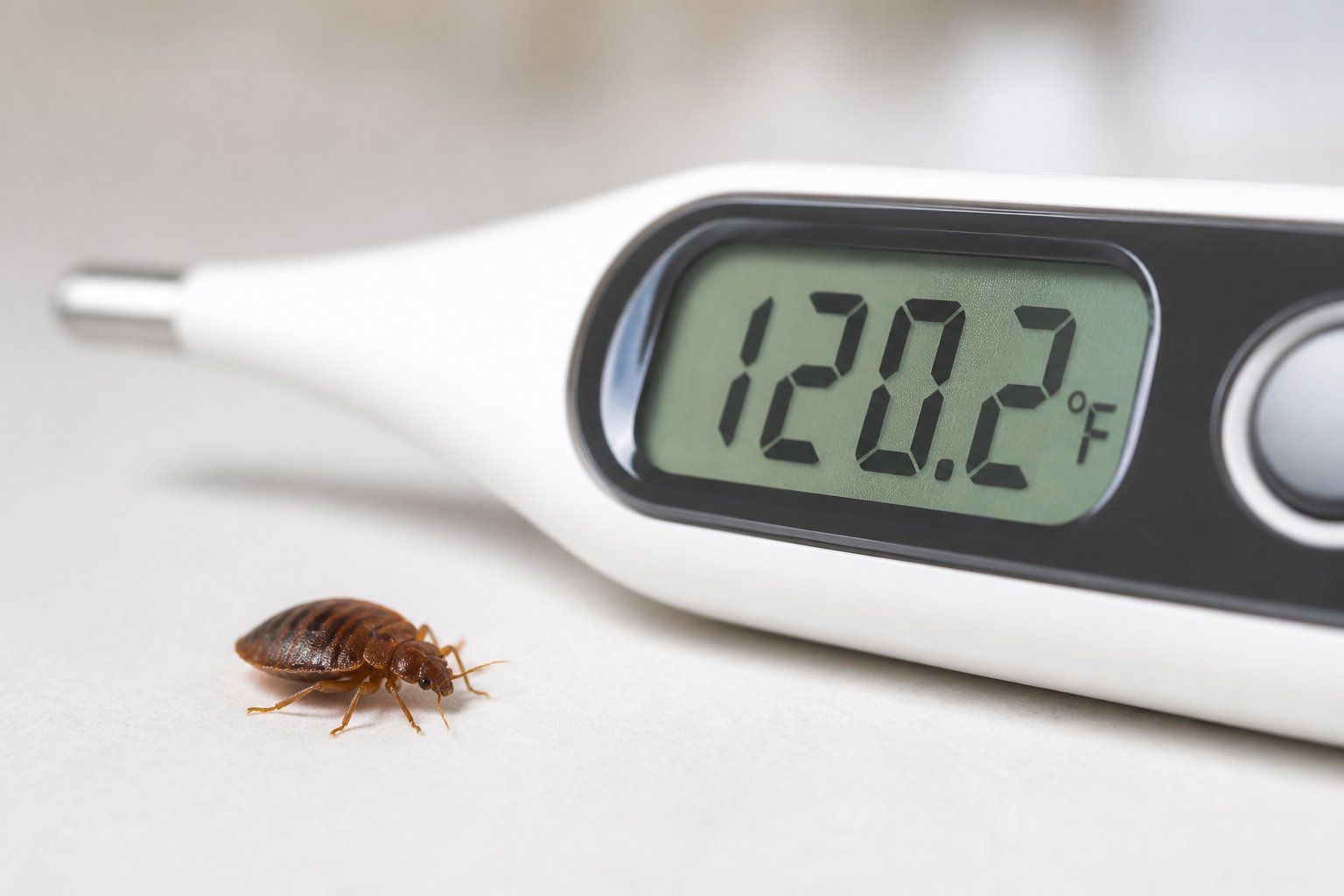
The number on your thermostat is not the same as the temperature inside a mattress seam, box spring, or wall void. That gap allows a bed bug infestation to survive DIY attempts even when the room feels hot or very cold.
Heat treatment is the most reliable temperature treatment for most cases. Cold treatment works only in limited situations.
The lethal temperature range is narrow, and exposure time matters just as much as the number itself.
The Exact Heat And Cold Thresholds

The temperature that kills bed bugs depends on life stage, how fast the temperature rises, and how long the pests stay exposed. Adult bed bugs die sooner than eggs, and both heat and cold treatment need enough time to reach the lethal temperatures.
Heat Levels That Kill Adults And Eggs
Research and pest control practice point to 118°F as a key benchmark for adult bed bugs. Treatment works better as temperatures reach 120°F to 122°F and stay there long enough.
A brief spike is not enough, because thermal death requires sustained exposure. Bed bug eggs are tougher than adults and often need the higher end of the range.
Many professional treatments aim for 122°F or more so the full population reaches the thermal death point, including hidden life stages. For severe infestations, temperatures near 140°F may kill faster, as long as the heat actually reaches the pests.
Cold Levels That Stop An Infestation
Cold treatment can work for smaller items, but it is less forgiving than heat treatment. Freezing temperatures need to stay low long enough to penetrate the item and kill bed bugs all the way through the core.
A common freezer method uses temperatures at or below 0°F for several days, depending on the item size and insulation. Short cold snaps, a frosty garage, or an unverified freezer setting usually do not stop a bed bug infestation.
Why Exposure Time Changes The Outcome
Exposure time is crucial because the temperature inside a mattress, dresser, or wall cavity rises slower than the air around it. A room can look hot or cold on paper while the pests inside never reach the lethal temperatures.
The real target is not just the number, but the combination of heat or cold treatment plus enough time for the hottest or coldest conditions to penetrate every hiding place.
Why Temperature Fails In Real Homes

Your room may reach a target reading, yet bed bugs can survive in hidden places where the core temperature never changes enough. Cold spots, thick furniture, and protected voids prevent heat treatment from working in everyday homes.
Air Temperature Vs. Core Temperature
Your thermometer reads air temperature in the open room. Core temperature is what matters inside a mattress seam, a pile of clothing, or a box spring, and that is the temperature bed bugs actually experience.
A bedroom can feel scorching while the interior of the box spring remains below the temperature needed for control. Treatments may look successful on the surface and still leave live pests behind.
Hidden Harborages And Cold Spots
Bed bugs hide in wall voids, baseboards, furniture joints, and tight folds where air moves slowly. Those hiding spots create cold spots that reduce the effect of heat treatment and let the infestation survive.
Hidden harborages protect eggs better than exposed adults. If hot air does not circulate evenly, the pests in those protected areas may never reach the temperature that kills bed bugs.
Why Eggs Survive More Often Than Adults
Eggs resist stress better than adults, so they are the life stage most likely to survive uneven treatment. Their shell gives extra protection, and a quick heating cycle can eliminate some adults while leaving eggs behind.
Professional bed bug heat treatment focuses on full saturation, not just a fast rise in temperature. The goal is to push lethal conditions into every harboring site long enough for all stages to fail.
Best Ways To Use Temperature Treatment

Temperature works best when you match the method to the item and the severity of the problem. The dryer method, freezer method, and professional heat treatment each have a place, but only one is suited to a whole-home infestation.
When The Dryer Method Works Best
The dryer method is great for clothing, bedding, stuffed toys, and other washable fabrics. High heat from a dryer can kill bed bugs on those items if you run a full hot cycle long enough for the heat to reach the interior.
Use this method for portable items, not furniture or rooms. It is one of the easiest ways to kill bed bugs on fabric without spreading them around the house.
How The Freezer Method Should Be Used
You can kill bed bugs with cold if you freeze small items in a real freezer that holds a steady low temperature. Place the item in a sealed bag, avoid overpacking the freezer, and give it enough time to freeze all the way through.
This method works best for books, shoes, and small personal items. It is not a dependable fix for large furniture or deep infestations.
What To Expect From Professional Heat Treatment
Professional heat treatment uses bed bug heaters and specialized airflow to raise the temperature of the entire treatment area. Exterminators monitor the process closely so the core temperature reaches a level that kills bed bugs across hidden spaces.
This service is the safest choice for a serious infestation or when you need broad control in one visit. It kills bed bugs where they hide, including spots that home equipment cannot reach consistently.


