
In the chilly landscapes of the Arctic, you’ll find a fascinating connection between two remarkable animals: the Arctic hare and the Arctic fox. These creatures play important roles in their ecosystem, where they interact in a predator-prey relationship. The Arctic fox preys on Arctic hares, but this relationship is more dynamic than simply one hunting the other.
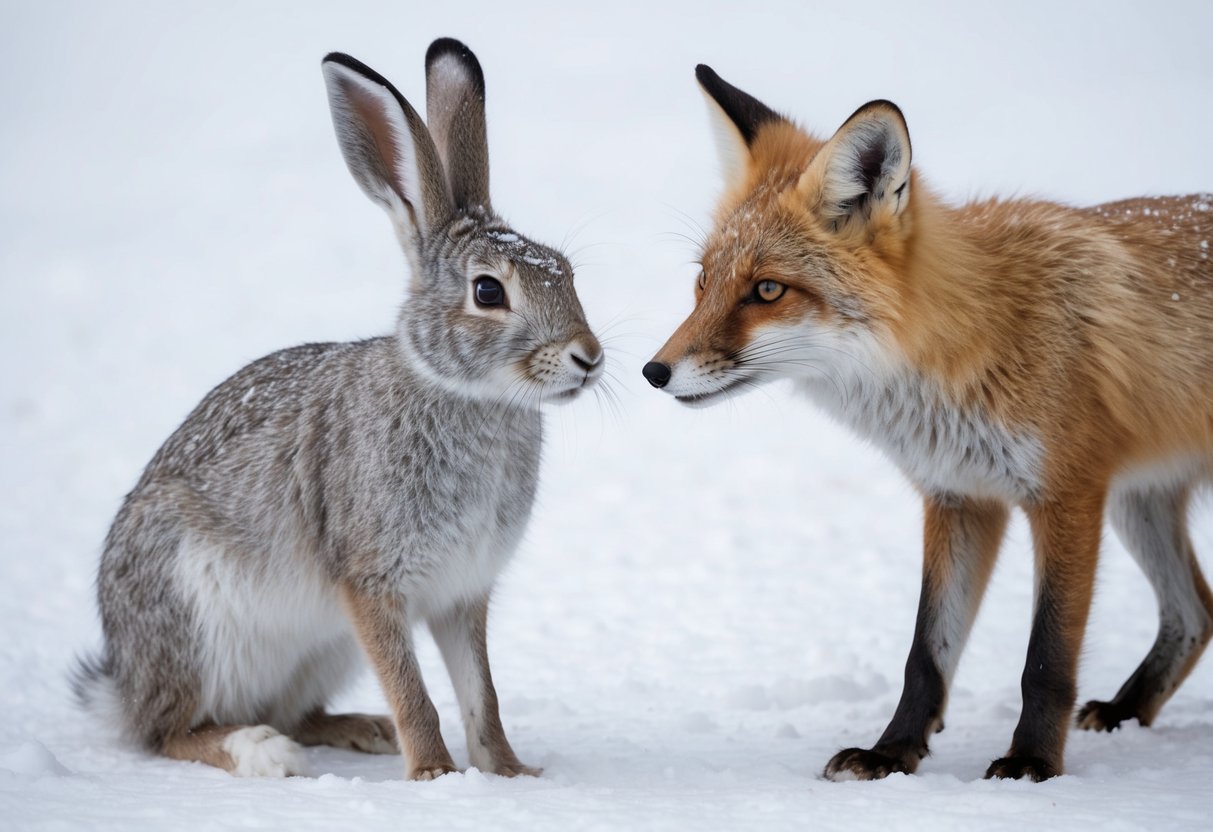
As an Arctic fox scans the snowy terrain in search of food, it often targets these agile hares. Arctic hares have adapted to evade their predators, showcasing incredible speed and agility.
This ongoing chase not only shapes their lives but also influences the broader balance of the Arctic ecosystem. Understanding how these two animals relate can offer you deeper insights into the harsh yet beautiful world they inhabit.
The relationship between Arctic hares and Arctic foxes highlights the intricate balance of nature. Each creature adapts to survive, ensuring that their ecosystem remains vibrant and diverse. By exploring this relationship further, you’ll discover the remarkable strategies both animals employ to thrive in one of the planet’s most challenging environments.
Arctic Foxes: Masters of the Tundra
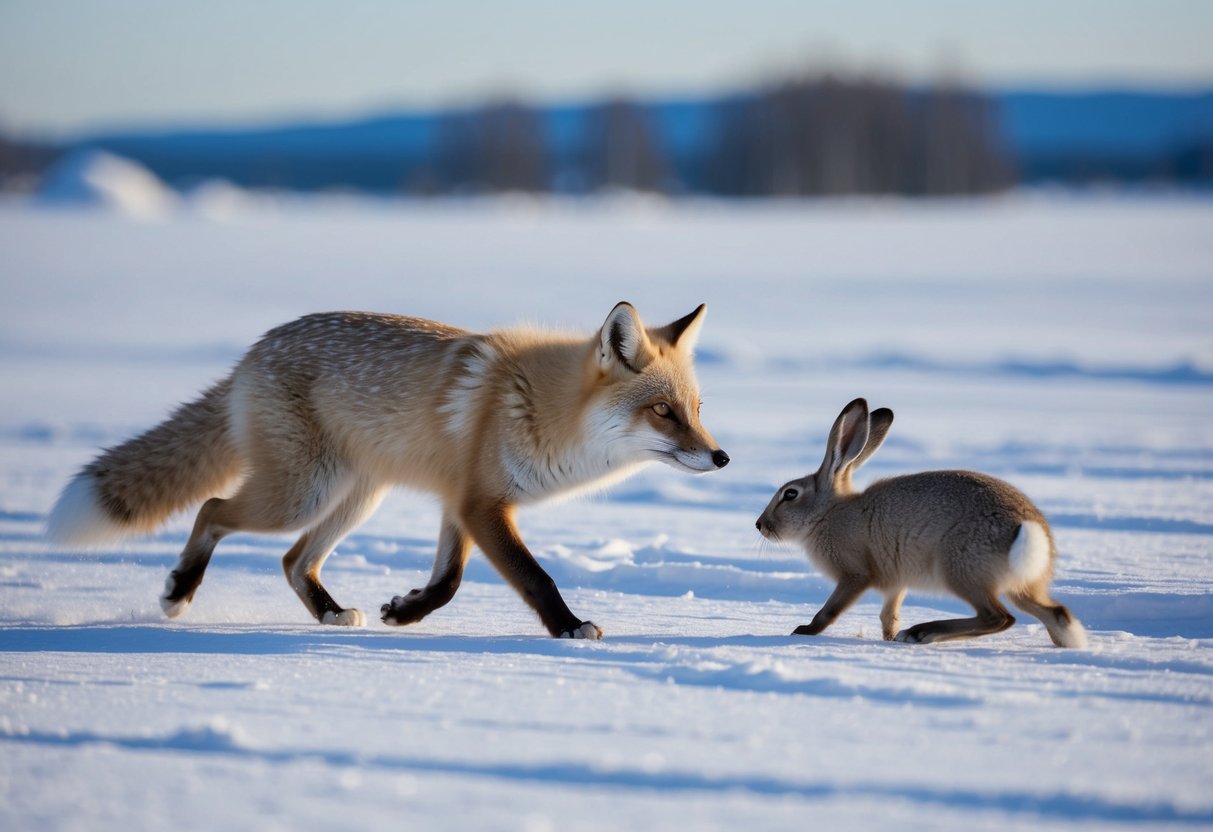
Arctic foxes adapt to their harsh environment through unique physical features and smart behaviors. These traits help them survive in the cold Arctic tundra.
Physical Adaptations and Survival Strategies
Arctic foxes, known scientifically as Vulpes lagopus, possess thick fur that insulates them against freezing temperatures. Their coat changes color with the seasons, providing excellent camouflage.
In winter, their fur is white to blend in with the snow, and in summer, it turns brown or gray to match the tundra.
Their small ears minimize heat loss, while their compact bodies conserve warmth. They have furry paws that act like snowshoes, allowing them to walk on thin ice and snow without sinking.
This insulation and camouflage are crucial for avoiding predators as well as hunting prey effectively in their environment.
Hunting Techniques and Diet
Arctic foxes are opportunistic feeders, meaning they will eat whatever food is available. They primarily hunt small mammals like lemmings, voles, and the occasional arctic hare.
Their sharp hearing helps them locate prey beneath the snow.
When hunting, they use a unique technique called “pouncing.” They will leap high into the air and land on their prey under the snow. This method allows them to break through the surface and catch unsuspecting animals.
Besides hunting, Arctic foxes also scavenge for food. They often feed on remains left by polar bears and other predators, ensuring they take advantage of every available resource in their environment. Their diverse diet helps them thrive in the Arctic tundra.
Arctic Hares: The Elusive Herbivores
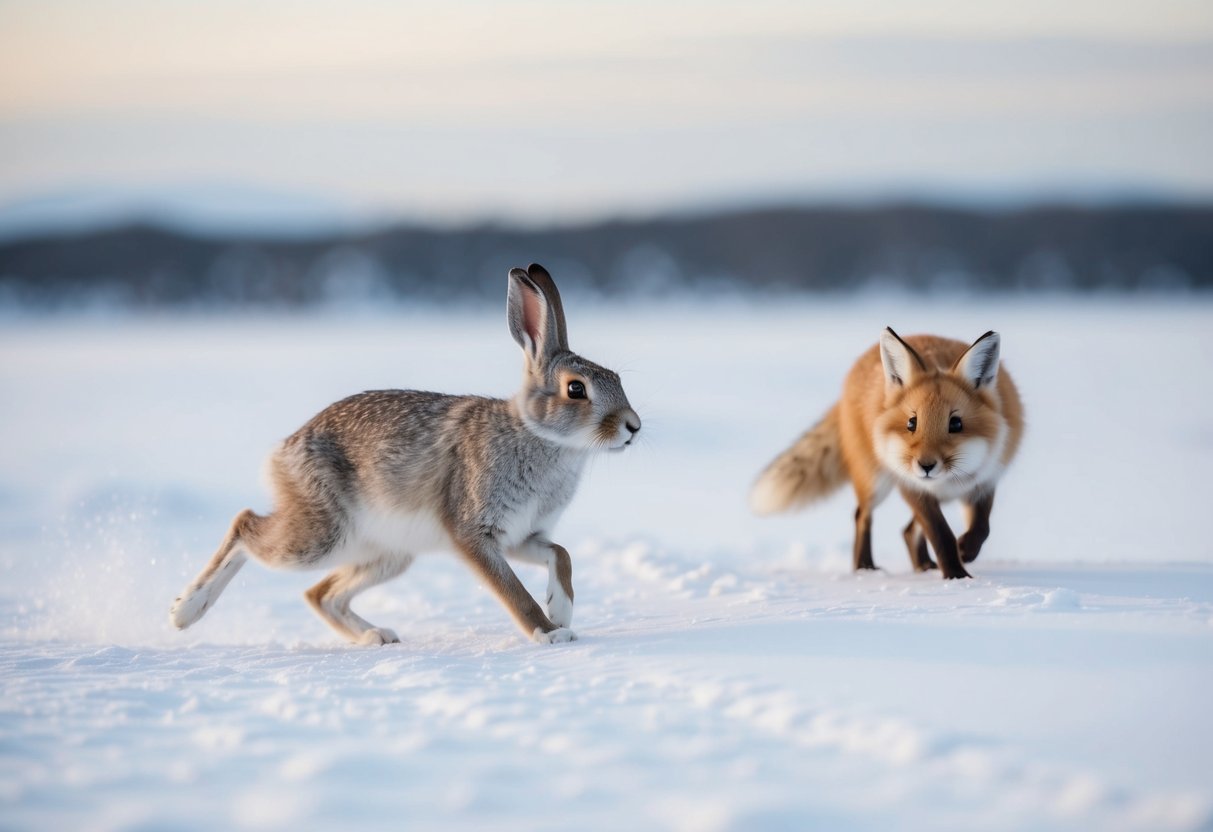
Arctic hares are fascinating creatures, well-adapted to their cold environments. They are known for their behavior, habitat, and interactions with predators, especially in the Arctic ecosystem.
Behavior and Habitat
Arctic hares thrive in the tundra, where they use their strong legs to move quickly across the snow. Their fur changes color with the seasons, allowing them to blend in.
This camouflage is essential for staying safe from predators like Arctic foxes. You might spot these hares in small groups, as they often travel together.
They dig through the snow to find food and create shelters to stay warm. Their ability to adapt to harsh conditions makes them resilient in their Arctic home.
Diet and Predation Pressure
You will find that Arctic hares primarily eat woody plants, berries, and grasses. During winter, they dig under the snow for these food sources.
Their diet helps them build fat reserves, crucial for surviving the cold months.
Predation pressure is significant, with Arctic foxes and other predators hunting them. Although hares are swift and can run up to 40 mph, they must use their wits and camouflage to escape.
The constant threat of predation shapes their behaviors and contributes to their survival in the wild.
Dynamic Interactions within the Arctic Ecosystem
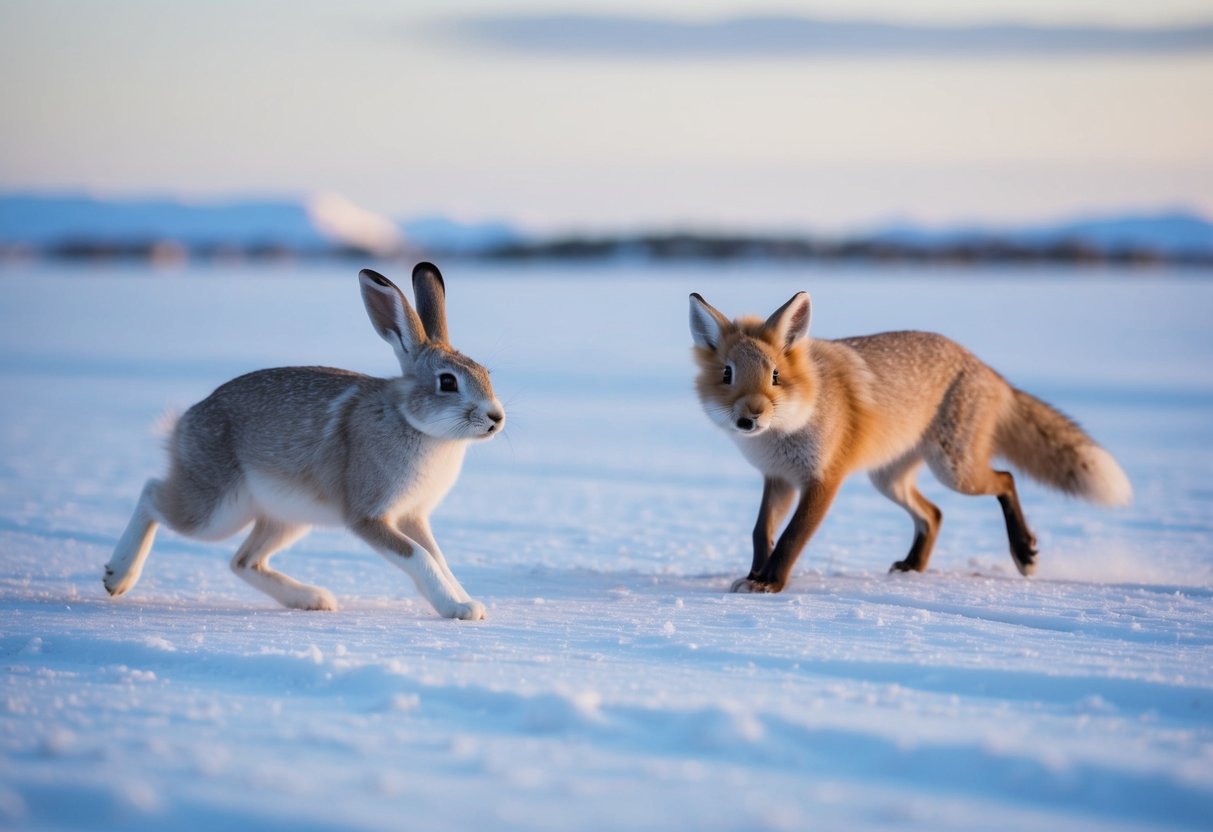
In the Arctic ecosystem, various species interact in complex ways. Understanding these dynamics helps you appreciate how each animal, including the arctic hare and arctic fox, plays a vital role in maintaining balance in their environment.
Food Chain and Biodiversity
The food chain in the Arctic is intricate. Arctic foxes are opportunistic predators, often preying on arctic hares. This relationship helps control hare populations, which can impact vegetation growth.
Arctic hares are herbivores, feeding on shrubs, grasses, and other plants. When their numbers rise, they can lead to overgrazing.
A balanced food chain supports biodiversity, ensuring that many species, from plants to predators, thrive together.
Biodiversity is crucial for resilience against diseases and environmental changes. Healthy interactions among species allow the ecosystem to adapt. All these connections reflect a finely tuned balance critical for survival.
Threats and Challenges
Climate change poses significant threats to the Arctic ecosystem. Warming temperatures are altering habitats and pushing species out of their ranges. This can lead to habitat loss for both arctic hares and foxes.
Additionally, the changing climate affects the availability of food. If plants grow differently or not as abundantly, both hares and foxes may struggle.
Conservation efforts are essential in maintaining these delicate interactions. Protecting habitats can help species adjust to climate impacts. Learning about these threats enables you to support conservation actions. Every bit helps in protecting the unique relationships in the Arctic!
Adapting to a Changing World
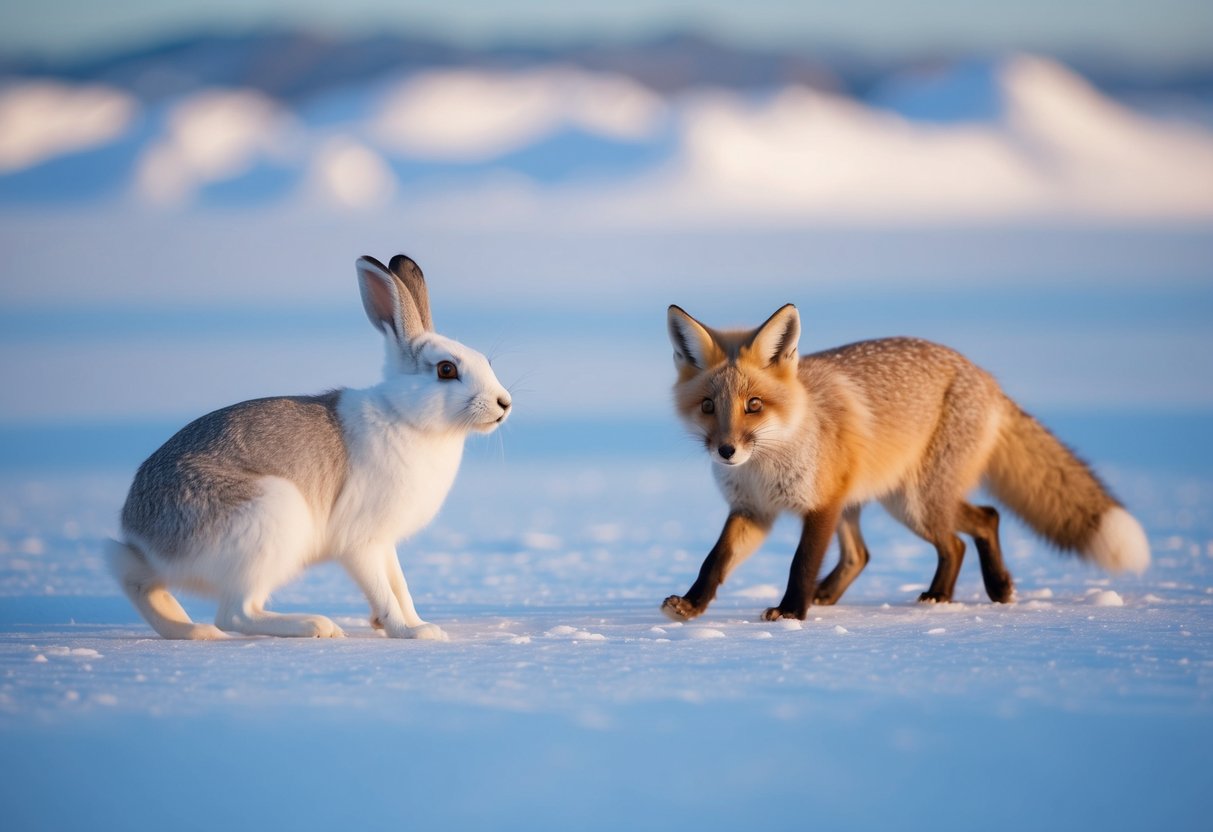
Both arctic hares and arctic foxes face challenges due to changing environmental conditions. Climate change impacts their habitats and food sources, while conservation efforts are vital for their survival.
Impact of Climate Change
Climate change significantly affects the Arctic regions, altering habitats where arctic hares and arctic foxes thrive. As temperatures rise, the snow cover changes, impacting these animals’ camouflage and hunting strategies.
For instance, when snow melts earlier in spring, arctic hares may struggle to blend in, making them more vulnerable to predators. Similarly, arctic foxes depend on the presence of snow for hunting small mammals that live underneath it.
This shift in snow dynamics can lead to decreased food availability for both species, posing a serious threat to their populations. You might also notice changes in their migration patterns as they seek suitable habitats.
Conservation Efforts
Conservation efforts help arctic hares and arctic foxes adapt to their changing world. These efforts include protecting habitats and reducing human impact on wildlife. Organizations work hard to monitor populations, ensuring they have the resources they need.
Creating protected areas helps maintain ecosystems where these animals can thrive. Additionally, educating local communities about their importance fosters goodwill toward wildlife conservation.
Habitat restoration projects also play a crucial role. These efforts can help restore native vegetation and provide safe corridors for movement. This way, arctic hares and foxes can find food and shelter more easily despite climate changes.
By supporting these initiatives, you can contribute to a resilient future for these fascinating creatures.


