
Most people assume “white” is the rarest lion color, but it’s a bit more complicated than that. True white lions—caused by leucism or albinism—are incredibly rare, with leucistic white lions (those with normal eye color) being the most reliably confirmed. Let’s break down what that means and why these lions are so hard to find.

You’ll find out where people have spotted white lions, why their color makes survival tricky, and how experts try to keep them around. I’ll stick to the facts, toss in a few examples, and try to explain why these animals fascinate so many of us.
What Is the Rarest Color of Lion?

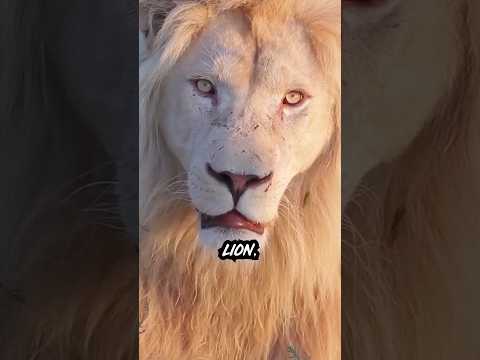
White lions are the rarest color form of African lions. They appear when a genetic change reduces pigment in their fur, affecting melanin production.
Defining Rare Lion Colors
Genetics, not age or dirt, create rare lion colors. Most lions have tawny coats that blend in with the grasslands.
You’ll see some with darker manes, but pale or white coats are much more unusual. Rarity comes down to how often a genetic trait pops up in wild lions.
Traits needing two copies of a recessive gene are rare since both parents must carry it. That’s why white lions are so much less common than tawny or dark-maned ones.
Eumelanin (dark brown/black) and pheomelanin (reddish/yellow) set the basic colors. When something changes these pigments or how much gets made, you get the range of lion colors you see.
White Lions and Leucism
Leucism causes white lions. This genetic condition reduces multiple pigments, so their fur looks creamy or pale, not the stark white you see in albino animals.
Leucistic lions usually have normal eye and skin color. People first documented wild white lions in the Timbavati region of South Africa, and they’re still extremely rare there.
Captive breeding has increased their numbers, but you’ll mostly find white lions in zoos or sanctuaries. Their white fur stands out, making hunting harder and survival tricky.
A mutation limits melanin in the hair. Both parents must carry the recessive gene for a cub to be born white, which explains why you almost never see them.
Albinism vs. Leucistic Lions
Albinism and leucism both reduce pigment, but they’re not the same. Albinism blocks melanin production completely, usually because of a mutation in the tyrosinase enzyme.
Albino lions have very pale skin and pink or light eyes. Leucistic lions still make some melanin, so their eyes and skin look normal.
That difference matters. Albino animals often struggle with vision and sunlight, while leucistic ones usually don’t face those problems.
If you’re trying to tell them apart, check the eyes and nose. Normal color usually means leucism. Pink or pale means albinism.
The Genetics Behind Lion Coloration
Genes control how much and what type of melanin a lion makes. Eumelanin gives black or brown, while pheomelanin makes red and yellow tones.
The mix of these pigments and the total amount of melanin set the lion’s overall color. Recessive mutations, like the one causing leucism, reduce melanin.
If both parents have the leucism gene, they can produce a white cub. Other genes affect mane color and size, changing looks without making a lion white.
Captive breeding can concentrate these rare genes and produce more white lions. In the wild, natural selection and lower carrier mating keep the leucism gene scarce.
If you want more details about white lion genetics and history, there’s a good breakdown here: white lion phenomenon in the Timbavati region.
Distribution, Rarity, and Conservation of Rare Lion Colors
Rare lion colors pop up in just a few places and face big challenges. Here’s where you’ll find them, why they’re still rare, and what people do to help.
Natural Distribution and Populations
White lions are famous in South Africa’s Timbavati region. People have recorded wild sightings and tracked local pride lineages there.
Only a handful of white lions live in and around Timbavati and nearby reserves. Most other reports of odd colors—like supposed black or melanistic lions—don’t have solid proof in the wild.
Across Africa and Asia, lions belong to subspecies like Panthera leo melanochaita (Southern African lions) and Panthera leo leo (West, Central African, and Asiatic lions). Asiatic lions live in India’s Gir Forest, not Timbavati.
The Cape and Barbary lions are basically extinct in the wild. Tawny lions still fill the Serengeti, southern Africa, and other regions, but wild white lions are rare.
Why Rare Lion Colors Are Uncommon
Genetics explain most color variations. Leucism, the gene behind white lions, is recessive. Both parents must have it to produce a white cub, which is unlikely in big wild populations.
Melanism (very dark coats) almost never shows up in lions, though it’s more common in other big cats. Natural selection also plays a big role.
A white coat makes lions stand out, so hunting is harder and cubs don’t survive as easily. Small, isolated groups might have more rare genes, but that also brings inbreeding risks.
Habitat loss, trophy hunting, and poaching from humans make it even tougher for rare color genes to stick around in the wild.
Conservation Challenges and Efforts
You’ll notice several focused efforts out there for white lion protection and broader lion conservation. Local trusts and groups—especially those working with communities near Timbavati—really push for habitat preservation. They also organize anti-poaching patrols.
Some groups run captive-breeding programs to preserve white lion genetics. Still, captive management brings up debates about rewilding and genetic health, and honestly, nobody seems to agree on the best approach.
Key conservation actions include building habitat corridors for African lions. Anti-poaching teams work hard to protect prides. Conservationists also keep a close eye on genetics to avoid dangerous inbreeding.
International lion conservation usually targets Panthera leo melanochaita and Panthera leo leo populations. In some regions, programs specifically protect Asiatic lions in Gir.
If you’re following this topic, it’s worth looking for efforts that mix on-the-ground protection with legal habitat safeguards. Community engagement can make a real difference for rare-colored lions and their tawny cousins.


