
Ever wondered just how smart a chimpanzee really is compared to us? It’s tough to measure exactly, but most scientists estimate a chimpanzee’s average IQ lands somewhere between 40 and 60.
So, their intelligence lines up with that of a 3 or 4-year-old child. They’re surprisingly good at problem-solving and using tools—maybe more than you’d expect.
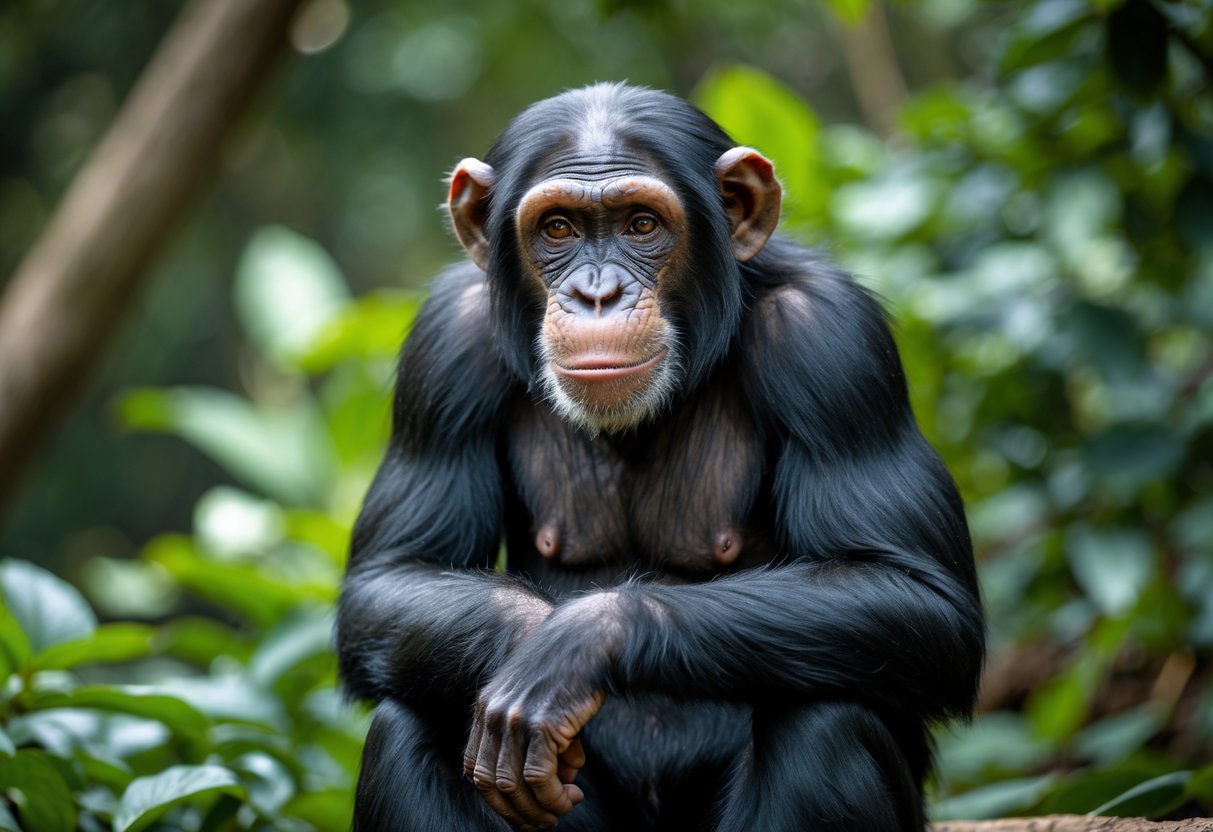
Chimps don’t sit down and take IQ tests like we do. Researchers watch how they solve puzzles, use sticks to snag food, and interact with each other instead.
Their brains might be smaller, but they’re clever in their own way.
If you’re curious about what shapes chimp intelligence and how it stacks up against ours, you’re in the right place. These animals are more than just our close relatives—honestly, they’re fascinating thinkers.
If you want to dig deeper, check out what is the IQ of a chimpanzee.
Chimpanzee IQ: Understanding the Numbers and Their Meaning

People often talk about chimpanzee intelligence using numbers like IQ scores, but it’s not that simple. The way researchers estimate their IQ, the limits of using human tests, and what those scores actually mean—all of that matters.
How Chimpanzee IQ Is Estimated
Scientists usually estimate chimpanzee IQ by comparing their memory and problem-solving skills to ours. They run tests on memory, tool use, and learning.
For example, young chimps can sometimes remember numbers faster than adult humans. That’s pretty wild—shows off their short-term memory.
IQ scores for chimps bounce around a lot. Some studies say chimps score between 25 and 50; others put it closer to 40-70, which is at the lower end for humans.
Researchers get these numbers from specific tasks, not full-blown IQ tests like the ones people take.
Limitations of Human-Based IQ Tests
Chimps don’t think exactly like we do, and that’s important. Human IQ tests lean hard on language, abstract ideas, and cultural stuff.
Chimps can’t really tackle those parts of the test. Because of that, human IQ tests might seriously underestimate how smart they are.
Most of these tests focus on skills chimps just don’t use, like reading or math. So, scientists design tests for chimps that focus on memory, spotting patterns, and using tools.
That gives us a much better picture of what’s going on in their heads.
What Chimpanzee IQ Scores Reveal
IQ numbers only tell part of the story. A chimp with an IQ between 40 and 70 might act like a young child on certain tasks.
But chimps really shine at things like memory and making tools or using gestures to communicate.
The scores also show that intelligence varies between individual chimps and different groups. Some chimps pick things up fast and solve tricky problems, while others struggle.
So, chimp intelligence is complicated—way too much to sum up with a single number.
You can check out more about IQ levels of chimpanzees and see how they stack up against humans in memory tasks if you want to nerd out on the details.
The Cognitive Abilities Behind Chimpanzee Intelligence

Chimpanzees show off their smarts in pretty obvious and interesting ways. You’ll spot it in how they solve problems, talk to each other, and pick up on emotions in their social circles.
These skills really let their intelligence shine.
Problem-Solving and Tool Use
If you watch chimps, you’ll see them using tools to get things done. They use sticks to fish termites out of mounds or grab stones to crack open nuts.
That shows they know how to change things around them to fit their needs.
Chimps don’t just use tools—they make them, too. Young chimps learn by watching adults, picking up skills and even improving them.
This kind of learning helps them survive and adapt, especially out in the wild.
You might not expect it, but chimps can plan ahead. They figure out what tools they’ll need and how to use them before they start a task.
These problem-solving chops put them among the smartest animals out there.
Communication and Social Behavior
Chimps have a bunch of ways to communicate. You’ll notice facial expressions, gestures, and sounds all coming together to get a message across.
A hand wave could mean “play,” or a certain call might warn everyone about danger.
Their communication keeps the peace and helps manage group life. Dominant chimps use signals to show who’s boss, and others use subtle hints to dodge fights.
This system keeps their groups running smoothly.
You’ll also find that different chimp groups have their own quirks. These cultural differences pop up because they learn from each other, passing down skills like tool tricks or unique hunting styles through the generations.
Emotional and Social Intelligence
Chimpanzees really feel emotions—sometimes in ways that are surprisingly familiar. You’ll spot them hugging or grooming friends who look upset.
They don’t just do this out of habit; they seem to show real empathy. That kind of comfort builds stronger friendships.
Just like us, chimps value their social circles. They team up and work together when they need to defend their space or find something to eat.
They rely on these social bonds to get by. It’s not just about survival—these connections make life better for everyone in the group.
Their emotional skills play a big part in how they fit into group hierarchies. Figuring out who’s a friend or a rival definitely makes things simpler.
You can see how this social intelligence keeps their groups close and working together, even when things get tricky.
If you’re curious, check out how chimpanzees show off these abilities through their problem-solving skills and learning.


