
Maybe you’ve heard wild stories or just wondered—could a human and a chimpanzee ever have a child together? It’s a strange idea, sure, but it pops up a lot because humans and chimps share so much DNA.
Still, no scientist has ever verified the existence of a human-chimpanzee child.
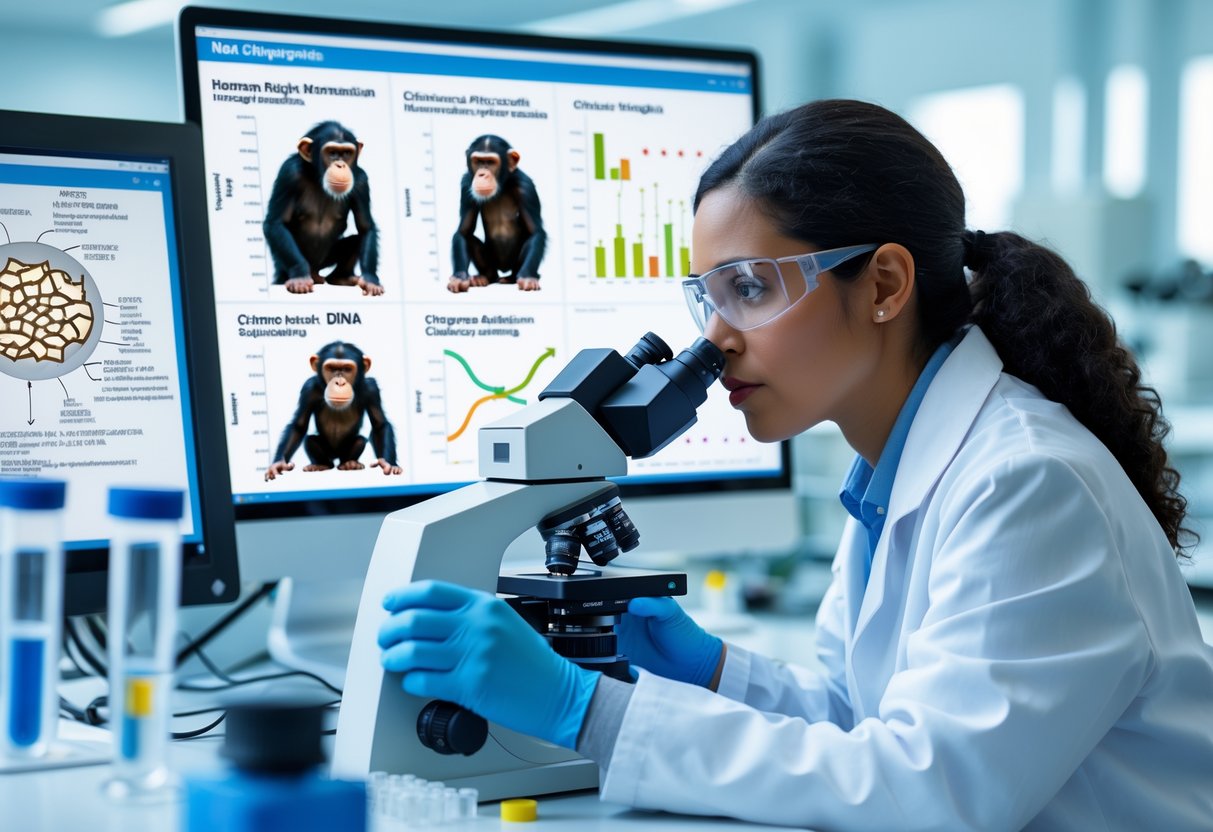
Biology stands in the way. Humans and chimpanzees don’t have the same number of chromosomes, which pretty much blocks any chance of a healthy hybrid baby.
Some early researchers tried to explore this idea, but they didn’t get anywhere. Their experiments raised a lot of ethical concerns, too.
Curious why people keep coming back to this mystery? Science actually has a lot to say.
Let’s dig into the biology, a bit of history, and some odd facts about how close—and how far apart—humans and chimps really are.
Has a Human Ever Had a Child with a Chimpanzee?
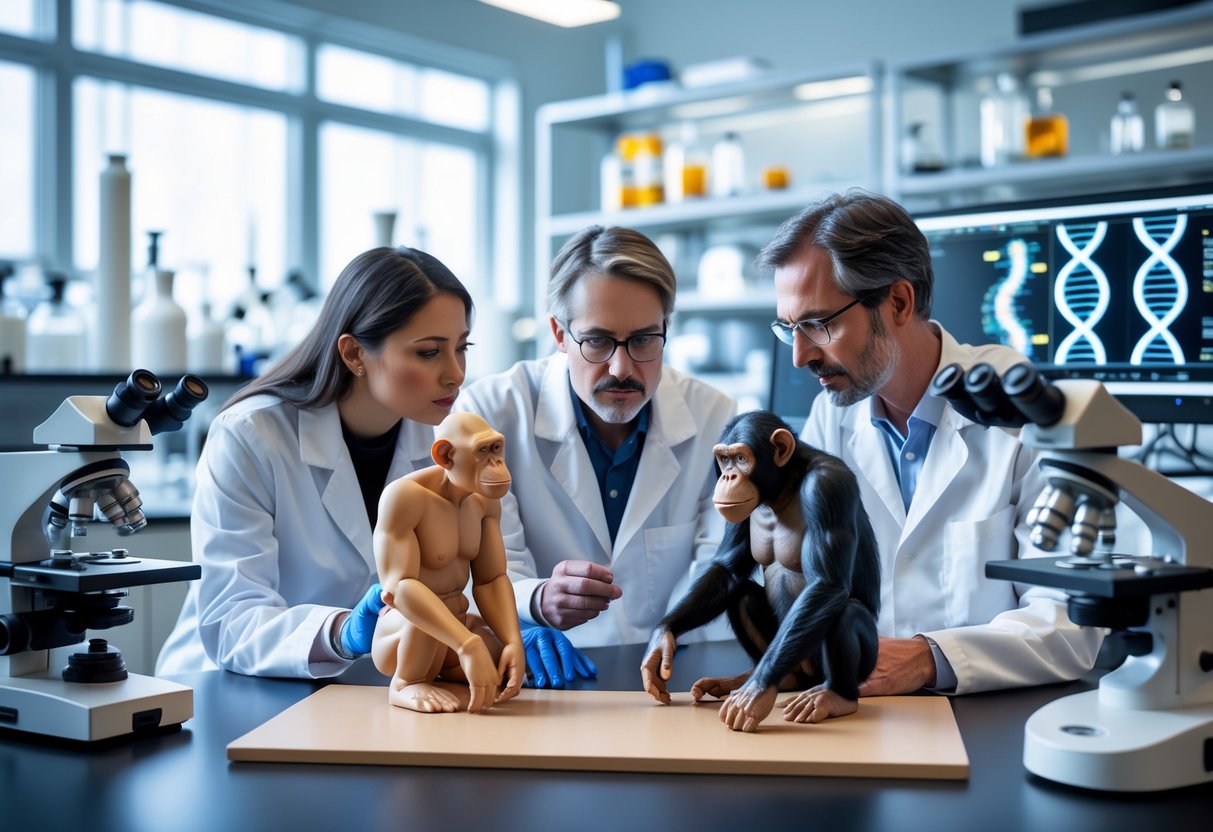
People have passed around stories about human-chimpanzee hybrids for ages. Some claim these hybrids exist or could be made.
Researchers have actually tried to test the idea, but the evidence is pretty one-sided.
Claims and Myths about Human-Chimpanzee Hybrids
You’ll hear about so-called “humanzees” in old myths and rumors. Some stories even mention strange children supposedly born from these unions.
These tales tend to blur the line between fact and fiction. They don’t have any scientific proof behind them.
Remember Oliver, the chimpanzee? People thought he might be a hybrid because he looked a bit unusual.
Later studies showed Oliver was just a regular chimp with a few quirky features. Stories like his are fascinating, but there’s no solid evidence.
Attempts at Hybridization in History
Back in the 1920s, a Soviet biologist named Ilya Ivanov tried to create a human-chimpanzee hybrid. He inseminated female chimpanzees with human sperm.
Nothing came of these attempts. Ivanov ran into political trouble, and his work stopped there.
There were also rumors of similar experiments in China during the 1960s. These claims never got proven.
Some say political events shut down the research, and none of the chimpanzees survived. Nobody fully documented these experiments, and nobody repeated them successfully.
Scientific Evidence and Current Consensus
Humans have 23 pairs of chromosomes, and chimps have 24. That difference creates a huge barrier.
When chromosomes don’t match up, reproduction usually fails or results in sterile offspring.
No scientist has found a verified case of a human-chimpanzee hybrid. Modern genetics and reproductive biology both say it just doesn’t work.
Researchers agree: based on everything we know, humans and chimps can’t produce a hybrid.
If you want to dive deeper, you can check out more research and genetic facts about human-chimp hybrids at knowanimals.com.
Genetic Barriers and the Science of Hybridization

Mixing human and chimpanzee genes isn’t just tricky—it’s nearly impossible. The problems start deep in our cells.
Chromosome differences and the way our genes work together make hybrid children a no-go. That’s really the heart of why we haven’t seen any verified cases.
Chromosome Differences between Humans and Chimpanzees
Humans have 46 chromosomes in 23 pairs. Chimps have 48 chromosomes in 24 pairs.
Long ago, two chromosomes fused in human ancestors, but they stayed separate in chimps.
Chromosomes carry all our genetic information. When they don’t match, the DNA can’t line up during reproduction.
Imagine chromosomes as puzzle pieces—if they don’t fit, the puzzle just falls apart.
Even though humans and chimps share about 99% of their DNA, the different number and structure of chromosomes block any chance at a successful hybrid.
Genetic Compatibility and Hybrid Offspring Challenges
Hybrids need matching gene sequences and chromosomes if they’re going to develop in a healthy way. When people try to mix humans and chimps, the genetic incompatibilities usually stop embryos from surviving or even forming at all.
Sometimes, animals from closely related species, like horses and donkeys, can produce hybrids such as mules. But honestly, those hybrids almost never reproduce, which just shows how tough it is to get fertile offspring when you cross species.
If someone tried to make a human-chimp hybrid, they’d run into even bigger issues. The differences in chromosome numbers and all those gene regions would probably cause serious health problems or just stop the embryo from growing.
That’s why scientists have never confirmed a human-chimpanzee hybrid. If you’re curious about the scientific details, you can check out the biological barriers to hybridization.


