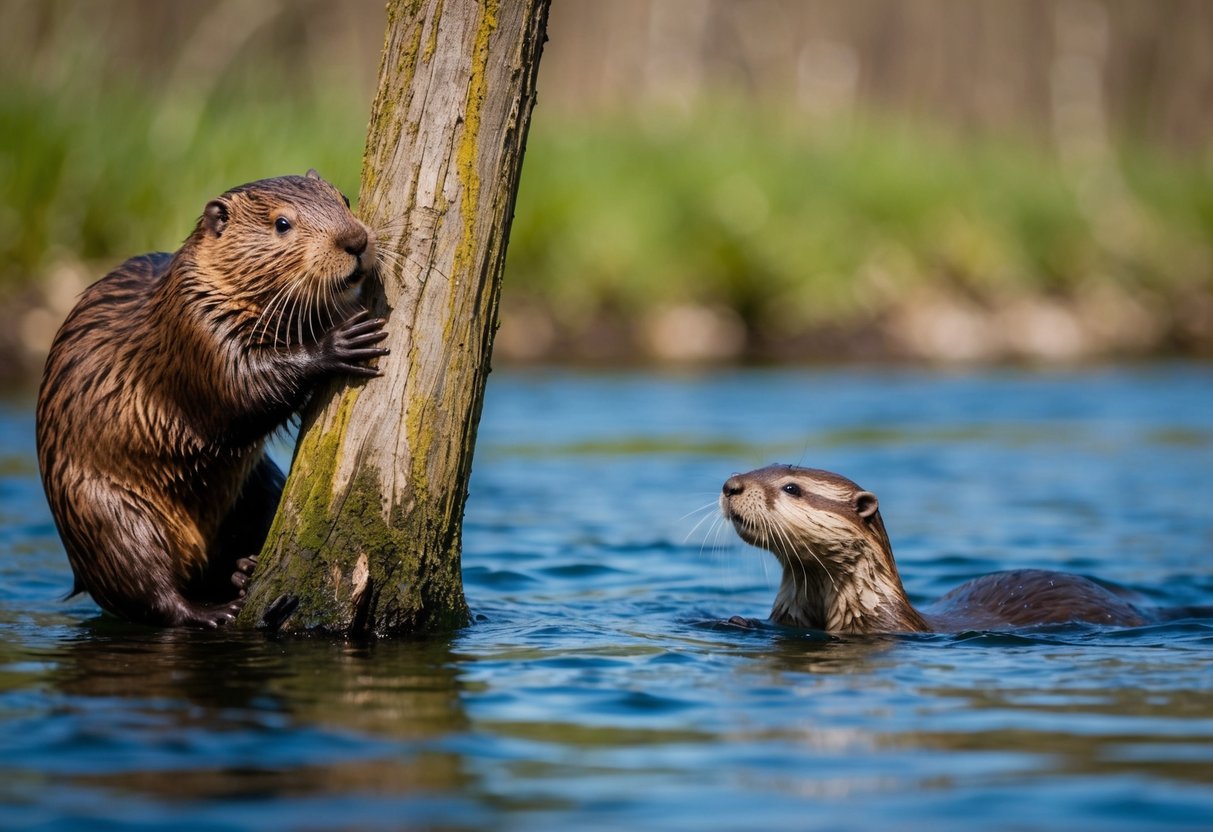
Beavers and otters are both fascinating aquatic mammals, but they serve very different roles in their environments. Beavers are mostly herbivores, known for their impressive dam-building skills, while otters are carnivorous hunters that thrive in water. Understanding these differences helps you appreciate how each animal adapts to its habitat.
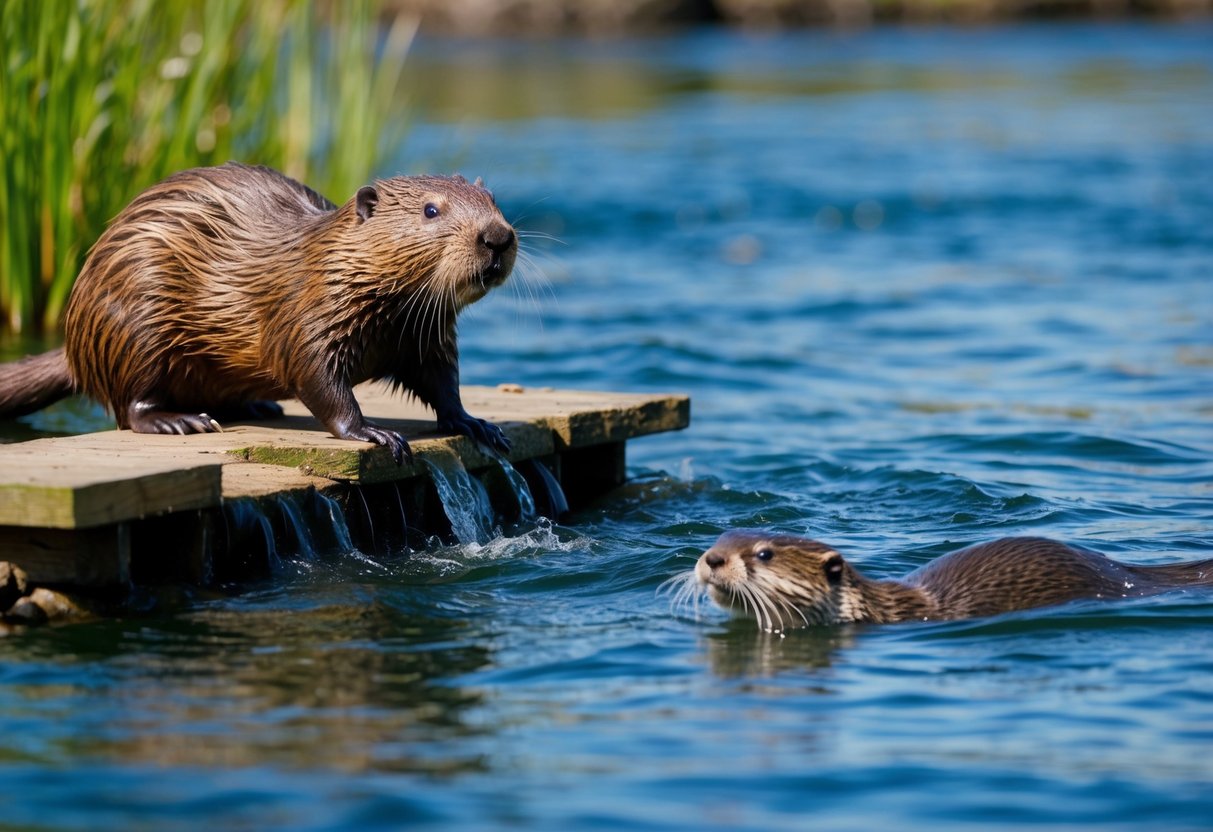
While beavers prefer freshwater areas where they can build homes from wood and mud, otters are more versatile. They can live in both freshwater and coastal saltwater environments. This adaptability allows otters to use tools and catch fish, unlike beavers, who focus on gathering plants and creating structures to survive.
When observing these two creatures, it’s easy to see their unique traits. Beavers have large, flat tails for steering in the water, while otters have long, slender tails that help them swim swiftly. By learning about the differences between beavers and otters, you gain insight into the incredible diversity of life in aquatic ecosystems.
Physical Characteristics and Differences

When comparing beavers and otters, you’ll find some interesting differences in their body size and structure as well as their tail variations. Each of these animals has unique traits that help them thrive in their environments.
Body Size and Structure
Beavers are larger than otters. Adult beavers typically weigh between 35 to 100 pounds. They can measure about 3 to 4 feet long. Their bodies are stout, built for strength. Beavers belong to the family Castoridae, which classifies them as rodents.
On the other hand, otters are more streamlined. They weigh around 10 to 100 pounds depending on the species and usually measure between 2.5 to 5 feet long. Otters belong to the family Mustelidae, which includes weasels and ferrets. Their bodies are sleek, making them agile swimmers.
Both animals have dense fur that helps keep them warm in cold water. This thick fur is essential for insulation, especially for beavers, as they work in chilly waters when building their dams.
Tail Variations
The tails of beavers and otters are quite different. A beaver’s tail is broad, flat, and serves multiple purposes. It acts as a rudder when swimming, helping with direction. Additionally, beavers use their tails for balance while sitting and for communication, slapping the water to warn others of danger.
Otters have long, muscular tails that are more tapered. Their tails help them navigate swiftly through water. The shape enhances their swimming ability, allowing them to perform agile maneuvers.
Together, the different physical characteristics and tail structures highlight how each animal is adapted to its lifestyle and environment.
Habitats and Ecosystems
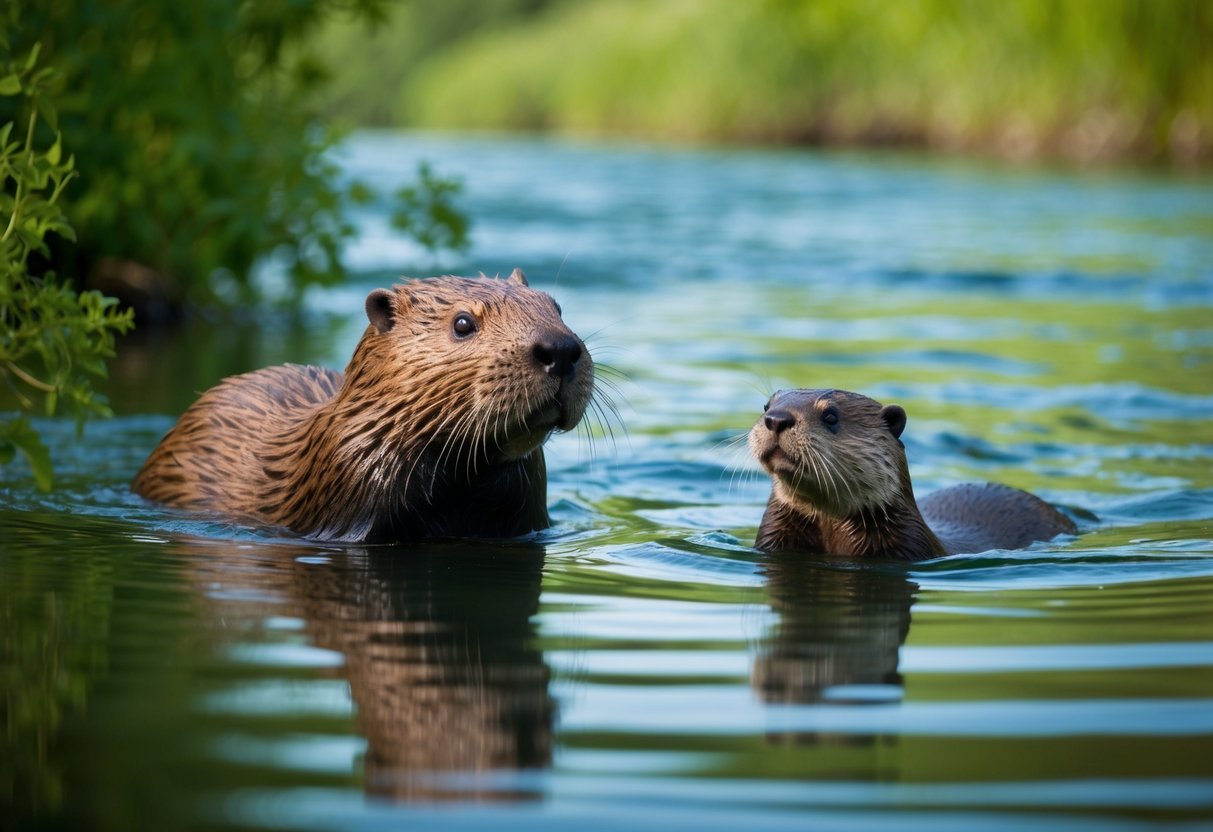
Beavers and otters play distinct roles in their habitats. Understanding their environments helps you appreciate their contributions to ecosystems and conservation efforts.
Types of Habitats
Beavers thrive in freshwater habitats, particularly in rivers, streams, and wetlands. They build dams, creating ponds that alter local ecosystems. These ponds provide habitats for other wildlife and support diverse plant life.
Otters, like the North American river otter and the Eurasian otter, also prefer aquatic ecosystems. You can find them in freshwater lakes, rivers, and sometimes estuaries. They are excellent swimmers and need clean water to thrive, making them sensitive to pollution.
Both animals rely on wetlands, which are crucial for biodiversity. Wetlands serve as nurseries for fish and other aquatic life, supporting a wide range of species.
Ecological Roles and Impact
Beavers are known as ecosystem engineers. Their dam-building activities create wetlands, which enhance biodiversity. These areas support various species, from fish to amphibians and birds.
Otters play a different but equally important role in their ecosystems. As skilled hunters, they help control fish populations, ensuring a balanced aquatic environment. Their presence often indicates a healthy ecosystem.
Both beavers and otters contribute to conservation efforts. Protecting their habitats is vital for maintaining biodiversity and the health of wetlands. By understanding their ecological roles, you can support initiatives that safeguard these valuable ecosystems.
Behavior and Lifestyle

Understanding the behavior and lifestyle of beavers and otters helps you appreciate their unique roles in the environment. Both animals have distinct social structures and feeding habits that set them apart.
Social Behavior and Reproduction
Beavers are known for their strong social bonds. They often live in family groups called colonies, typically consisting of a monogamous pair and their offspring. The parents work together to build and maintain their dams, which provide shelter and safety.
In contrast, otters tend to be more social in groups, called rafts, often consisting of several individuals. They are playful animals, known for sliding down mud and snow banks. When it comes to reproduction, female otters give birth to 2 to 5 pups. They care for them in dens until they are ready to explore.
Feeding Habits and Diet
Beavers are herbivores, primarily eating tree bark, leaves, and aquatic plants. They are excellent at using their strong teeth to gnaw through trees, which also helps control fish populations by creating wetland habitats. Their diet is essential for maintaining the ecosystem.
Otters, as carnivores, enjoy a varied diet that includes fish, crustaceans, and other small aquatic creatures. They are skilled hunters and often dive into the water to catch their prey. This versatile diet helps them thrive in different environments, ensuring they meet their energy needs.
Conservation Status and Human Impact
Beavers and otters play important roles in their ecosystems, but their conservation status varies.
Beavers are often labeled as pests in some areas. They build dams, which can alter landscapes and impact agriculture. This creates new wetland habitats, but it can also lead to flooding in human areas.
Otters generally have a more stable conservation status. They face threats from water pollution and habitat loss, but many populations are doing well thanks to conservation efforts.
Many regions have reintroduction programs for both beavers and otters. These programs aim to restore their populations in areas where they once thrived.
Conservation efforts include managing water levels and creating wildlife corridors. These actions help maintain freshwater ecosystems important for both species.
You should also consider the impact of trapping on these animals. Beavers may be trapped due to their dam-building habits, while otters are sometimes caught for their fur.
Both species use tools, which showcases their intelligence. Beavers chew down trees to build dams, while otters use rocks to crack open shellfish.
Together, beavers and otters can enhance biodiversity. Protecting them means safeguarding their habitats and the countless species that rely on these environments.


