
You might think the giraffe’s closest relative would be another animal with a long neck, but that’s not the case. The okapi, a shy forest mammal from the Democratic Republic of Congo, actually claims that spot.

Let’s dig into how the okapi’s striped behind and secretive lifestyle connect it to the tall, spotted giraffe. Scientists have traced their shared history through bones, genes, and ancient landscapes. That research matters a lot for both species today.
Okapi: The Closest Living Relative
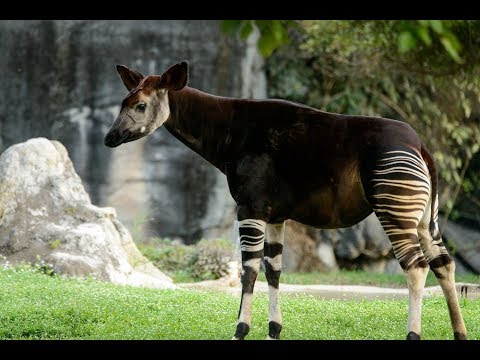
So what really makes the okapi so much like the giraffe? Where does it live, and what’s it like in the wild? Here’s what you’ll want to know about its body, range, and social habits—especially since conservation depends on these details.
Physical Features Shared With Giraffes
The okapi (Okapia johnstoni) shares some pretty striking features with the giraffe. Both belong to the family Giraffidae.
They each have long, prehensile tongues for grabbing leaves and grooming—okapis can stretch theirs about 45–50 cm. Males of both species grow ossicones, those odd horn-like bumps, though okapi ossicones are smaller and usually only show up on males.
You’ll spot similar skull and tooth patterns, built for a leaf-eating diet: low-crowned teeth and a dental formula that’s great for snipping foliage. Both animals use a pacing gait, swinging the legs on one side together, which is pretty unusual for hoofed mammals.
Their big ears and sharp senses help them notice predators, whether in thick forest or out on the open savanna.
Natural Habitat and Distribution
Okapis live mostly in the dense rainforests of northeastern Democratic Republic of the Congo. You’ll find them in canopy forests between about 500 and 1,500 meters elevation.
Their range is really limited and patchy, which is a problem for their survival. Protected places like the Okapi Wildlife Reserve in the Ituri Forest host some of the more secure populations.
Unfortunately, logging, farming, and mining have chewed up a lot of their forest and split up their habitat. The IUCN lists the okapi as endangered. National parks and reserves are pretty much essential if we want to keep them around.
Behavior and Social Structure
Okapis mostly keep to themselves. You’ll hardly ever see more than one adult together, unless it’s mating season or a mother is with her calf.
They keep home ranges that overlap a bit. Males tend to wander wider, while females stick closer to one area.
Both mark their territory—males use urine and gland secretions on trees, while females go for communal dung piles.
They don’t really have a set breeding season. Females give birth after a long pregnancy of about 440–450 days, usually to just one calf. The calf hides for weeks.
Leopards and humans pose big threats, so okapis stay quiet and secretive. If you care about their future, supporting protected forests and national parks really does help.
Evolution and Biological Connections

So how do giraffes fit into the bigger mammal picture? Where did they come from, and what sets them apart? Here’s how modern giraffes and okapis connect, with some fossil clues and changes in their bodies along the way.
Giraffidae Family Overview
Giraffes and okapis belong to the even-toed ungulate group, Artiodactyla. Inside that order, the family Giraffidae includes modern giraffes (genus Giraffa) and the okapi.
People used to call giraffes “camelopard” because they looked like a weird mix of camel and leopard.
Giraffidae sits within Mammalia and shares traits with other even-toed hoofed animals: cloven hooves and a four-chambered, ruminant stomach. Giraffes and okapis are the only living members left.
Family traits show up in their ossicones, long tongues, and teeth built for eating leaves. Giraffe populations differ by subspecies, and those differences actually matter for conservation.
Common Ancestor and Fossil Evidence
Scientists trace giraffids back to Miocene ancestors from about 15–16 million years ago. Fossil genera like Canthumeryx and larger relatives such as Sivatherium show all kinds of sizes and neck lengths.
Paleontologists use skulls, teeth, and limb bones to link extinct giraffids to today’s Giraffa and okapi. For example, Giraffa jumae fossils show neck features that fall somewhere in between.
The fossil record shows how neck vertebrae and limb proportions changed over time, as habitats shifted from woodland to open savanna. Those changes help explain why giraffes ended up with such long necks and why males fight by necking.
Key Differences and Adaptations
Giraffes have developed extremely long necks, long legs, and those iconic spotted coats.
Okapis, on the other hand, have stuck with shorter necks, striped hindquarters, and a look that helps them blend into the forest.
You can see some of the main differences in this quick list:
- Neck and height: giraffes stand very tall, while okapis have short necks.
- Ossicones: you’ll find these in both, but the shape and size aren’t quite the same.
- Habitat: giraffes stick to the savanna; okapis prefer dense forest.
- Behavior: male giraffes spar with their necks to show dominance; okapis usually keep to themselves and act pretty secretive.
- Ecological links: oxpeckers often perch on giraffes and pick off parasites.
These traits connect closely to what they eat, the predators they face, and how they interact with others.
Giraffes probably grew those long necks because of feeding competition, fighting for mates, and big shifts in their environment over a really long time.


