
When you hear about the Celtic bird, you might wonder what makes it special.
A Celtic bird isn’t just one kind of bird. It’s a symbol from ancient Celtic culture that stands for wisdom, protection, and a link to the spirit world. People wove these birds into myths and stories, where they carried messages from the gods or guided souls between worlds.
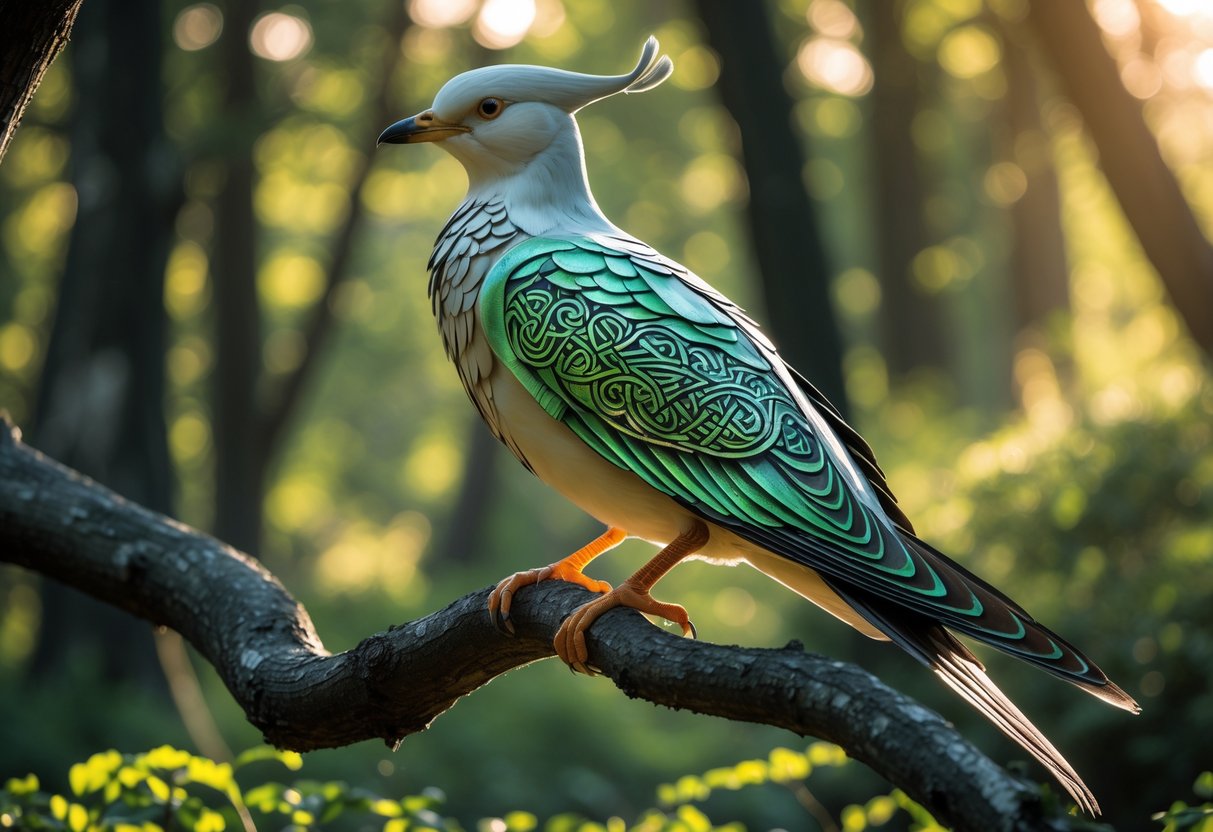
It’s kind of wild how each bird—like the crow, owl, or swan—held its own meaning and role in Celtic traditions.
If you start looking at birds through this lens, it might give you a fresh way to see them in nature and maybe even in your own life. Curious about the magic birds brought to old Celtic stories? Let’s dig in.
Celtic Birds in Mythology and Culture

Birds in Celtic culture are way more than just animals. They stand for magic, wisdom, and a bridge between worlds.
Stories and art often show them as beings close to gods, battles, and the mysteries of life and death.
Sacred Birds and Their Roles
Some birds just stand out in Celtic legends. Take ravens and crows—they’re tight with the war goddess The Morrigan and her sides like Badb and Macha.
You’ll see these birds pop up before fights or as omens of fate and death.
Swans and cranes, on the other hand, represent purity, transformation, and a beauty that feels almost otherworldly.
Owls get tied to wisdom and secret knowledge. People thought druids could understand the language of birds, and owls were part of that mystery.
Even tiny birds like the wren have meaning. The wren, though small, links to fertility, protection, and a bit of magic.
Bird Symbolism and the Otherworld
Birds often act as messengers between our world and the Otherworld—a place of spirits and gods in Celtic belief.
When you read stories about mystical birds, you’ll notice they bring messages, warnings, or blessings from beyond. These birds seem to travel between realms, guiding souls or carrying out the gods’ will.
The Ceffyl Dŵr or water horse sometimes takes on a bird-like form, tied to the watery Otherworld. Stories like these remind you to respect nature and the unknown.
Major Birds in Celtic Legends
A handful of birds really make their mark in Celtic tales.
-
Raven and Crow: You’ll spot these a lot, especially with the Morrigan. They show up where battles happen and stand for fate and transformation.
-
Swan: This bird gets linked to purity and to figures like Rhiannon, whose birds supposedly sing magical songs.
-
Crane: People see cranes as wise and noble, sometimes connecting them to poets like Taliesin.
-
Wren: “The king of birds,” the wren pops up in folk tales and old rituals about fertility and renewal.
Each of these birds carries stories of magic, leadership, and a deep bond with the land.
Birds as Messengers and Omens
Birds sometimes show up as signs you shouldn’t ignore. If a raven or crow crosses your path, maybe it’s a warning or a heads-up about change or transformation.
Swans can mean peace or healing. Owls? They might hint at wisdom or secrets waiting to be found.
In Celtic divination, people watched birds’ flights and listened to their calls for clues. Druids used bird behavior to predict the future or figure out what the gods wanted.
You could see these birds as magical guides—carrying knowledge and power you can’t always see, but maybe you can learn to recognize.
You can dive deeper into these sacred birds and their roles in Celtic mythology and see how they connect with battle, magic, and the Otherworld.
Celtic Birds Across Languages and Traditions

Birds play a unique role in the Celtic world, carrying meaning through different languages and beliefs.
Their names stretch across Celtic languages, showing shared roots. Traditions link birds to nature, gods, and daily life. Art captures their place in Celtic symbols and stories.
Bird Names in Celtic Languages
Celtic languages like Irish, Welsh, Breton, and Manx often give birds similar-sounding names.
For example, “crow” in Irish is bréacán, while in Welsh, it’s brân. These names show up in stories and are easy to spot across the Celtic language family.
Here’s how some birds are named in different Celtic languages:
| Bird | Irish | Welsh | Breton | Manx |
|---|---|---|---|---|
| Crow | Bréacán | Brân | Bran | Wran |
| Owl | Ulchabhán | Tylluan | Kuzh | Shynnagh |
| Raven | Fiach | Bran | Bran | Wran |
| Blackbird | Dúbhán | Ddu-du | Du-du | Dhoo |
Names like fiach for raven and ulchabhán for owl show how the Celts talked about these birds across regions.
You can see their language kept a strong tie to nature and the spiritual world in these words.
Cultural Beliefs and Rituals
To the Celts, birds were more than just animals—they connected to the Otherworld and big moments in life.
Ravens and crows symbolized battle and protection. Seeing one could mean guidance or a warning.
Owls linked to wisdom and the night, while swans and stags stood for purity and grace.
Birds like the starling and swift also appeared in folktales, guiding hunters or heroes.
In rituals, people listened for birds’ calls to signal changes or messages from spirits. The cockerel (rooster) was tied to dawn and new beginnings.
Geese and ducks showed up in myths about transformation and journeys over water.
Birds often made their homes near oak trees, which stood at the heart of Celtic culture. The oak meant strength and wisdom, and birds living there shared in that power.
Artistic Depictions and Symbols
Celtic artists loved to draw birds with bold lines and mysterious patterns. You might notice birds tangled up in knot designs or carved right onto stone crosses and bits of jewelry.
Ravens and crows pop up a lot as symbols, usually tied to gods of war or prophecy. Artists often show them perched or in mid-flight, hinting at their jobs as messengers. Owls, on the other hand, show up in carvings and seem to whisper about wisdom.
Swans and blackbirds turn up in stories about transformation and beauty. Sometimes artists even mix birds with stags or fish, which really brings out how everything in nature connects.
Seagulls and ducks hang out near water symbols, underlining how important rivers and the sea were to Celtic life. Birds show up in stories about the soul’s journey and the spirit world, too.
If you’re curious about Celtic bird names, here’s a list of bird names in Celtic languages.


