
So, you’re curious about the British version of flipping the bird? It’s not just the single middle finger that Americans use. In the UK, folks usually raise two fingers—the index and middle fingers—with the back of the hand facing out.
This two-finger salute is pretty offensive and most people call it the “V-sign.”
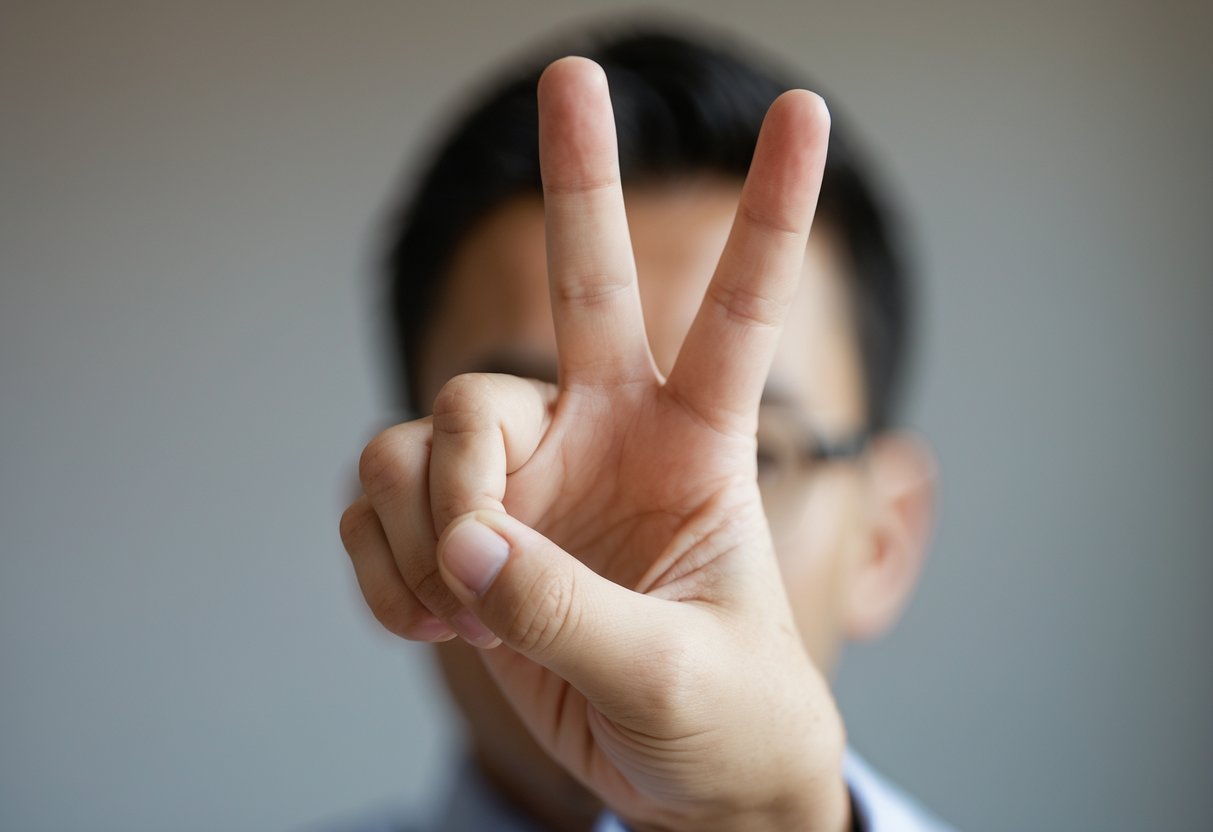
People often link the gesture to English archers from the Battle of Agincourt, but honestly, that story’s up for debate. Either way, everyone in Britain knows this sign is just as rude as flipping the bird in America.
If you’re planning a trip or chatting with Brits, knowing this might spare you an awkward moment. When someone flashes the two-finger salute, you’ll get the message loud and clear. Want to dig into the history and meaning? Stick around.
British Gestures Equivalent to Flipping the Bird

In the UK, the rude gesture closest to flipping the bird in the US looks pretty different. People over there use a two-fingered hand sign, which can throw you off if you’re not used to it.
Knowing these little cultural quirks can help you avoid misunderstandings.
The Two-Finger Salute
You make the two-finger salute by holding up your index and middle fingers, back of your hand facing the person you’re signaling.
This gesture is straight-up offensive in Britain, Ireland, Australia, and New Zealand. It’s basically the same as giving someone the middle finger in the States.
People sometimes call it the “V-sign” or just “the fingers.” Some say it goes back to English archers at the Battle of Agincourt in 1415, who supposedly showed these fingers to their enemies as a taunt.
If you see this gesture in the UK—with the back of the hand showing—it’s their way of flipping someone off. The single middle finger, like in America, doesn’t show up as often.
Differences Between UK and US Hand Gestures
You might assume flipping the bird always means sticking up your middle finger. That’s the deal in the US and Canada. In Britain, though, people usually go for the two-finger salute.
Americans use one finger to insult, but the British stick up two fingers in a specific way. The meaning’s the same, but the look changes. If you use the American middle finger in the UK, people will get it, but it’s not the classic move.
One more thing: the “peace sign” with two fingers is only friendly if your palm faces out. Flip your hand around, and suddenly it’s rude.
Common Misunderstandings by Visitors
Travelers to Britain sometimes mess up and use the peace sign the wrong way, not realizing it’s rude.
People push up their glasses with two fingers near their eyes and don’t mean anything by it, but it can confuse Americans who only know the middle finger.
The middle finger gesture still exists in the UK, but you just don’t see it as much. If you’re visiting, watch your hand position to avoid any mix-ups. It might save you from a weird or embarrassing moment.
If you want more details about why the British use the two-finger salute, check out this explanation.
Historical and Cultural Origins of the Gesture

To really get the British version of flipping the bird, you’ve got to look at how these hand gestures started and changed over time. It’s a bit wild how much meaning can hide in something as simple as a couple of fingers.
digitus impudicus in Ancient Rome
The middle finger gesture actually dates back to Ancient Rome, where people called it the digitus impudicus. That’s Latin for “shameless finger,” and they used it to insult or disrespect someone.
Romans didn’t mess around—it was a clear, wordless way to offend.
This old-school move set the stage for the middle finger’s meaning in Western culture. No wonder it stuck around and people everywhere still recognize it.
Evolution of British Hand Gestures
In Britain, people still use the middle finger as an insult, but there’s another classic: the “Two Finger Salute.” You make it by raising your index and middle fingers, with your knuckles facing out. It’s usually considered pretty rude.
There’s a popular tale that connects this gesture to English archers from the Hundred Years’ War. The French supposedly threatened to chop off the archers’ bow fingers. So, the story goes, archers would flash those two fingers to show they still had them.
No one has really proven that story, but the gesture stuck around as a symbol of defiance. These days, folks in Britain use it to show contempt or just plain annoyance. It’s not the same as the palm-out V-sign, which means peace or victory.
Gestures like this change over time, shaped by culture and conflict. If you’re curious, you can read more about the meaning and history of the Two Finger Salute.


