
Bed bugs can turn your nights into a stressful routine. The best approach at home is not a single product.
Confirm the infestation, contain it quickly, and use a combined plan of cleaning, heat, encasements, and targeted treatments instead of relying on one spray.
That matters because bed bugs hide well and spread easily through bedding and furniture.
Bed bugs can return if you miss eggs or nearby hiding spots.

You can often start with strong DIY steps. A larger bed bug infestation may need professional pest control or an exterminator.
The goal is not just to kill visible bed bugs. You need to get rid of hidden bedbugs and stop new bites from showing up.
The Best Treatment Strategy First

Use several methods together for the best results. Integrated pest management is the standard approach for a bed bug treatment plan in a home or office.
Why Integrated Pest Management Works Best
Integrated pest management combines inspection, cleaning, heat, encasements, and carefully chosen products.
The EPA explains that this mixed strategy is often the most effective way to control bed bugs, since no single step reaches every hiding place or life stage.
According to the US EPA’s bed bug guidance, treatment takes time and patience.
When DIY Can Work And When It Usually Fails
DIY methods work when you catch the problem early, stay organized, and treat every affected area.
DIY usually fails when you treat only visible bugs, skip cracks and fabrics, or spread the infestation by moving items around.
If the infestation is widespread, professional pest control may save time and reduce the risk of missing hidden bugs.
Why Bug Bombs And Quick Sprays Are Poor Options
Bug bombs and fast sprays do not reach deep hiding spots and can push bed bugs into new areas.
They do little for eggs tucked into seams, frames, and wall gaps.
The EPA warns that foggers and other DIY products need research and proper use. Always use only legal control methods.
Confirm The Problem And Contain It Fast

Before you treat anything, make sure you are dealing with bedbugs and not another pest.
Next, isolate the problem so you do not move bugs into other rooms.
How To Spot Live Bedbugs And Other Clear Signs
Look for live bedbugs, shed skins, tiny dark spots, and clusters near sleeping areas.
Bed bug bites can be clues, especially if you wake up with new marks after sleeping in the same spot.
Bites alone do not confirm an infestation, since other insects and skin reactions can look similar.
Where To Check Including Mattresses Electronics And Cracks And Crevices
Check mattress seams, box springs, bed frames, baseboards, and nearby furniture first.
Inspect electronics, TVs, and other items near the bed, as well as cracks and crevices where bugs can hide during the day.
A flashlight and a slow, careful inspection help you find the full spread before you start cleaning.
How To Isolate Laundry Bedding And Furniture Without Spreading Them
Bag bedding and clothing before carrying them through the home.
Move items directly to the washer and dryer, and keep clean items sealed until the room is treated.
Avoid dragging furniture from room to room. That can spread live bedbugs into new areas.
Use The Most Effective Nonchemical And Chemical Tools
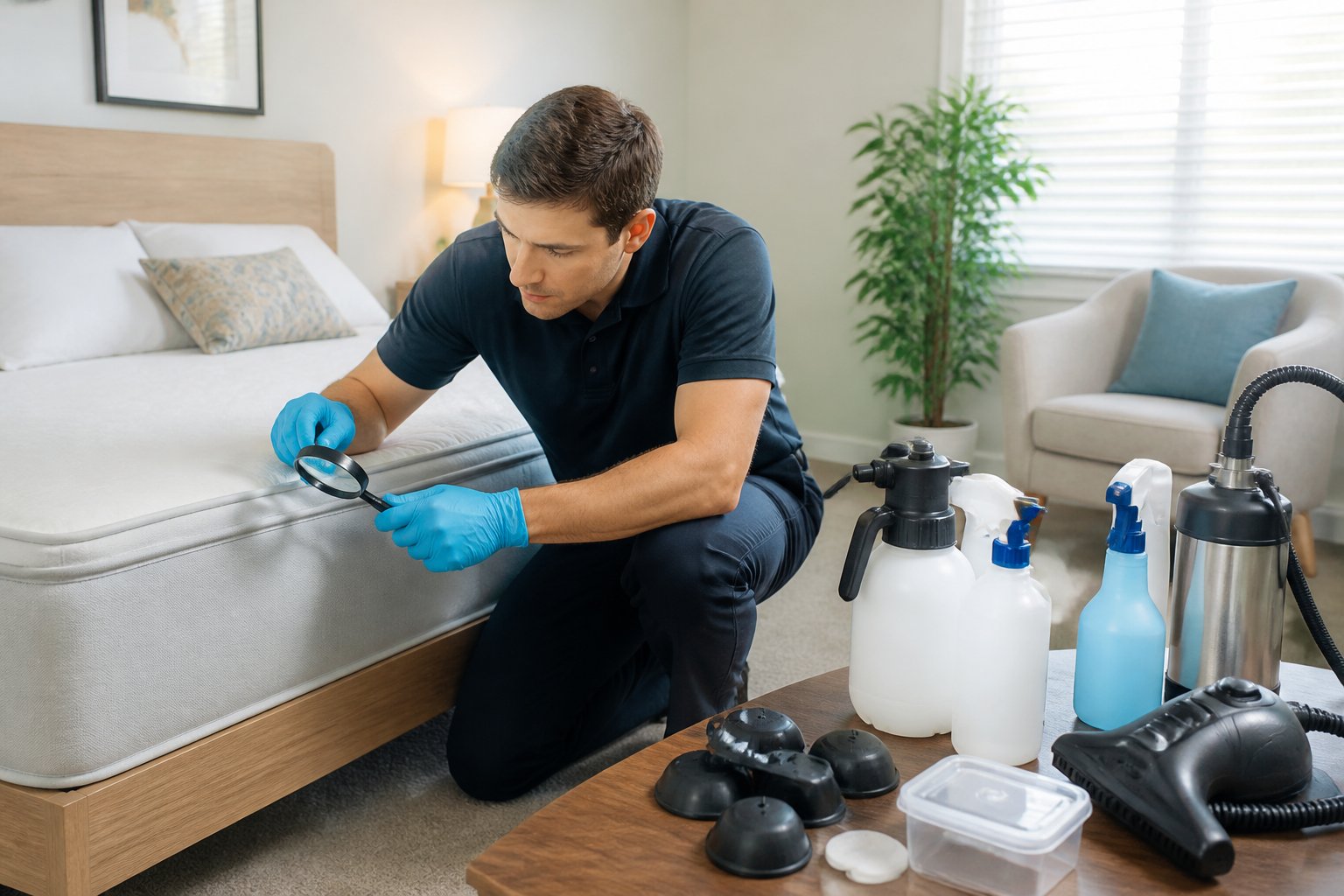
Use heat, physical barriers, and carefully selected products together.
Your goal is to kill bed bugs where they hide and make the space harder for them to use again.
Heat Laundering And Steam Cleaning
Wash bedding, clothing, and washable fabrics on hot settings.
Dry them on high heat long enough to reach the items’ center.
Steam cleaning works well on mattress seams, bed frames, and upholstered edges when you move slowly enough to let the heat penetrate.
Mattress Covers Box Spring Encasement And Bed Bug Interceptors
A tight mattress cover and box spring encasement trap bugs inside and make inspections easier.
Bed bug interceptors go under bed legs, helping you monitor activity and reduce climbing access.
These tools do not replace treatment but make the whole plan more effective.
Diatomaceous Earth And Other Treatments To Use Carefully
Apply diatomaceous earth lightly in dry, hidden areas where bed bugs travel, following label directions.
Too much powder can reduce effectiveness and create a mess.
If you use any chemical bed bug treatment, follow the label exactly.
Avoid mixing products unless the instructions allow it.
Prevent Reinfestation And Protect Daily Life

Even after treatment starts, keep a plan for your routine and your belongings.
Small habits can protect your health, sleep, and daily wellness while you clear the infestation.
What To Expect For Bites Sleep And Overall Health
Bed bug bites can itch and interrupt sleep, which may leave you tired and irritable.
Most people improve once the bugs are removed and the room is treated.
If bites become infected or you have a strong reaction, seek medical advice.
How To Reduce Risk After Travel Or In Shared Buildings
After travel, inspect luggage, wash clothes right away, and keep bags off beds and upholstered furniture.
In apartments, hotels, dorms, and other shared buildings, stay alert for new signs and avoid bringing used furniture home without inspection.
Careful routines help you avoid another bedbug infestation.
What To Know If You Have Pets Children Or Busy Households
If you have pets, dogs, children, or a busy household, choose treatments that are safe for your routines. Follow label directions closely.
Keep pets and kids away from treated areas until it is safe for them to reenter.
Use a simple, organized plan to protect your wellness, fitness, and lifestyle. This approach helps you get the infestation under control.


