
Bed bugs do not find you by chance. They track the signals your body gives off and stay close to where you sleep so they can feed when you are still.
If you know how bed bugs find humans, you can spot the cues they follow and check the right hiding places.

The common bed bug, Cimex lectularius, uses carbon dioxide, body heat, and skin odors to locate people. Bed bug bites often show up after a night’s sleep, and the insects gather near beds instead of roaming randomly.
The Main Cues Bed Bugs Use To Detect People

Bed bugs respond to several signals, not just one. They use your breath to home in from farther away, then rely more on warmth and scent as they get close.
Carbon Dioxide As The Strongest Long-Range Signal
Your exhaled carbon dioxide gives bed bugs a clear signal to follow. Researchers have found that bed bugs move up the carbon dioxide gradient toward a resting person, which makes sleeping areas their main target.
This long-range pull explains why you may not notice them during the day. Bed bugs wait near hiding spots until your breathing signals that a host is nearby.
Why Body Heat Helps Them Close In
Once bed bugs get near you, your steady body heat helps them narrow the distance. They sense warmth and move toward a person resting nearby, which makes a warm bed or couch an easy feeding opportunity.
Heat reinforces the carbon dioxide trail and helps bed bugs confirm they are near a usable host.
How Skin Odor Influences Host Finding
Skin odor and sweat add another layer of guidance. Human scent helps bed bugs stay oriented after they move in close.
A sleeping person is easier for them to locate than someone who is active and moving around.
Why They Gather Near Beds And Bite At Night

Bed bugs stay close to sleeping areas because feeding is safer when you are still. Their nighttime habits reduce the chance of being disturbed, and nearby hiding spots let them retreat quickly after feeding.
How Stillness And Sleep Make Feeding Easier
When you are asleep, you move less and respond more slowly. Bed bugs get a better window to reach your skin, feed, and leave before you notice much movement.
They avoid active, bright spaces. A quiet bedroom at night gives them the best chance to feed and remain hidden.
Common Harborage Areas Around The Bed
Bed bugs cluster where they can stay near you without being exposed. Common spots include the bed frame, headboard cracks, nearby furniture, baseboards, and the edges of upholstered items.
This habit keeps them close enough to feed often while minimizing travel. If you are checking a room, start near the bed and move outward in a careful pattern.
Why Mattress Seams And Bed Frames Matter
A mattress seam is one of the easiest places for bed bugs to shelter. Tight folds, stitching, and frame joints give them narrow spaces to hide during the day and emerge at night.
These areas are worth inspecting first because they combine concealment with proximity to your sleeping body. The closer the hiding place, the less distance bed bugs need to travel to bite.
How To Spot Activity Before It Spreads
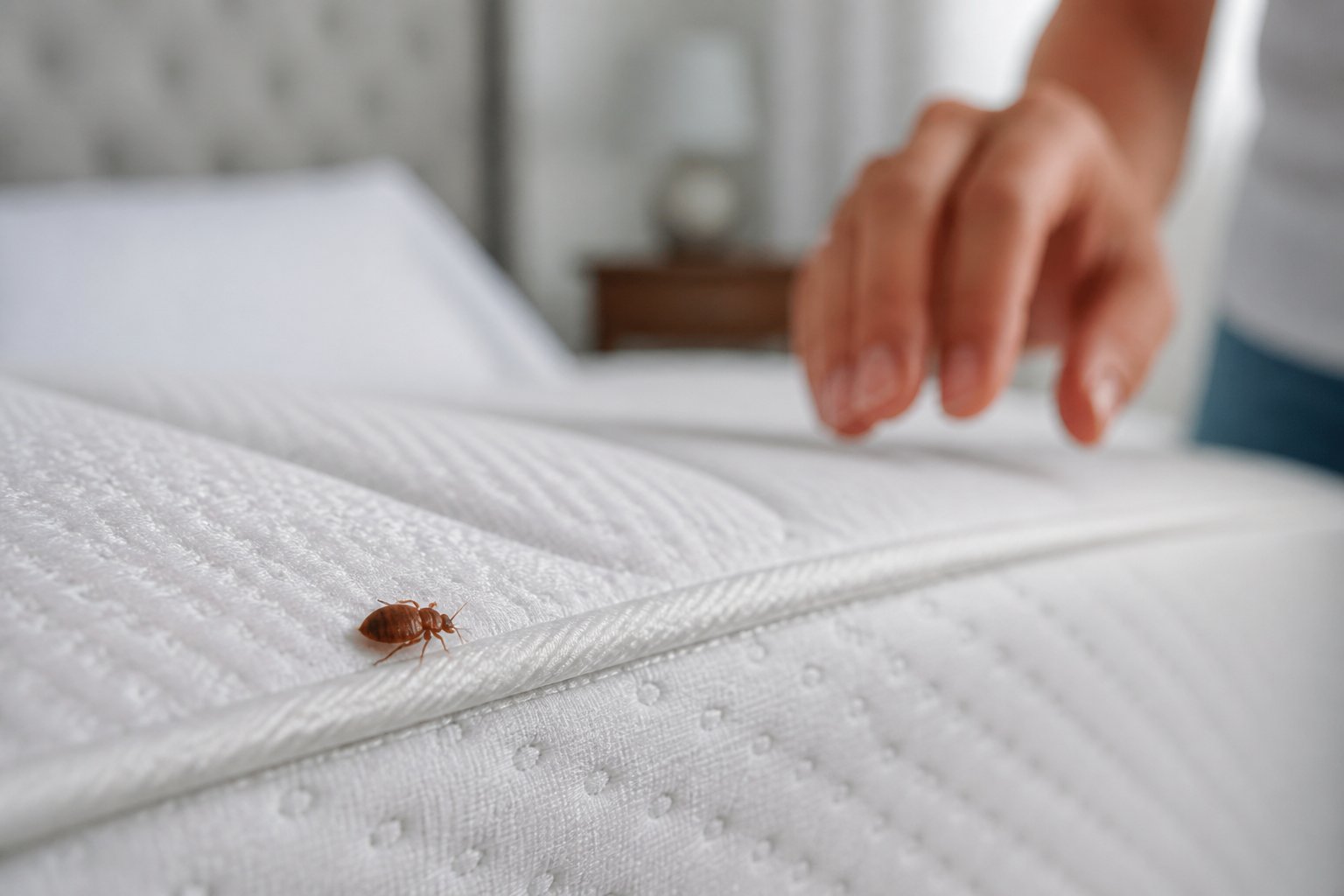
Early detection depends on noticing small clues before the problem becomes obvious. The most useful signs show up on bedding, seams, and the furniture closest to where you sleep.
Early Clues On Sheets, Mattresses, And Furniture
Look for rust-colored stains, tiny dark specks, shed skins, and live bugs in folds or seams. These are common signs of bed bugs and often appear before a full bed bug infestation is easy to see.
Your sheets and mattress edges are a good starting point because they catch evidence in places you already inspect often. Upholstered furniture near the bed can show the same pattern.
Where To Check During A Home Inspection
Check mattress seams, box spring edges, bed frames, headboards, nightstands, and nearby baseboards. Also inspect outlets, wall gaps, and any upholstered chairs or couches close to the sleeping area.
A slow, methodical inspection works better than a quick glance. Bed bugs are small, flat and hide well in tight spaces.
The Most Reliable Signs In Low-Level Activity
Physical evidence is the clearest sign of bed bugs. Eggs, shed skins, fecal spots, and live insects give stronger confirmation than skin reactions alone.
Bites can support your suspicion, especially if you notice them after sleep, but they do not prove the insects are present.
What Actually Helps Stop An Infestation

You need more than chasing the ones you can see to stop bed bugs. Their ability to hide, crawl, and spread through luggage, furniture, and seams makes control difficult without a focused plan.
Why Hitchhiking And Hidden Harborages Make Control Hard
Bed bugs spread by hitchhiking on clothing, luggage, used furniture, and other items. Once inside, they slip into hidden harborages that are easy to miss and hard to reach.
A few visible bugs can point to a larger hidden problem. If you miss even a small cluster, the infestation can return.
When DIY Steps Fall Short
DIY cleaning can help reduce spread, especially when you wash bedding hot, vacuum carefully, and keep clutter down. Even so, these steps may not reach deep crevices, wall gaps, or bugs tucked far inside furniture.
If you keep seeing new activity after cleaning, the problem is likely larger than the visible signs suggest. At that point, repeated home efforts can slow things down, but they may not eliminate the insects.
When To Call Professional Help
Call professional pest control when activity spreads beyond one bed, keeps coming back, or appears in multiple rooms.
A professional heat treatment reaches areas that routine cleaning cannot.
Professional pest control helps you create a plan to eliminate bed bugs and protect the rest of the home.
Act quickly to improve your chances of stopping the infestation before it grows.


