
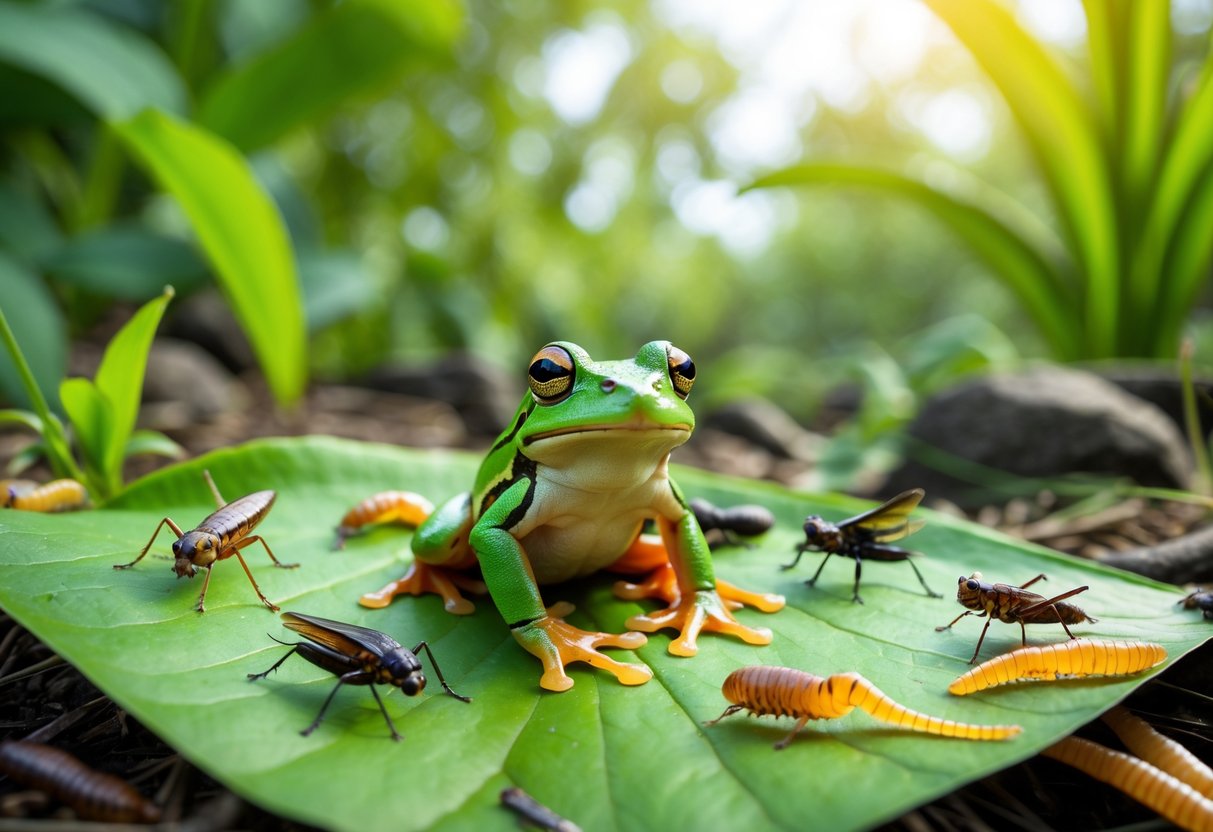
When you’re feeding your frog, the best choice is a mix of live insects—think crickets, mealworms, and small worms. These bugs give frogs the protein and nutrients they really need to stay healthy and active.
Offering your frog a variety of foods helps mimic what they’d find in the wild. It usually keeps them much happier, too.
Maybe you’re curious about fruits or veggies. While a few frogs might nibble on tiny bits of fruit or greens, insects should always make up most of their meals.
What you feed your frog can really affect how well they grow and how lively they seem.
Choosing the Best Food for Frogs

Feeding your frog the right stuff matters for its health and mood. You want to pick foods that actually give them the nutrition they need and feel natural for them.
Different foods offer different benefits. Knowing your options helps you make better choices.
Recommended Commercial Frog Foods
You’ll find commercial frog foods in pellets or powders. Companies design these for frogs and add important vitamins and minerals that live bugs might not have.
These work especially well for young frogs or tadpoles who need a little extra nutrition.
Pick a product made for frogs, not just any reptile or fish food. Some brands even make formulas for certain species, like tree frogs or Pacman frogs.
Always check the nutrition label so you know it fits your frog’s needs.
Tip: If you want to boost nutrition, dust live insects with powdered supplements. But honestly, it’s best to check with your vet before adding anything new.
Live Insects and Natural Prey
Most of your frog’s meals should come from live insects. Frogs eat crickets, worms, flies, and sometimes even small mice if they’re big enough.
Crickets are a favorite. They’re easy to buy and you can gut-load them—basically, feed them healthy stuff first so your frog gets more nutrients.
Mealworms are another option, but they have a lot of chitin, which is tough for frogs to digest. It’s better to offer mealworms only sometimes.
Dubia roaches and fruit flies work great for smaller frogs. Just remember, always pick insects that aren’t bigger than your frog’s head to prevent choking.
Fruit and Plant-Based Options
Most frogs really don’t eat fruit or plants since they’re carnivores. A few, like some tree frogs, might nibble on soft fruit now and then, but it’s not their main food.
Don’t feed them human snacks or pet food meant for other animals. Those can lack the right nutrients and might even harm your frog.
If you want to give your frog variety, stick with insects and commercial diets made for frogs. That keeps their diet balanced and supports their natural hunting instincts, which is actually good for their mental health.
If you want more details, check out what vet experts say about live insects and commercial frog foods.
Food Tips for Tadpoles and Young Frogs

Feeding young frogs means you have to pay close attention at every stage. Tadpoles mostly eat plants and need food rich in calcium and vitamins.
As they grow, you’ll want to add tiny insects and proteins to help them develop.
Special Nutritional Needs for Tadpoles
Tadpoles start out as herbivores, so they need a diet high in plant matter. You can feed your tadpoles algae, boiled leafy greens like spinach or lettuce, and aquatic plants.
These foods provide fiber and important vitamins that help with early growth.
Special tadpole foods are available, too. They’re made with balanced nutrients like calcium and amino acids, which help tadpoles develop strong shells and bones.
Skip the human foods like bread or processed snacks—those can upset their digestion and really aren’t good for them.
Transitioning From Tadpole to Adult Diet
When your tadpoles start growing legs and turning into little froglets, their diet changes pretty quickly. They suddenly need a lot more protein for muscle growth and all that new energy.
Try adding in small, soft insects like fruit flies or pinhead crickets. Tiny worms work too. Just make sure whatever you offer is small enough—they can choke if it’s too big.
It’s still a good idea to keep some plant-based food nearby during this stage. That way, their diet stays balanced while they figure things out.
You can dust their prey with a calcium or vitamin supplement to help prevent any deficiencies. They’re switching from eating mostly plants to being little carnivores, so that extra boost matters.
Feed them in small amounts a few times a day. Their metabolism really speeds up as they grow, so they’ll appreciate it.
If you want more tips on feeding tadpoles, check out this guide on the best tadpole food and diet tips.