
When a bee touches you, it’s usually just taking a break or checking things out. Most of the time, if a bee lands on you, it won’t sting or hurt you unless you panic or wave your arms around.
Bees aren’t out to get you. They’re just doing their pollinating thing and might pause for a second on your arm or shirt.
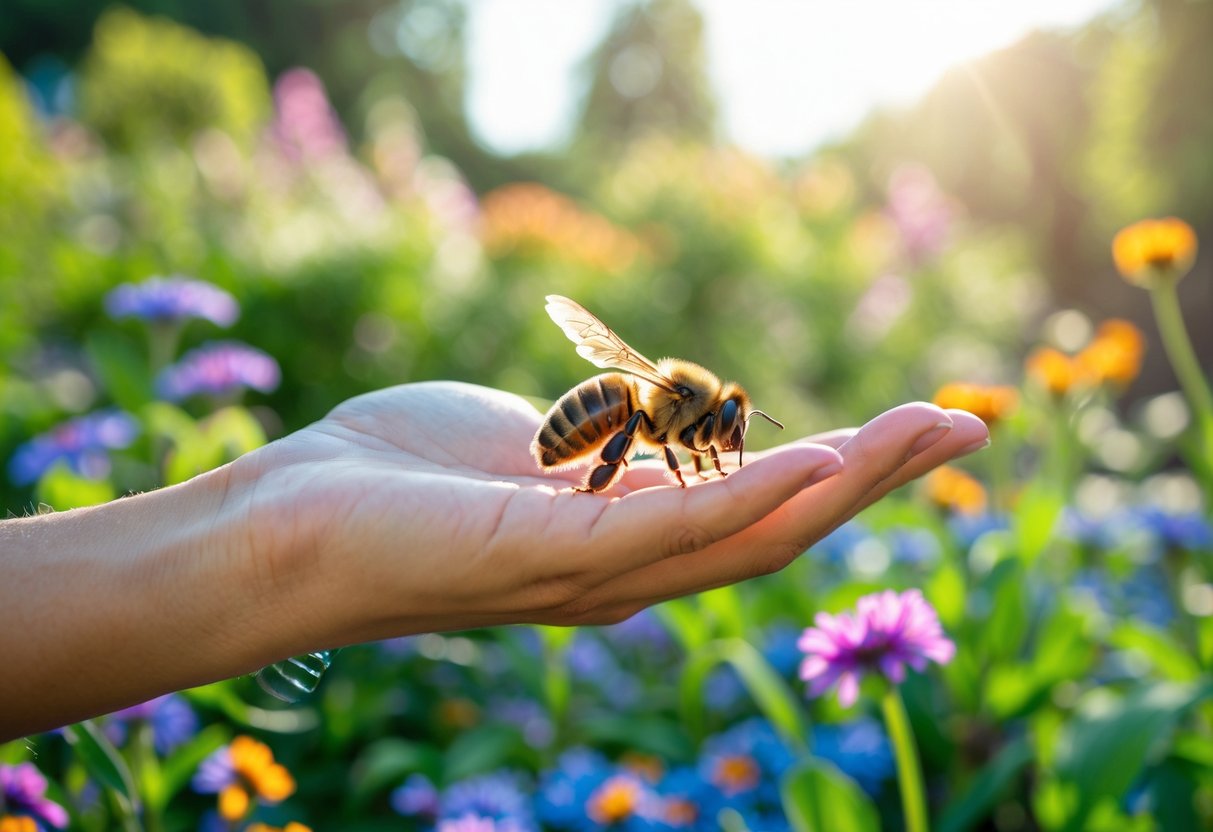
If a bee lands on you, try to stay still. Swatting or jerking away can make the bee nervous and more likely to sting.
When you know this, it’s a lot easier to stay safe and help the bee out, too. After all, bees play a huge part in keeping our environment healthy.
Reacting the right way can turn what feels like a tense moment into a calm one. If you learn how to handle it, you might even find yourself appreciating these little pollinators up close.
What Happens When a Bee Touches You?

Usually, when a bee touches you, it’s just curious or searching for something. Most of the time, nothing bad happens, but knowing why bees land on people and how to react can keep you safe.
If you understand bee behavior, you’ll probably stay calmer and avoid getting stung.
Bee Behavior and Reasons Bees Land on Humans
Bees focus on flowers, but sometimes they check out people instead. Maybe your sweat, your perfume, or your bright shirt catches their attention.
Sometimes bees need a break or just want to explore a warm spot, like your skin or clothes.
They don’t mean to bother anyone. Usually, they’re just being careful and scoping things out.
When a bee lands, it uses its feelers and even tastes the surface with its tiny mouthparts.
Knowing that bees aren’t naturally aggressive can help you keep your cool if one lands on you. They’re really just after pollen and nectar, not looking for a fight.
Immediate Effects of a Bee Touch Without a Sting
If a bee touches you but doesn’t sting, you’ll probably just feel a light tickle or soft brush. It shouldn’t hurt at all.
You might notice the bee walking around on your skin or clothes, just checking things out.
Most bees will leave pretty quickly if they don’t find anything interesting or feel threatened. If you stay still or move slowly, the bee will usually just fly off.
Your body probably won’t react to a simple touch. If you have sensitive skin, you might get a little itchy, but that’s about it.
Try not to make sudden moves, since that could scare the bee.
Risks of Provoking a Bee to Sting
If you swat at a bee or make fast moves, you can make it feel threatened. If the bee stings you, it injects venom that causes pain, redness, and swelling.
Bees use their sting to defend themselves or their hive.
You’re more likely to get stung if you grab the bee, get too close to its hive, or trap it. Bees will protect themselves if they sense danger.
If you just chill and let the bee leave on its own, you’ll probably avoid getting stung. Staying calm really makes a difference.
For tips on what to do if a bee lands on you, check out How to React When a Bee Lands on You.
Bee Stings: Reactions, Biology, and Safety Steps

If a bee touches you and ends up stinging, a few things happen right away. Your body reacts to both the sting itself and the chemicals the bee injects.
Knowing what’s going on under your skin can help you stay safe.
How Bees Sting and the Role of the Barbed Stinger
Bees protect themselves with a barbed stinger. When a bee stings, the barbs stick in your skin, and the bee usually loses its stinger as it flies off.
The stinger connects to a venom sac, and even after the bee leaves, venom keeps pumping into your skin for a bit.
Because of the barbs, the stinger can be tough to get out. It’s best to remove it quickly and gently to limit how much venom gets in.
Bee Venom and Its Effects on the Body
Bee venom contains proteins and chemicals that cause pain, swelling, redness, and warmth around the sting. The venom hits your nerve endings, which is why it stings so much.
You might notice swelling or itching, too. How much it bothers you depends on your body and how much venom you get.
Some folks just feel mild discomfort, while others might react more strongly.
Your Immune System and the Release of Histamine
Your immune system jumps into action if you get stung. When venom enters your skin, your body releases histamine.
Histamine makes blood vessels widen and skin swell up.
That’s why stings get red, swollen, and itchy. Your immune system is trying to protect you by sending more blood and immune cells to the spot.
Sometimes, this reaction gets pretty intense and can cause swelling or discomfort beyond just the sting area.
Recognizing and Responding to Anaphylaxis
Some people experience a severe allergic reaction called anaphylaxis. It doesn’t happen often, but when it does, it’s dangerous.
Watch for signs like trouble breathing or swelling in the throat. You might also notice a racing heartbeat, dizziness, or that faint, woozy feeling.
If you suspect anaphylaxis in yourself or someone nearby, call emergency services right away. Grab and use an epinephrine injector if you have one—seriously, it can make a huge difference before help shows up.
If you want more details about treating and preventing these reactions, check out the Mayo Clinic’s overview on bee sting symptoms and causes.


