
If a sweat bee stings you, you’ll probably feel a small jolt of pain and notice some redness or swelling right where it happened. Sweat bee stings usually aren’t dangerous—they just cause a bit of discomfort unless you’re allergic.
Unlike honeybees, sweat bees keep their stingers after they sting, so it’s over with pretty fast. Honestly, you might not even realize it happened until you spot the bump.
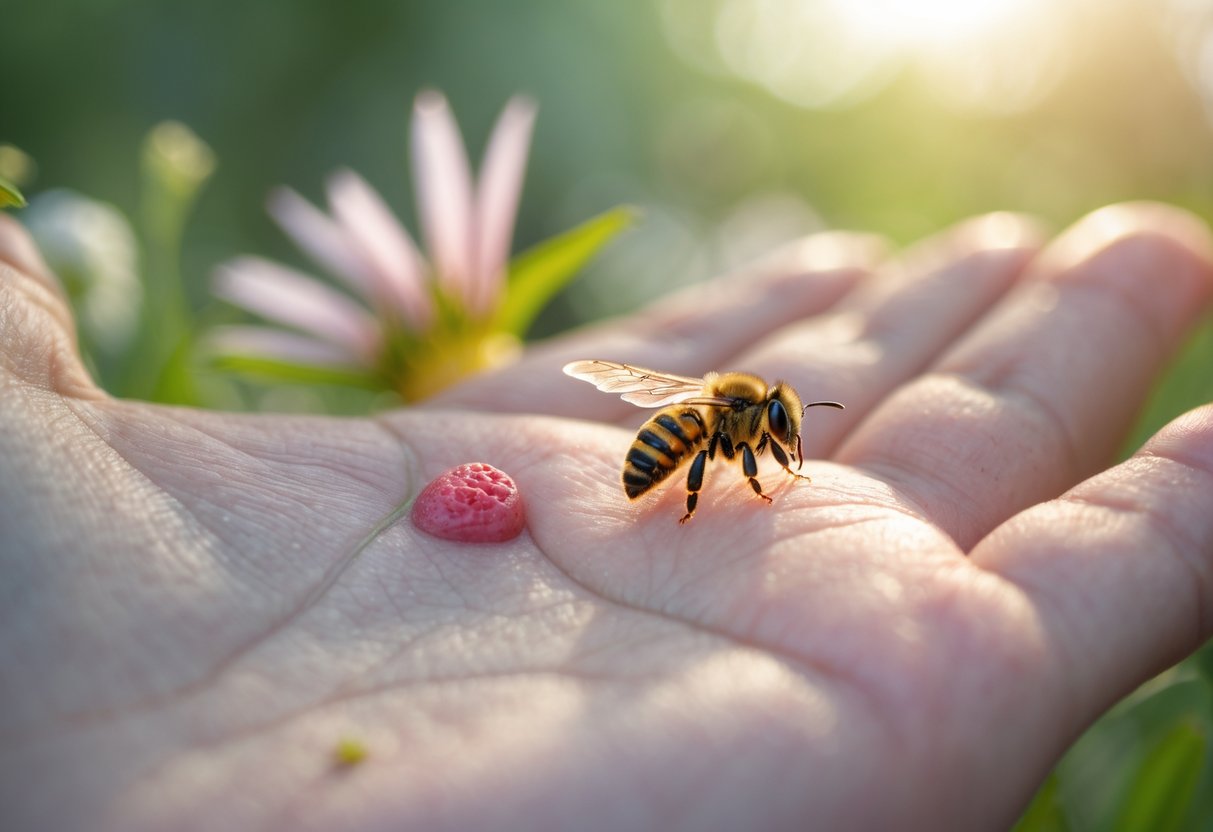
Ever wonder why these little bees sting in the first place? They mostly sting if they feel threatened or get trapped, but they’re not aggressive. If you know what to expect, it’s a lot easier to stay calm and handle things. Curious about how to treat a sting or what it feels like? Let’s get into it.
What Happens If a Sweat Bee Stings You?

When a sweat bee stings you, your body reacts with a few pretty standard symptoms. The venom hits your skin and usually causes pain and swelling.
How you feel depends a lot on whether you have allergies. Your recovery really comes down to how your body handles it and what you do afterward.
Immediate Sensations and Symptoms
Right after the sting, you’ll probably feel a sharp, quick pain—nothing too dramatic. Most people say it hurts less than a honeybee sting.
You’ll likely notice some redness and a bit of swelling where you got stung. Sometimes there’s a small bump or an itch that hangs around for a few hours.
Only female sweat bees can sting, so if you got stung, it was definitely a female. Their sting is fast and they don’t leave the stinger behind.
Sweat Bee Venom and Its Effects
Sweat bee venom isn’t as strong as what honeybees or wasps have, but it still packs proteins that irritate your skin.
Your body releases histamine when the venom hits, which causes the redness, itching, and swelling.
If you scratch, you’ll probably just make it worse or slow down healing.
The venom stays mostly in your skin and doesn’t really get into your bloodstream in big amounts. Serious symptoms rarely happen.
Mild Versus Severe Reactions
Most people get away with just mild pain, redness, and swelling after a sweat bee sting.
If you have allergies, though, your body might overreact—think swelling beyond the sting, trouble breathing, dizziness, or hives. That’s a medical emergency.
Not sure if you’re allergic? Watch out for swelling in your face or throat, or any trouble swallowing. Those are big warning signs.
Even if you’re not allergic, getting stung a lot can make you more sensitive, so keep that in mind.
Duration and Recovery Timeline
Pain and redness usually start to fade in a few hours.
Swelling and itching can hang around for a day or two, but simple care like ice packs and cleaning the spot really helps.
Most people bounce back in two or three days if there’s no allergy or infection.
If the sting looks worse or lasts longer than a few days, you should check in with a doctor—just in case.
For more on treating symptoms, check out this detailed guide to sweat bee stings.
How to Treat and Prevent Sweat Bee Stings

Sweat bees from the Halictidae family sting when they feel threatened or get trapped. Their stings tend to cause mild pain and swelling.
If you know how to handle a sting and avoid these pollinators, you can enjoy the outdoors without too much worry.
First Aid and At-Home Remedies
If a sweat bee stings you, gently brush the bee away to prevent more venom from getting in. Wash the area with soap and water to lower your risk of infection.
Put a cold pack on the sting to help with pain and swelling. Some people use a baking soda paste to calm itching and neutralize the venom.
Try not to scratch. Over-the-counter creams like hydrocortisone or an antihistamine can help with the itch and discomfort.
When to Seek Medical Attention
You can treat most sweat bee stings at home. But get medical help if you:
- Have trouble breathing or notice swelling in your face or throat
- Break out in a rash or hives all over
- Get stung several times in one spot
- Feel severe pain that gets worse, or see redness spreading away from the sting
These could mean you’re having an allergic reaction and need urgent care.
Tips for Avoiding Sweat Bee Encounters
Sweat bees love sweat and anything with a strong floral scent. So, skip the heavy perfumes or scented lotions if you’re hanging out outside.
Go for light-colored clothes, and if you can stand it, throw on some long sleeves and pants. You’ll want to do this especially when it’s warm out, since sweat bees seem to show up everywhere then.
If a bee buzzes near you, try to stay calm. Swatting at them? Not a great idea—quick movements might just make things worse.
Stick to natural insect repellents if you can, and keep an eye on your food or sugary drinks. Leaving those out just invites more bees to the party.


