
If the queen bee dies, your hive faces some pretty serious changes right away.
Without the queen’s eggs and pheromones, the colony can’t stay organized or healthy.
Worker bees get restless fast when they realize their leader is gone.
The whole colony could collapse if they don’t raise a new queen quickly.
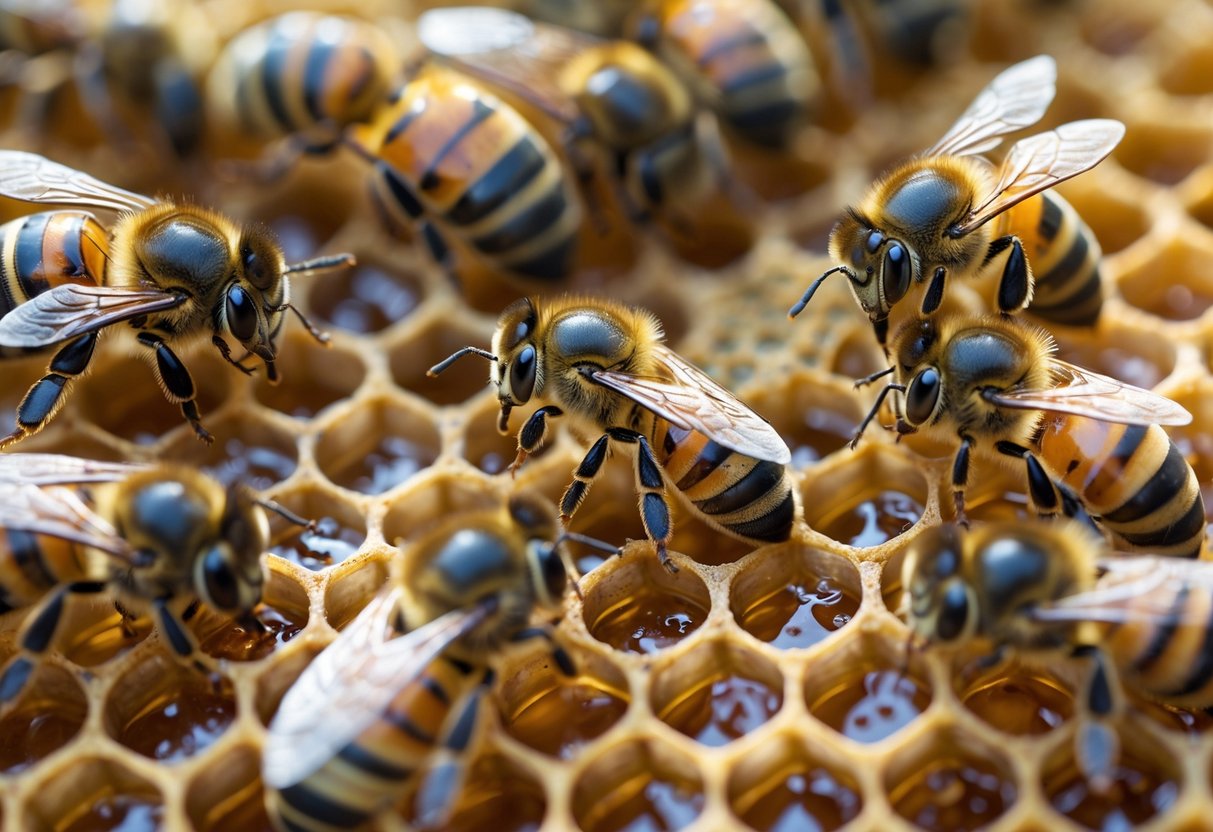
Your bees usually try to fix things by picking a larva and feeding it royal jelly to turn it into a new queen.
This takes a little time, and the hive might look confused and sluggish during this stretch.
It’s wild how much the hive relies on the queen—knowing what happens when she dies really helps you see her importance.
You can actually do a lot to support your colony through this tough patch.
If you’re curious about how this works or want to spot the signs, keep reading.
You’ll find tips to help your bees stay strong and see why the queen matters so much.
What Happens Immediately After a Queen Bee Dies

When the queen bee dies, the hive instantly feels the difference.
Worker bees know she’s gone because they can’t sense her chemical signals anymore.
This loss sets off a chain reaction in their behavior and how the whole hive runs.
Worker Bee Detection of Queen Loss
Worker bees pick up on the queen’s absence mostly by noticing her pheromones are missing.
These chemicals basically tell everyone she’s alive and running the show.
When the pheromones disappear, the workers realize something’s off.
They stop their usual queen care and start searching for larvae that could become the next queen.
They feed these chosen larvae royal jelly to start the transformation.
Changes in Hive Organization
The hive’s organization falls apart pretty quickly after losing the queen.
Her pheromones usually keep things calm and orderly.
Without her, confusion sets in, and bees start shifting roles.
Workers begin building special queen cells to get ready for a new queen.
The hive suddenly focuses on survival and replacing the queen, not normal routines.
Egg laying stops right away, so brood care slows down too.
Impacts on Bee Behavior and Activities
Bee behavior changes almost overnight.
Worker bees get more frantic and work with new urgency to save the hive.
You’ll probably notice them feeding certain larvae more and paying less attention to foraging.
Some worker bees even develop active ovaries since nothing blocks them anymore.
Still, those eggs aren’t usually fertile, so it doesn’t really help.
The hive’s main goal is to raise a strong new queen and get things back on track.
For more details, check out what happens when a queen bee dies in a hive.
Queen Replacement and Consequences for the Colony

When a queen bee dies, your bees have to act fast to keep the hive going.
The workers start raising a new queen by building queen cells and feeding chosen larvae royal jelly.
Whether or not they succeed really affects egg production and the hive’s future.
Emergency Queen Cell Creation
Your workers jump into action, building emergency queen cells almost right away.
These cells look bigger than normal brood cells and hang vertically inside the hive.
The colony picks out young larvae and places them in these special cells to turn them into queens.
You’ll notice the bees working quickly to make sure at least one strong queen develops.
If they don’t make queen cells in time, your colony can’t reproduce or stay organized, and things can go downhill fast.
Feeding Larvae Royal Jelly
The larvae in queen cells get a special diet of royal jelly, which is pretty fascinating.
Nurse bees make this jelly from glands in their heads.
Royal jelly has the nutrients that help a larva become a fertile queen instead of just another worker.
This feeding step is everything—the right nutrition is what lets a queen develop her reproductive organs and live longer.
Success and Failure of Queen Replacement
If your bees manage to raise a new queen, she’ll take a mating flight and mate with drones outside the hive.
She comes back and starts laying eggs, bringing growth and order back to your colony.
But if the hive fails to raise or mate a new queen, things get bleak.
No new eggs means the worker population shrinks.
The hive struggles to forage, care for brood, and defend itself, and it might not survive.
Effects on Egg Production and Hive Health
If your queen isn’t healthy, egg production just drops off—or sometimes stops altogether. The colony really needs a steady flow of new eggs to keep enough workers around.
When there aren’t enough workers, everything from honey production to cleaning and even defending the hive takes a hit. It’s honestly a bit of a domino effect.
A missing or weak queen also messes with the pheromone signals in the hive. Workers get confused, and their behavior can get a little unpredictable.
This confusion opens the door for pests or diseases, like those pesky Varroa mites, to move in and cause even more trouble for the hive.


