
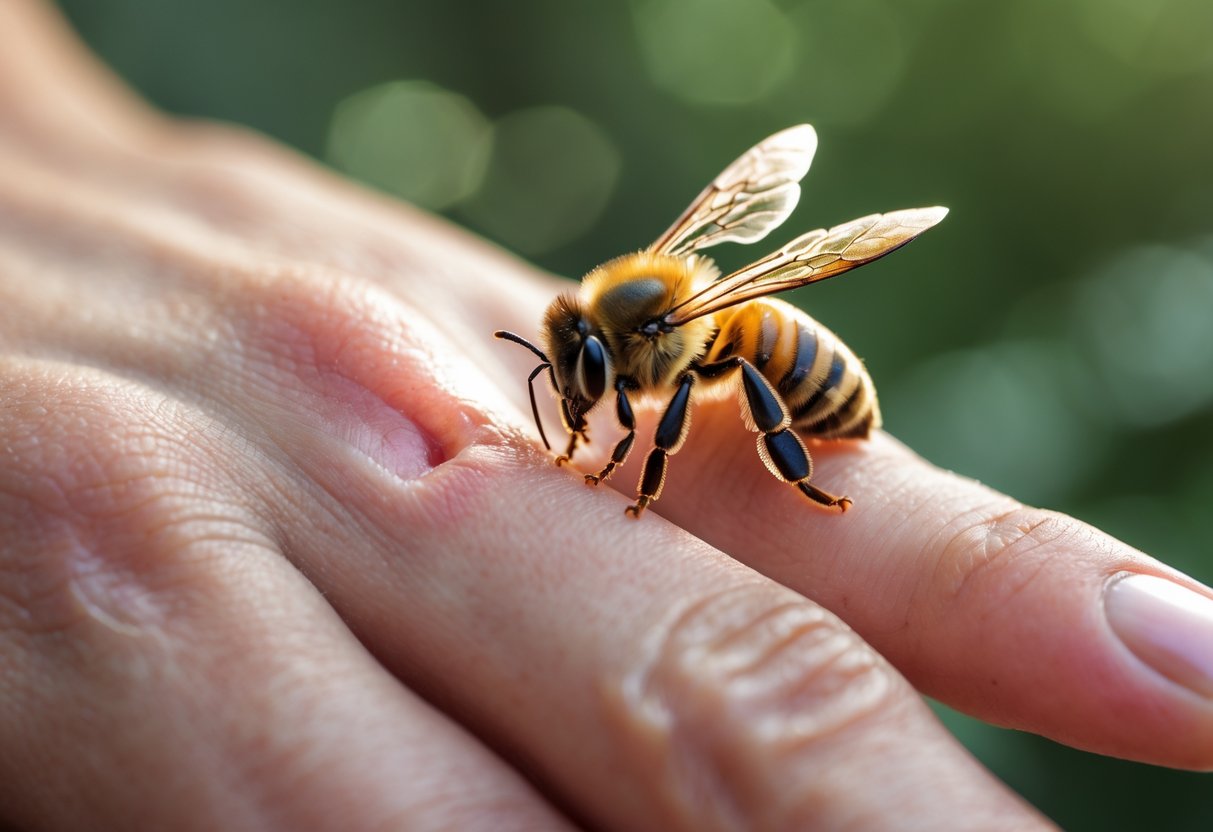
If a bee stings you, you’ll probably feel a sharp pain right away. Redness and swelling usually show up around the spot pretty quickly.
The bee injects venom into your skin, which leads to those mild symptoms—pain, swelling, maybe a bit of heat. Most folks can just treat these stings at home with basic first aid.
Sometimes, though, your body might freak out a little more—itching, hives, or even trouble breathing. If that happens, don’t wait around. Get medical help fast, since allergic reactions can get serious in a hurry.
It helps to know what to expect and how to react. That way, you can stay calm and do the right thing if you or someone else gets stung.
What Happens When a Bee Stings You
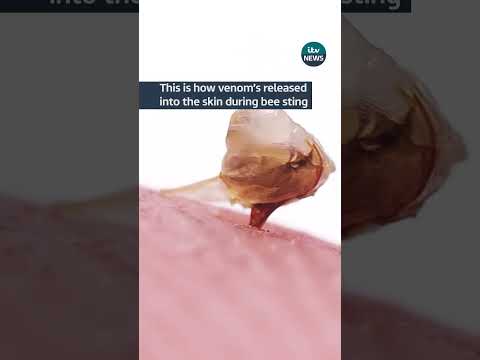
When a bee stings, it injects venom into your skin. This causes pain, redness, and swelling.
Your body reacts based on how sensitive you are to the venom. Some people just get a little irritated, while others might have a rougher time.
You’ll find out how the sting works, what symptoms to look for, and how bee, wasp, and hornet stings aren’t all the same.
How a Bee Delivers Its Sting
A honey bee uses its barbed stinger to pierce your skin. The barbs get stuck, so the bee can’t pull the stinger out.
That stinger keeps pumping venom even after the bee flies off (or, well, doesn’t). The bee usually dies soon after stinging you.
Bumble bees and carpenter bees, though, have smoother stingers. They can sting more than once and don’t lose their stinger.
The venom contains proteins that mess with your nerves and immune system. That’s what makes you feel pain and swelling almost immediately.
If you remove the stinger quickly, you limit how much venom gets in. That can help your reaction stay mild.
Symptoms and Body Reactions
Right after a bee sting, you’ll notice pain, redness, and swelling at the spot. The pain starts sharp and then turns into more of a dull ache.
The skin around the sting might get red and warm. Some folks also get itching or a light rash as their body reacts.
Usually, these symptoms stick to the sting area. They tend to fade away in a few hours or maybe a couple of days.
You can use ice, pain relievers, and antihistamines to help with swelling or itching. Keep an eye out for infection if the redness spreads or gets worse.
Risks of Severe Allergic Reaction
Some people have a severe allergic reaction called anaphylaxis. It can hit within minutes and you’ll need emergency care.
Signs include trouble breathing, swelling in your face or throat, dizziness, a racing heart, nausea, or feeling faint.
If you’ve had a bad reaction before, or notice those symptoms, get medical help right away. People with known bee allergies should carry an epinephrine auto-injector.
Fast treatment can prevent things from getting really dangerous.
Differences Between Bee, Wasp, and Hornet Stings
Honey bees usually sting once and then die because their stinger gets stuck. Wasps and hornets have smooth stingers, so they can sting you over and over.
Wasps and hornets are also more aggressive, in my experience. Their venom packs a bigger punch, too—more pain, more swelling.
Some people react worse to wasp or hornet stings than bee stings. If you know which insect stung you, you can treat the sting more effectively.
| Insect Type | Stinger Type | Sting Repeat? | Venom Impact |
|---|---|---|---|
| Honey Bee | Barbed, stays in | No, one sting | Mild to moderate |
| Bumble Bee | Less barbed | Can sting more | Similar to honey bees |
| Carpenter Bee | Smooth | Can sting multiple | Mild |
| Wasp | Smooth | Multiple stings | Can cause more pain |
| Hornet | Smooth | Multiple stings | Stronger venom effect |
Identifying the Bee and Typical Sting Effects

The kind of bee that stings you changes how your body reacts. Some bees leave you with more pain and swelling, while others barely leave a mark.
If you can figure out what type of bee stung you, you’ll have a better shot at treating it right and knowing what to watch for.
Bumble Bee Versus Honey Bee Reactions
Bumble bees and honey bees sting in different ways, and you’ll notice different reactions on your skin.
When a honey bee stings, it leaves its barbed stinger stuck in your skin. The bee can’t pull it out and usually dies.
That stinger keeps releasing venom, which means pain, redness, and swelling that might last a few days.
Bumble bees have smooth stingers and can sting you more than once. Your reaction to a bumble bee sting is usually less severe than a honey bee sting, but you’ll still get pain and swelling.
Some folks find bumble bee stings less itchy or less swollen than honey bee stings. Not everyone agrees, but that’s what a lot of people report.
Carpenter Bee Sting Characteristics
Carpenter bees look a lot like bumble bees but they don’t act the same. They rarely sting unless you really bother them.
If a carpenter bee does sting you, it feels a lot like a bumble bee sting but usually hurts less. The venom might give you mild pain and a little swelling.
Most people don’t have strong allergic reactions to carpenter bee stings. But if your swelling or redness gets worse fast, or you start having trouble breathing, go get medical help.
Multiple Stings Versus Single Sting
When you get stung just once, you’ll probably notice pain, redness, and swelling right where the sting happened. That’s your skin and immune system reacting to the venom.
The swelling might be tiny, or it could get bigger if you’re more sensitive. It really depends on the person.
Getting stung multiple times? That’s a different story. Each sting adds more venom, which ramps up the pain and swelling.
If you take several stings, you could start feeling weak or dizzy, maybe even run a fever. Some folks might have a severe allergic reaction—anaphylaxis—which is pretty dangerous and means you need emergency help right away.
| Sting Type | Pain Level | Risk of Allergic Reaction | Venom Left in Skin? | Bee Dies? |
|---|---|---|---|---|
| Honey Bee | Moderate to high | Possible, watch carefully | Yes | Yes |
| Bumble Bee | Mild to moderate | Less common | No | No |
| Carpenter Bee | Mild | Rare | No | No |
It’s honestly useful to know these differences. That way, if you get stung, you’re not left guessing what to do next.


