
Ever spotted a seahorse floating or swimming upside down and wondered what’s going on? When a seahorse ends up upside down, it usually means there’s a health or buoyancy problem, not just quirky behavior. It’s something that calls for quick attention.
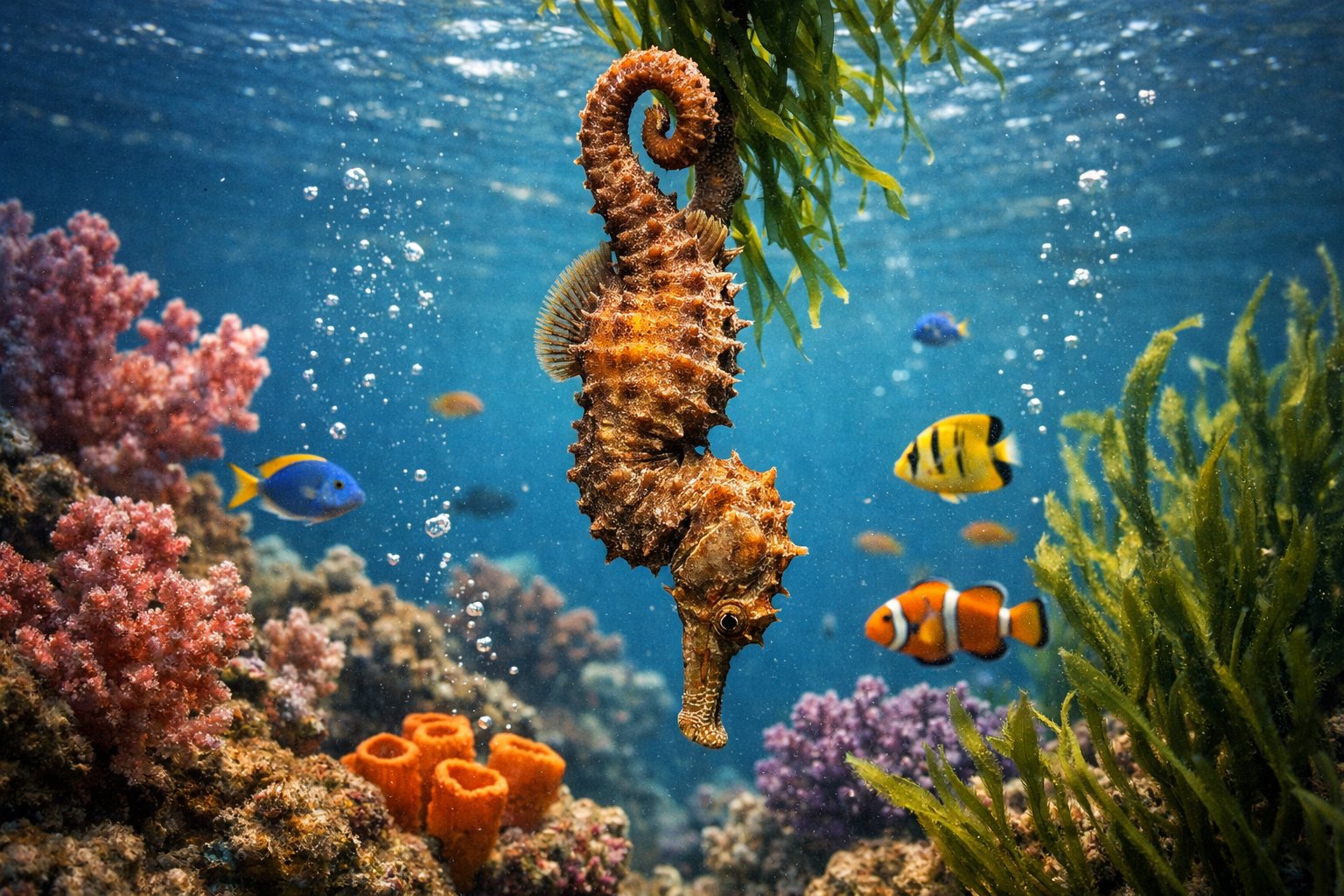
Let’s get into what causes this—things like gas bubble disease, swim bladder trouble, or stress from medications like copper. You’ll also learn how to tell if your seahorse can recover.
Stick around for easy checks and gentle steps you can take to help your seahorse out. I’ll also mention when it’s time to call an expert or try a safe home treatment, like carefully releasing bubbles from the pouch.
Meaning Of “Upside Down Seahorse”

People use this phrase when a male seahorse floats, tilts, or swims with his head down and belly up. Usually, it means he’s got a buoyancy issue that messes with swimming, eating, and comfort.
What The Term Refers To In Aquarium Settings
In tanks, “upside down seahorse” refers to a male who just can’t stay upright. You might see him leaning forward, rolling onto his side, or even totally flipped at the surface.
That’s not normal for a healthy seahorse.
Jot down when and where you see it. Did it happen after feeding? Maybe after a water change or breeding? Those little details help you and a vet track down the cause faster.
If you spot this, check for trapped air in the male’s brood pouch. That’s a common—and fixable—culprit in captive males.
Typical Symptoms Seen In Seahorses
Watch for clear signs: can’t stay upright, floating up top, not eating much, and a weak tail grip. Sometimes, you’ll notice sudden postural shifts when he moves, as bubbles inside the pouch shift around.
Behavior changes follow the physical stuff. Your seahorse might stop chasing after food or sucking it up. He could cling to a hitching post more than usual because swimming upright just wears him out.
Check for a swollen pouch or tiny bubbles. If you spot that, act quickly so things don’t get worse.
Common Causes Of Upside Down Positioning
Gas trapped in the brood pouch is the top cause for males. It can happen from gulped air, infection, or—though it’s rare—a busted swim bladder. That trapped gas shifts his balance and makes him tilt.
Other culprits include swim bladder trouble, constipation, or stress from bad water. Poor salinity, high ammonia, or low oxygen can mess with buoyancy and bring on symptoms.
You can often fix pouch gas by gently massaging the pouch, or by using a small catheter or eyedropper to let the bubbles out. In some cases, a vet might need to do a needle aspiration.
Always wet your hands first and handle him as little as possible to avoid stressing him out. If you want more details on pouch treatments, check out this discussion on treating upside down seahorse problems.
Dealing With Upside Down Seahorses

You’ll need to act quickly, but don’t panic. Focus on safe pouch care, spotting gas issues, and steering clear of treatments that could harm your seahorse.
Approaches For Safe Pouch Care
If your male is carrying eggs, be extra gentle with the brood pouch. Keep the water stable—temperature in the normal range, salinity steady.
Sudden changes stress both the male and the developing young.
Don’t try to lance or squeeze the pouch yourself. That can cause infection or internal injury.
Instead, cut down strong currents and add plenty of hitching posts so he can rest upright without fighting the flow.
Feed small, frequent meals. That way, he can eat even while floating.
If he stops eating or seems tired, move him to a low-flow quarantine tank with the same water parameters and keep an eye on him.
Call an experienced aquatic vet before trying anything invasive.
Recognizing Gas Bubble Disease
Gas bubbles in the belly or pouch can make a seahorse float upside down. Look for a bubble under the skin or belly that doesn’t move when he swims.
You might notice he has trouble hitching or holds an uneven posture.
Check your aquarium’s oxygen and dissolved gas levels. Quick shifts in temperature or salinity can force gases out of solution.
Use gentle aeration and don’t oversaturate the water. If you suspect gas bubble disease, move him to a low-flow quarantine tank and reach out to a vet.
A vet can diagnose internal gas and recommend safe treatments like controlled recompression or gentle handling.
Importance Of Avoiding Copper Treatments
Copper-based medications really do a number on seahorses, even at doses that seem fine for other fish. Seahorses can’t handle copper—it builds up in their bodies and messes with their breathing and ion balance.
You should never treat a tank with copper if you keep seahorses or have live food like copepods or amphipods. If you accidentally used copper, jump on it fast: do big partial water changes and add a copper-removal chemical that’s been tested.
Check the copper levels with a reliable test kit. Honestly, before you add any medication to a seahorse tank, it’s smart to talk things over with your vet.


