
Ever wondered what a bee stinger actually looks like? You’re definitely not the only one. A bee stinger is this tiny, sharp, barbed thing—usually about 1.5 to 2.5 millimeters long—that bees use for defense.
Because of the barbed design, the stinger often gets stuck in your skin. That’s one thing that makes bee stings different from other insect stings.
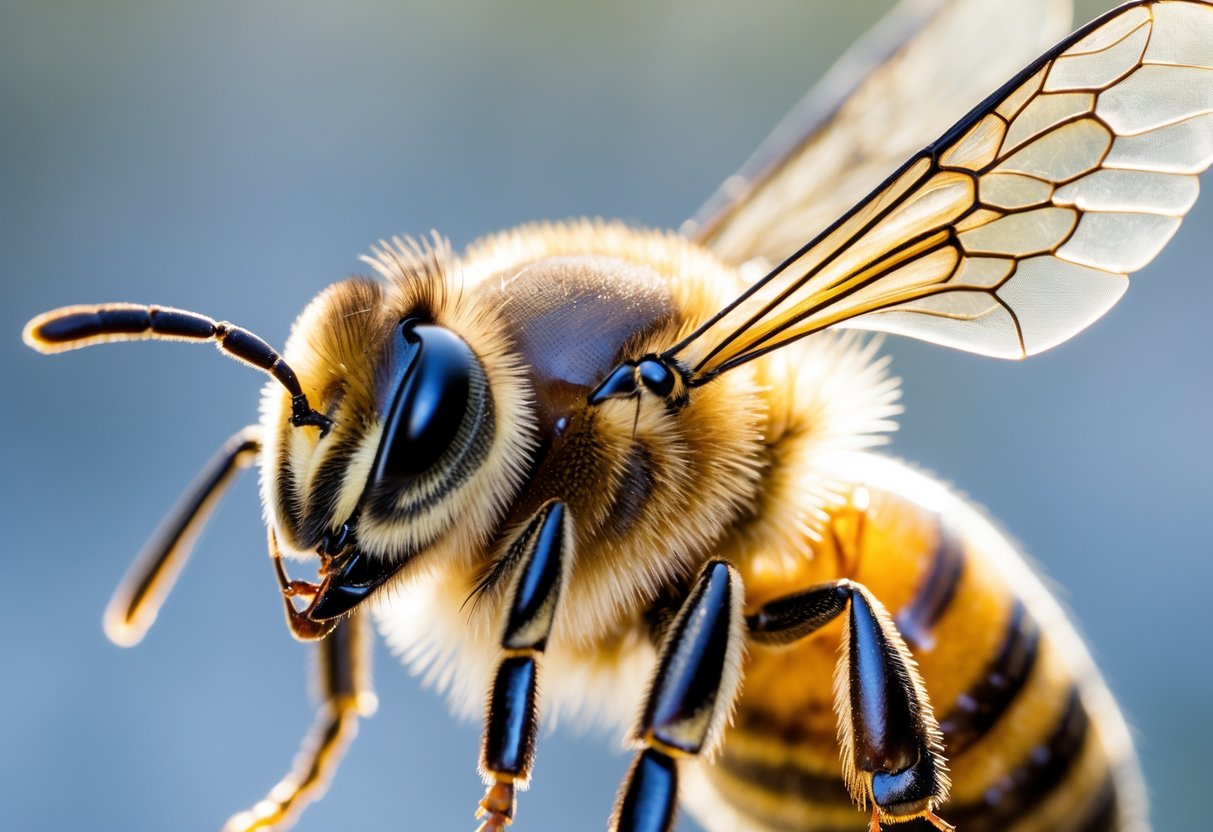
When a honey bee stings you, it leaves the stinger behind. The stinger keeps releasing venom, which can cause redness, swelling, or itching.
You might notice a small puncture or a white spot where the stinger went in. If you know what to look for, you can remove the stinger and treat the sting a lot more easily.
Bee Stinger Appearance and Structure

A bee stinger is small but surprisingly complex. Bees use it to protect themselves and their hive.
The stinger has sharp parts for piercing skin and a system for injecting venom. You’ll spot some unique features that keep it stuck in your skin while the venom does its work.
Visible Features of a Bee Stinger
If you look closely, a bee stinger really does look like a tiny, pointed needle. It measures about 1.5 to 2.5 millimeters long.
The stinger has three main parts. There’s the central shaft, called the stylet, and two smaller blades on either side called lancets.
It’s hollow so venom can flow through a canal inside. After a honey bee stings, the stinger often stays in your skin because of its barbs.
You might notice a little white spot where it went in. That’s the spot where the stinger got left behind.
Barbs and Their Function
The bee stinger sports tiny barbs along the lancets. These act like little hooks that catch on your skin.
When the bee stings, the barbed stinger locks in and doesn’t come out easily. That keeps the stinger embedded, letting venom keep flowing.
Even if the bee tries to fly away, the barbs make the stinger stay put. Sadly, this usually means the bee dies, since it leaves part of its body behind.
These barbs are something you’ll only find on honey bee stingers, not on other insects.
Venom Sac and Venom Delivery
A venom sac attaches right to the stinger. This sac holds the bee’s venom, which contains a chemical called melittin.
Once the stinger is stuck in your skin, tiny muscles push venom through the hollow stinger. That’s what causes the pain, redness, and swelling you feel after a sting.
The venom keeps pumping as long as the stinger stays in. It’s honestly a pretty clever defense system for the bee.
Comparison With Wasp Stingers
Wasps have smooth stingers, not barbed ones. Because of this, wasps can sting more than once and don’t leave their stingers behind.
Their stingers work like little needles, but they don’t get stuck in your skin. Wasps also deliver venom, but their stingers and venom sacs aren’t set up the same way as a honey bee’s.
This explains why honey bees leave their stinger behind and wasps don’t. If you’re curious, you can check out more details on bee stinger anatomy and function.
Bee Sting Reactions and Identification

When a bee stings you, your body might react in different ways depending on how sensitive you are to the venom. Spotting the sting and knowing how your body responds helps you figure out what to do next.
Recognizing the Stinger in Skin
If a honey bee stings you, you might see a tiny white or black spot where the stinger went in. Since the stinger has barbs, it usually stays stuck and keeps releasing venom until you pull it out.
Other bees don’t leave their stingers behind, so you won’t see that spot. The area around the sting often turns red and swells up pretty fast.
You might feel a sharp pain or itching right where you got stung. If you know the stinger is still in your skin, you can remove it to stop more venom from getting in.
Types of Reactions to Bee Stings
People react to bee stings in a few different ways. Most of the time, you’ll just get some redness, pain, and swelling near where you got stung.
That usually clears up in a few hours or days. Some folks get a bigger reaction, with more swelling, redness, and itching that can last longer or spread out from the sting site.
This isn’t usually an emergency, but you might want to keep an eye on it. For people with bee sting allergies, things can get serious fast.
You need to watch for those symptoms because quick treatment is really important.
Moderate Reactions and Symptoms
A moderate reaction means pain, swelling, and redness that goes beyond the sting itself. For example, if a bee stings your hand, your whole arm might swell up.
The sting site might feel itchy and warm. Sometimes, you’ll see blisters or bigger bumps pop up.
These symptoms can last for several days. Although it’s uncomfortable, moderate reactions don’t usually cause serious problems.
You can use ice packs, antihistamines, or pain relievers to help. Just keep an eye on things to make sure it doesn’t get worse.
Allergic Reactions and Anaphylaxis
If you’re allergic to bee stings, things can get serious pretty fast. Usually, reactions kick off with swelling, itching, or redness.
Sometimes, you might see hives, have trouble breathing, or feel dizzy. Anaphylaxis, though—that’s the most severe kind of reaction.
People often feel their throat tightening or notice it’s hard to swallow. Wheezing, a racing heartbeat, or sudden lightheadedness can show up too.
This situation calls for immediate action. Grab your epinephrine injector and use it right away if these symptoms hit after a sting.
Always get emergency help without delay.
Want to know more about how bee stings look or the way your body might react? Check out what a bee sting looks like for more info.


