
When you spot a squirrel acting a bit off, it might be feeling mad or threatened. Squirrels express their anger through various sounds and body language, making it clear that they want some space. You might hear intense chattering or loud screeches that signal their frustration or annoyance.
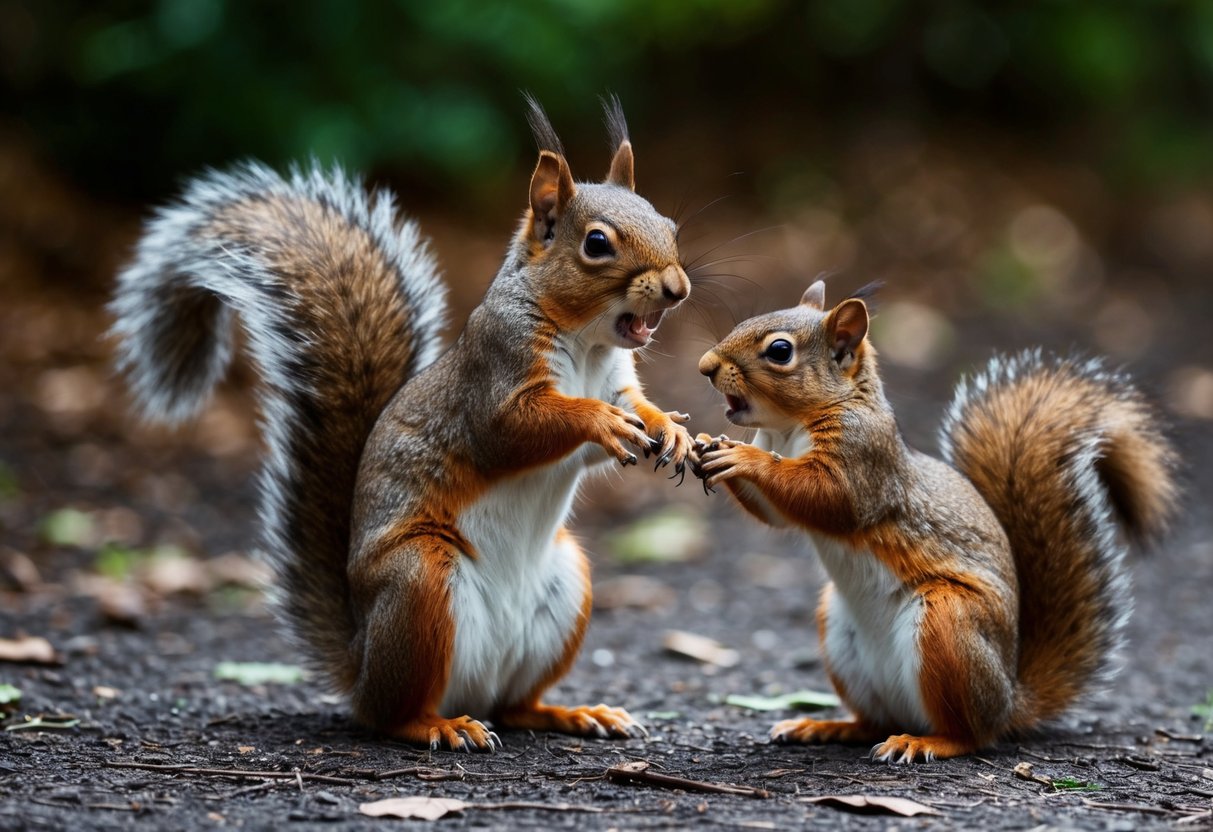
These furry creatures use tail flicks and eye contact to communicate their feelings as well. If another squirrel gets too close to their food, for example, the mad squirrel may give off aggressive signals to drive it away. Understanding these behaviors helps you see how squirrels interact and assert themselves in their world.
Next time you’re watching squirrels, pay attention to their noises and movements. You’ll start to notice how vividly they express their emotions, especially when they are not happy with something around them.
Understanding Squirrel Behavior

Squirrels exhibit a variety of behaviors when they feel threatened or upset. Their vocalizations and body language can provide you with clues about their emotions and reactions.
Vocal Communications
Squirrels use a range of sounds to express their feelings. Each sound has a specific meaning. For example, kuks are short calls often made when they feel threatened. You might notice quaas, which are longer calls used between mother squirrels and baby squirrels.
When alarmed, squirrels produce sharp chattering sounds. If a predator approaches, you may hear barking sounds or piercing screams that indicate distress. These sounds alert others nearby. Higher-pitched calls, like whistles or buzzes, can also signal discomfort or a warning.
Squirrels may use softer sounds, such as moans or crying sounds, when they feel vulnerable or are communicating with their mate during the mating season. Understanding these squirrel noises can help you recognize when they are mad or scared.
Body Language and Tail Signals
Squirrel body language is just as important as their sounds. Their tails are essential for communication. A flicking tail can signal agitation or excitement. If you see a squirrel holding its tail upright and frantically waving it, it is likely feeling threatened.
Teeth chattering often accompanies aggression. You might notice this behavior when two squirrels are competing for food. When squirrels want to show submission, they may lower their bodies and avoid direct eye contact.
During moments of distress, a squirrel may lie flat on the ground—a behavior known as splooting. This can indicate they are trying to cool down or are overwhelmed. Observing these subtle cues, along with their vocal sounds, will give you a clearer picture of their emotional state.
Squirrel Species and Their Responses to Threats
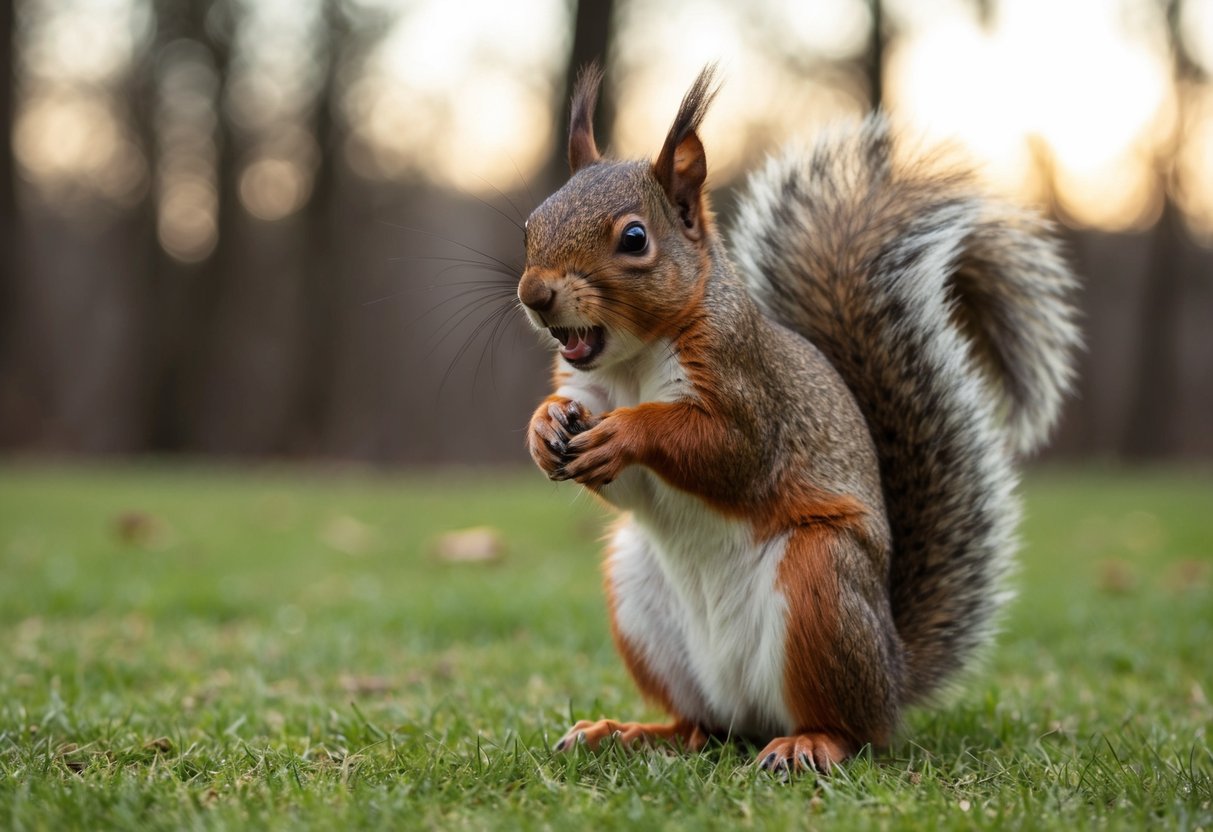
Squirrels react differently to threats based on their species. Understanding these reactions helps you appreciate how these animals cope with danger. From alert behaviors to signs of agitation, each species has unique responses to keep themselves safe.
Species-Specific Reactions
Different squirrel species have distinct behaviors when they sense a threat. For instance, red squirrels often assume a defensive position when agitated. They may stand on their hind legs, paws at their chest, ready to defend their territory.
Gray squirrels are also alert and quick to take flight. Their agility allows them to escape predators effectively. Meanwhile, ground squirrels often use alarm calls to warn others nearby, while fox squirrels might use their size to bluff potential threats.
Flying squirrels, though mainly nocturnal, will hide in tree hollows when frightened. Understanding these species-specific reactions can help you recognize how squirrels act in your area.
Signs of Squirrel Agitation
You can spot signs of agitation in squirrels by watching their body language. When a squirrel is upset, it may flick its tail, make loud vocalizations, or exhibit a quick, nervous movement. These behaviors signal to other squirrels that danger is nearby.
For example, when ground squirrels feel threatened, they may emit sharp alarm calls. This alerts other squirrels to the potential danger.
Similarly, tree squirrels might thump their tails against the ground to warn others.
Being aware of these signs helps you understand when squirrels are feeling stressed or mad. It’s important to respect their space, especially during aggressive encounters.


