
Ever wonder what chimpanzees actually do all day? Honestly, it’s pretty fascinating. Most of the time, they’re searching for food, hanging out with their group, or just taking it easy. Chimpanzees spend about 6 to 8 hours a day foraging, munching on fruit, leaves, and even the occasional small animal.
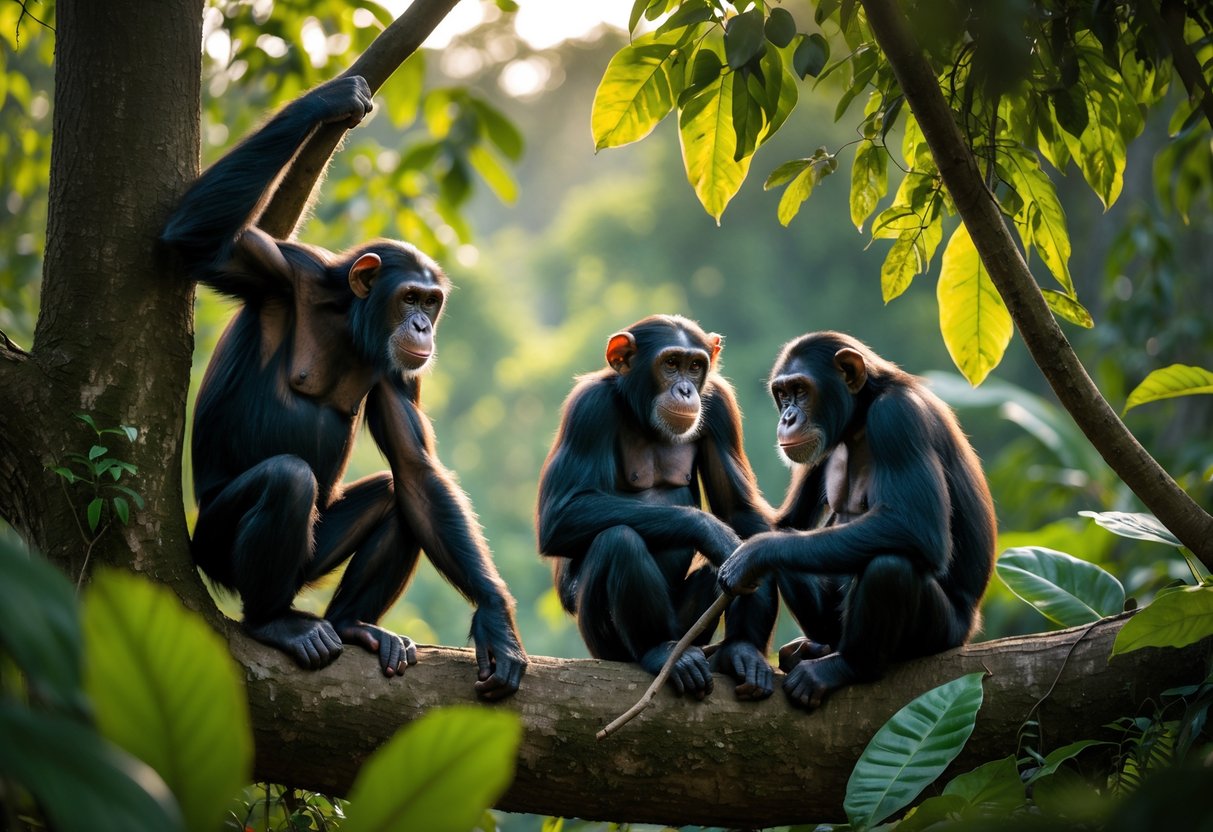
You’ll catch them building nests for sleep and grooming each other—kind of like a spa day, but with more bugs. Watching them use tools or play around gives you the sense you’re looking at a sharp, lively community. Their daily habits shift with the seasons, which just proves how adaptable they can be.
Typical Daily Activities of Chimpanzees

Chimpanzees fill their days with stuff that helps them survive and stay close to their group. They focus on finding food, connecting with friends, and taking time to rest or play.
Each part of their day serves a purpose and gives you a window into wild chimp life.
Foraging for Food and Eating Patterns
Chimpanzees spend a big chunk of their day—6 to 8 hours—looking for food. They go after fruit, leaves, seeds, and sometimes small animals like young antelopes or monkeys.
They pick the ripest fruits, usually eating in the early morning or late afternoon. Sometimes, they hunt together to catch prey. That teamwork is pretty impressive.
Every now and then, they eat fermented fruit and get a little tipsy—kind of funny, if you think about it. Their varied diet keeps them fueled and ready for whatever the day brings.
Social Interactions and Group Dynamics
Chimpanzees live in groups and use sounds, gestures, and facial expressions to communicate. You’ll spot them grooming their buddies, which builds trust and keeps things calm.
Dominant males lead the way, while females look after the little ones. Group members cooperate to hunt or protect each other.
Warning calls and other signals help everyone stay safe. Their social world is full of teamwork, friendships, and sometimes a bit of drama over status or food.
Resting, Grooming, and Play
Chimps rest a lot, especially when it’s hot out. At night, they build fresh nests high in the trees to sleep safely.
Grooming goes beyond cleaning—it brings them closer and helps avoid fights. Play shows up everywhere, mostly with the young ones who wrestle, chase, and swing around.
Adults sometimes join the fun, using play to settle arguments or just blow off steam. All this resting, grooming, and goofing around keeps their group tight-knit and healthy.
For more details on chimpanzee activities, see Typical Daily Activities of Chimpanzees.
Environments and Routines Shaping Chimpanzee Days

Chimpanzees adjust what they do each day based on their environment and the challenges they face. Their routines include moving through their home area, using tools for food, and living differently in the wild compared to captivity.
Habitat and Home Range Navigation
You’ll find chimpanzees in forests, woodlands, and even on the edge of savannahs. They travel through these places to find food, water, and safe spots to rest.
Their home range covers several square kilometers. Chimps usually move in small groups.
They remember where the best fruit trees are and plan their travels around fruit seasons. That way, they eat enough without wasting energy.
Moving carefully also helps them avoid predators. At the end of the day, they build new nests high in the trees for safety.
These nests change daily and show how chimps make the most of their environment.
Use of Tools and Problem-Solving
Chimpanzees get pretty creative with tools. You might see one using a stick to fish termites out of a mound or smashing nuts with a rock.
They solve problems together, like teaming up to hunt small animals. Some even shape their tools for special jobs and teach these tricks to younger chimps.
This cleverness helps them survive in all kinds of places. Watching them figure things out is a reminder of how adaptable and smart they really are.
Differences Between Wild and Captive Lifestyles
If you’ve ever watched chimpanzees in a zoo, you might notice their lives don’t quite match what happens in the wild.
In the wild, chimps spend hours foraging, moving, and hanging out with their group. They have endless space to explore, which probably keeps things interesting.
Captive chimps live in smaller spaces, but people try to keep them engaged with toys, puzzles, and other activities. You’ll still catch them grooming each other, playing, and building those social bonds.
Their routines in captivity can feel a bit more predictable, though, since humans set the schedule. Even so, they find ways to stay busy.
Both wild and captive chimps build nests to rest. Captive chimps might get softer bedding or even cozy indoor shelters.
If you’re curious, you can check out more about chimpanzee daily life at Chimp Time at the Sanctuary.


