
When a bee bites you, it grabs your skin fast with its strong jaws. Bee bites feel like a short pinch and don’t inject venom like stings, so they usually cause less pain and irritation.
Most bees only bite if they feel threatened or want to protect their hive from tiny intruders.
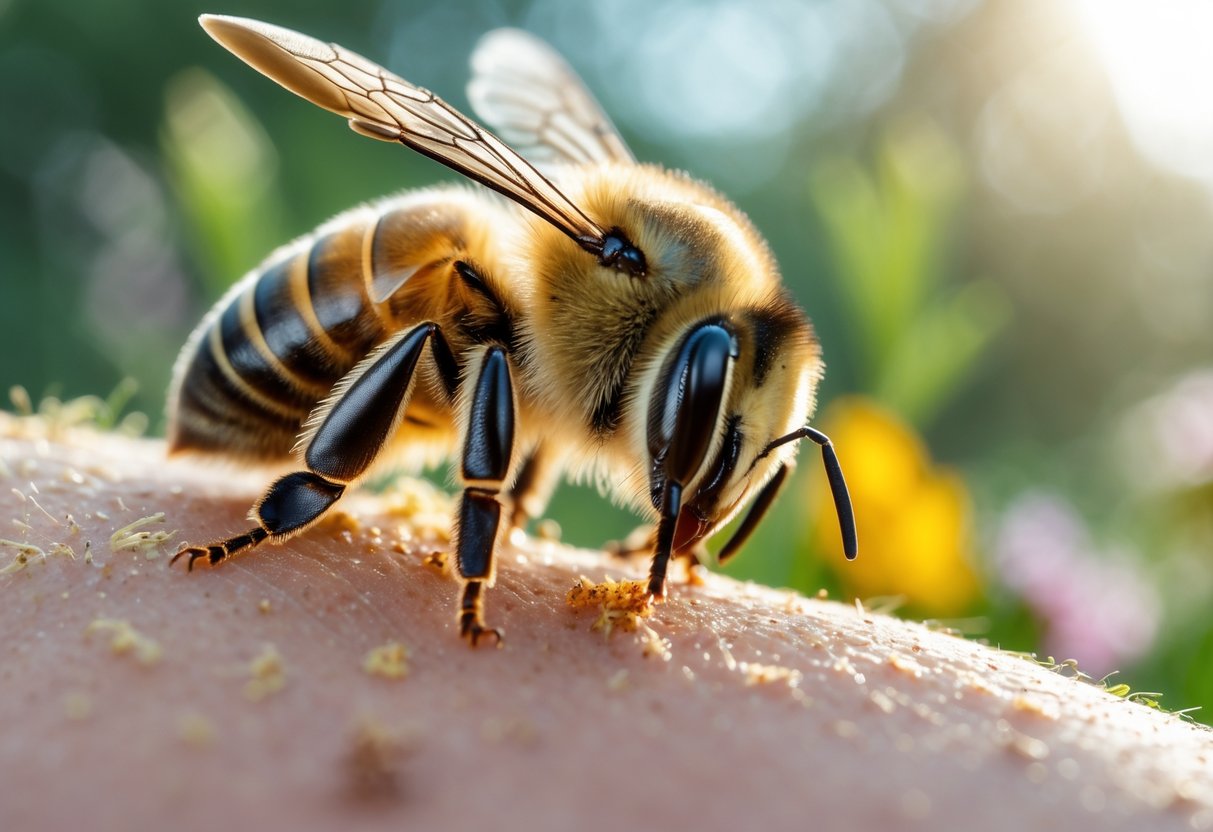
You might not even notice a bee bite at first. It’s way less aggressive than a sting.
Bees mostly use biting as a defense against small pests, not people. If you’ve ever wondered what really happens when a bee bites, knowing the difference between bites and stings can help you stay calm and know how to treat your skin.
What Happens When Bees Bite You?

When a bee bites you, it grabs your skin with its jaw parts. The bite feels like a quick pinch and can cause some mild irritation.
Bees don’t inject venom through their bites like they do with stings. Some bees can still release small amounts of chemicals that might affect your skin.
Bee Bite Mechanism and Anatomy
Bees use their mandibles, which are strong jaw-like parts, to bite. These jaws help them latch onto your skin or other surfaces.
The bite feels like a pinch because it’s usually brief and not deep. Unlike stingers, mandibles don’t deliver venom.
The physical bite itself can cause mild irritation. Some bees, like carpenter bees, bite more often and might cause noticeable redness.
The bite area usually doesn’t leave a mark, or it fades quickly.
Chemical Compounds Released in a Bite
Most bee bites don’t inject venom, but some bees release tiny amounts of chemicals like 2-heptanone when they bite. This chemical acts as an alarm signal for other bees nearby.
2-heptanone can also be a mild irritant. It might add a slight sting to the bite.
Still, chemicals from a bite are much less harmful than bee venom from a sting. Your skin might feel a bit of burning, itching, or slight swelling after a bite.
Bee Bite vs Bee Sting: Key Differences
Here’s the big one: bee stings inject venom with a stinger, but bee bites use mandibles and usually don’t inject venom.
Bee stings cause pain, swelling, and sometimes allergic reactions because of the venom. Bites just feel like a quick pinch or mild irritation.
Here’s a quick comparison:
| Aspect | Bee Bite | Bee Sting |
|---|---|---|
| Tool Used | Mandibles (jaws) | Barbed stinger |
| Venom Delivery | Rarely any, small chemical release | Yes, venom injected |
| Sensation | Quick pinch, mild irritation | Sharp pain, burning, swelling |
| Lasting Effects | Usually mild and short | Can be severe depending on reaction |
For more about bee bites, check out bee behavior and bites at learnbees.com.
Types of Bees That Bite and When It Happens
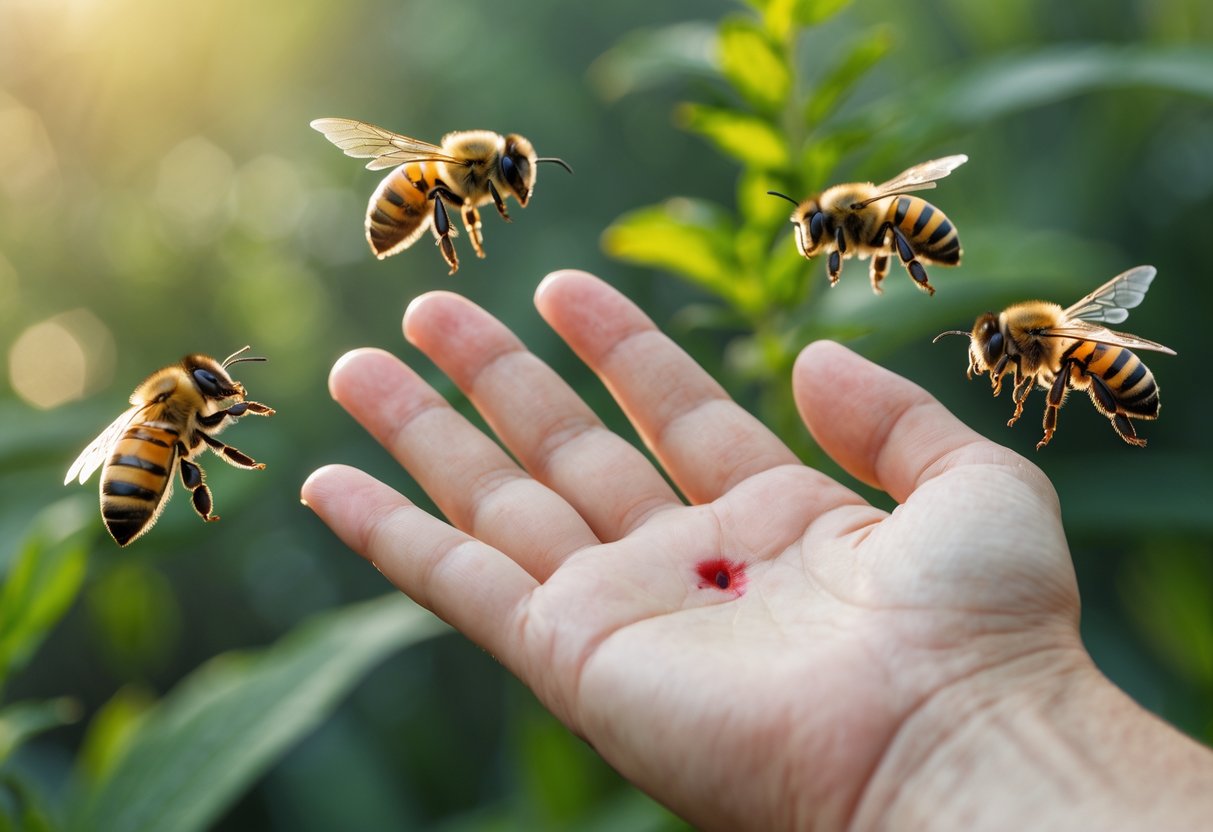
Some bees use biting to defend themselves or their nests, especially when stinging isn’t really an option. Different bees show this behavior at different times, depending on what’s threatening them or what they need to protect.
Carpenter Bees and Their Biting Behavior
Carpenter bees are big, shiny bees that chew into wood to make nests. If you get too close to where they’re nesting, these bees might bite you.
They use their strong jaws to pinch your skin as a warning. The bite feels like a quick pinch and doesn’t usually hurt much or leave a mark.
Carpenter bees rarely sting unless you really provoke them, so biting is often their first move. If you want to avoid bites, it’s probably smart to stay away from spots where they’re drilling or nesting.
Stingless Bees’ Defensive Strategies
Stingless bees can’t sting like honeybees or bumblebees. They rely on biting to protect themselves and their hives.
These bees grab your skin with their jaws and sometimes hold on for a bit. Since they can’t inject venom, biting is their main way to defend the hive.
The bites from stingless bees can cause a bit of irritation, but honestly, they’re usually not painful. You might see some small red spots if you get bitten, but serious reactions are rare.
Why Bees Choose to Bite Instead of Sting
Bees sometimes bite rather than sting, and honestly, there are a few reasons for that. When honeybees sting, they can die afterward because their stingers get stuck. Biting helps them defend themselves without paying that price.
Biting also works better against tiny threats, like insects that are just too small for a sting to matter. Bees such as carpenter bees or stingless bees tend to bite when stinging just isn’t an option—or honestly, wouldn’t do much good. They can still warn off or stop intruders without losing their stingers.
If you’re hanging around bees, keep in mind they might bite even if you don’t spot any stingers. Knowing about these habits can help you stay safe and, hopefully, avoid bothering them.
For more details on bees that bite, visit Bees That Bite: Can Bees Bite Humans?


