
Bed bugs on a mattress look like small, flat, brown insects about the size of an apple seed. Younger ones can be tiny, pale, and harder to spot.
If you want to know what bed bugs look like on bedding, the best clue is often not the bug itself, but the signs they leave behind.
Check for live bugs, tiny white eggs, shed skins, black fecal spots, and rust-colored smears along seams, tags, and folds. These signs usually show up where the mattress is dark and undisturbed, especially near stitching and edges.

How To Recognize Bed Bugs on a Mattress

You can spot bed bugs on mattress surfaces more easily when you know their size, shape, and color changes. Adult bugs, nymphs, and recently fed insects all look a little different.
The hiding places on a mattress are very specific.
What Adult Bed Bugs and Nymphs Look Like
An adult bed bug, or common bed bug (Cimex lectularius), is flat, oval, wingless, and brown. Adult bed bugs measure about 5 to 7 mm long.
Nymphs are smaller, paler, and sometimes translucent until they feed. A female bed bug has a rounder abdomen, while a male has a more pointed rear end.
The tropical bed bug (Cimex hemipterus) looks very similar, so shape and hiding place matter more than a quick glance.
How Bed Bugs Change After Feeding
Before feeding, bed bugs look flatter and lighter brown. After a blood meal, they become swollen and more reddish-brown.
This color shift makes them easier to see against light-colored fabric. Feeding also makes them appear more oval and less paper-thin.
Where To Spot Them on Mattress Seams and Tags
You are most likely to find bed bugs on mattress seams, tufts, piping, tags, and folded edges. They like narrow gaps that stay dark during the day.
Check the stitching with a flashlight and run your fingers along the edge of the mattress. If you spot bed bugs on mattress seams, look nearby for more bugs, eggs, or black marks.
The Clearest Evidence Left Behind

Bed bug infestations leave behind eggs, molted skins, and stains that stand out even when the insects stay hidden.
Bed Bug Eggs and Shed Skins
Bed bug eggs are tiny, pale white, and often stick to fabric or hidden creases. They look like pinhead-sized grains and are easy to miss unless you inspect closely.
Shed skins, also called casings, appear as pale shells near seams, folds, and other protected spots.
Fecal Stains, Droppings, and Blood Marks
Bed bug fecal stains and droppings appear as small black spots or dark ink-like dots. These spots can bleed slightly into fabric, which helps separate them from loose dirt.
You may also notice rusty or reddish smears from crushed insects or recent feeding. These marks are some of the clearest signs of bed bugs on bedding.
Why Bites and Itchy Welts Are Not Enough
Bed bug bites can show up as itchy welts, sometimes in a line or zigzag pattern. Even so, a bite is not enough on its own to confirm an infestation.
Many skin reactions can look similar, so you need physical evidence on the mattress or nearby furniture before you can be sure. If you only have bites, keep checking for eggs, fecal stains, or live bugs.
Bugs Commonly Mistaken for Bed Bugs
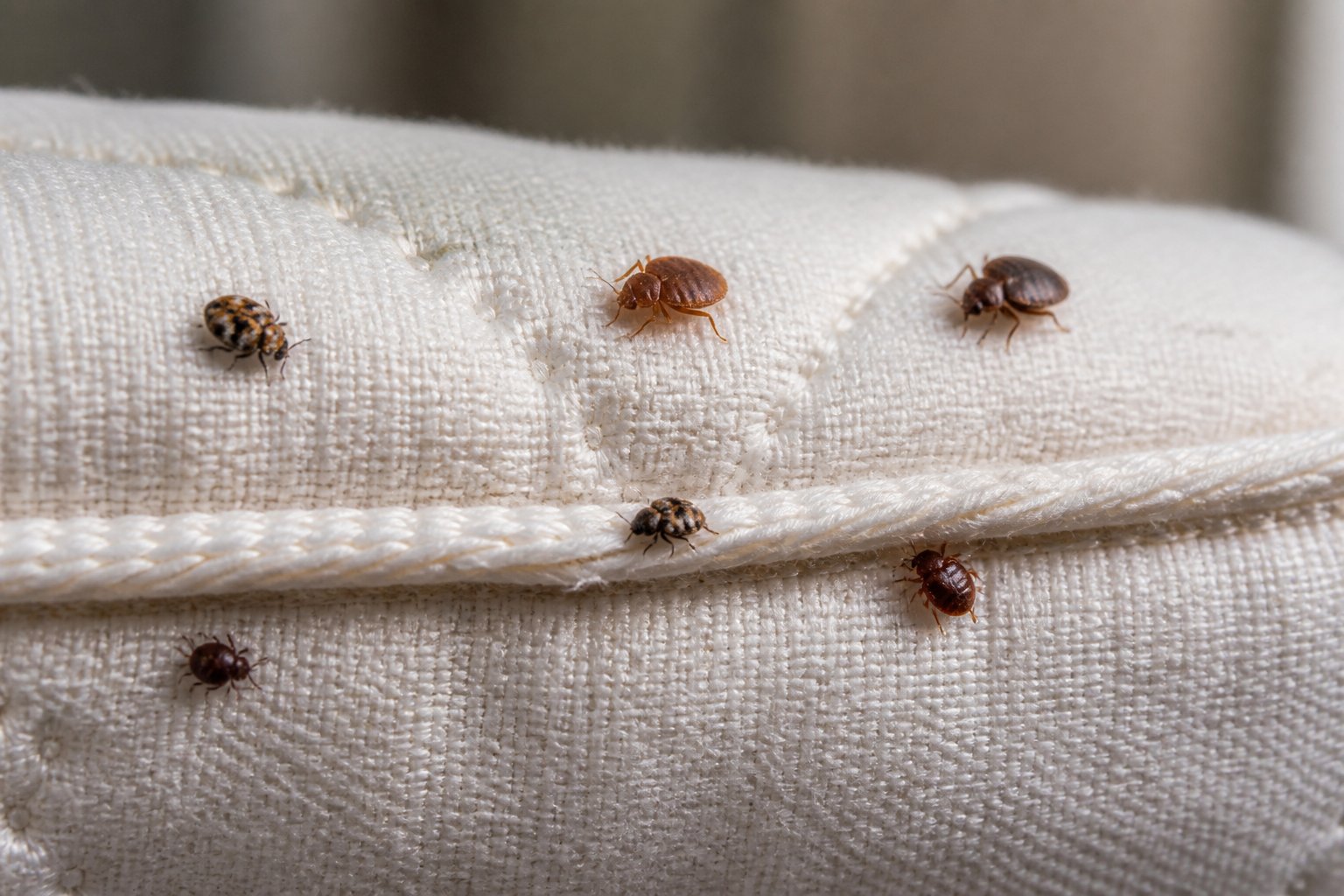
Several tiny insects can be mistaken for bed bugs, especially when they move fast or appear in poor light. Shape, color, and where you found them can help you sort out the most common bed bug look-alikes.
Bat Bugs and Swallow Bugs
Bat bugs and swallow bugs are close relatives of bed bugs and can look very similar at a glance. Bat bugs often have longer hairs on the thorax and are more likely to live near bats or bird nests than in mattress seams.
If you spot one on a mattress, that does not automatically mean bed bugs. Context matters, so check nearby walls, attics, and nesting areas too.
Carpet Beetles and Spider Beetles
Carpet beetles are usually rounder than bed bugs, and their larvae can look fuzzy or hairy. Spider beetles also get mistaken for bed bugs, though they do not bite humans.
These insects may end up on bedding, yet their body shape is different from the flat oval look of bed bugs. That difference helps when you compare insects side by side.
Ants and Other Bed Bug Look-Alikes
Ants can wander onto a mattress and confuse a quick inspection. Other look-alikes include tropical bed bugs in places where they live, along with several small household insects that share a brownish color.
If you are not sure, capture the insect on clear tape and compare it with bed bug look-alikes before you treat the room. A close look is much safer than guessing.
What To Do Next If You Find Them

If you find bed bugs, act quickly to limit spread. The next steps focus on safe cleanup, professional help, and how to prevent bed bugs from coming back.
How To Get Rid of Bed Bugs Safely
Strip the bedding, seal it in bags, and wash and dry it on high heat if the fabric allows. Vacuum the mattress seams, bed frame, and nearby floor area, then empty the vacuum outdoors right away.
You can also reduce hiding spots by moving the bed away from the wall and keeping bedding from touching the floor. Avoid spraying random pesticides on your mattress unless the label clearly allows it.
When To Call a Bed Bug Exterminator
Call a bed bug exterminator when you see live bugs after cleaning, find signs in multiple rooms, or keep getting bites despite repeated effort. A pro can inspect hidden areas and use a targeted treatment plan.
A professional inspection also helps when you are unsure whether you found bed bugs or another insect. Fast confirmation can save you time, stress, and repeat treatment costs.
How To Prevent Bed Bugs From Coming Back
Keep luggage off beds after travel. Inspect secondhand furniture before bringing it inside.
Vacuum sleeping areas regularly. Use mattress encasements to make inspections easier and limit hiding places.
Stay alert after guests, travel, or nearby pest issues if you live in an apartment or share walls. Check seams, tags, and headboards early to make it easier to get rid of bed bugs before they spread.


