
Bed bugs usually enter your house by riding in on people and belongings. They hitchhike on luggage, clothing, used furniture, and items that have already been in an infested place.
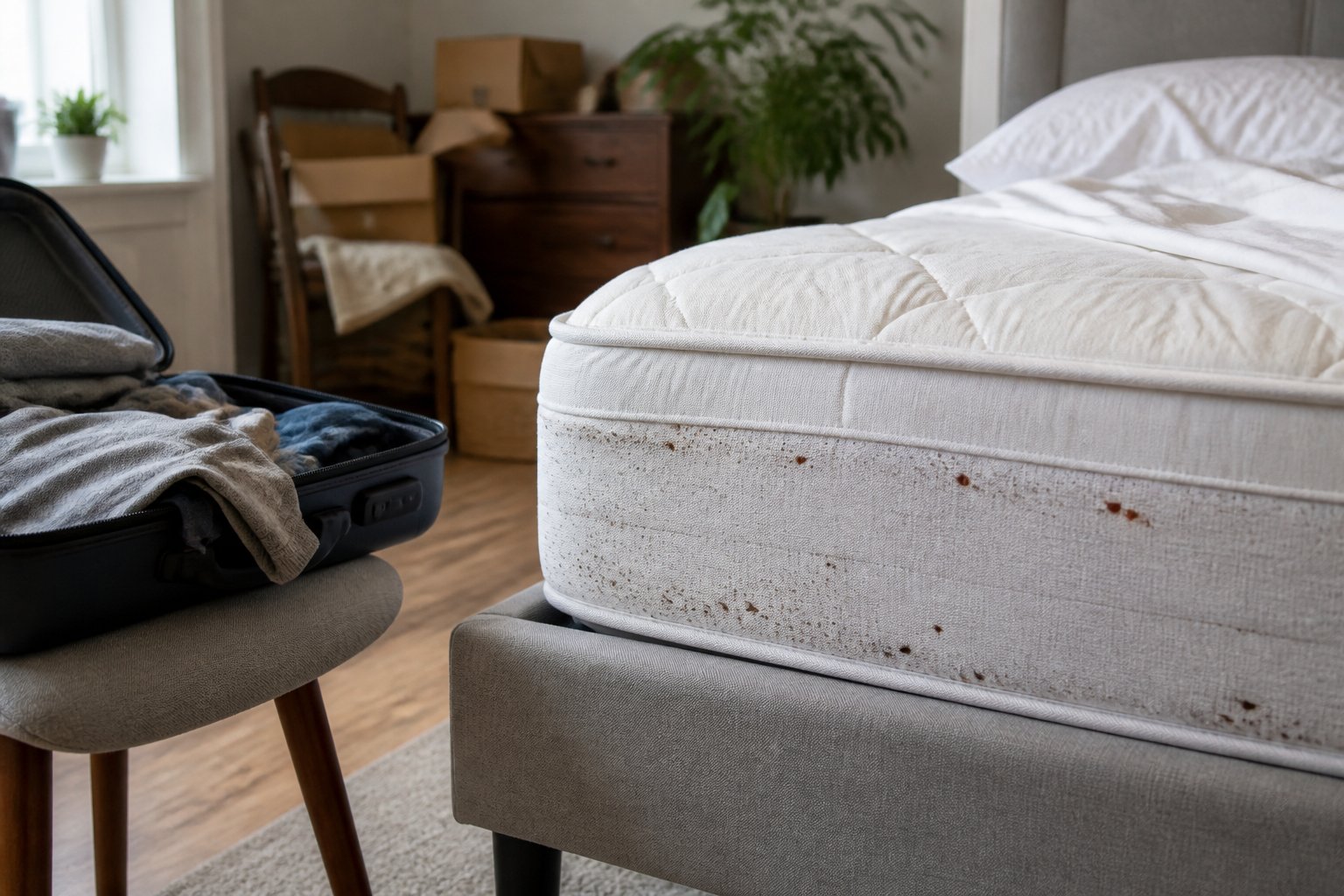
How Bed Bugs Get Into A Home

Bed bugs act as expert hitchhikers, and a cimex species can move into a home without you noticing. They spread through travel, secondhand items, and close contact between neighboring units.
Travel, Luggage, And Overnight Stays
Hotels, motels, rentals, and even visits to friends or family can expose your bags to bed bugs. Luggage and backpacks often carry them, especially when they rest on beds, upholstered chairs, or carpeted floors.
Used Furniture, Mattresses, And Secondhand Items
Used sofas, mattresses, box springs, and other soft items can hide bed bugs in seams, tufts, and cracks. A quick look is not enough, since the bugs and eggs can sit deep inside fabric and stuffing.
Shared Walls, Apartments, And Nearby Units
In apartments, condos, and other multi-unit buildings, bed bugs can move through wall voids, baseboards, and utility openings. Shared living spaces make it easier for one infestation to affect nearby homes, especially when the bugs travel on clothing, bags, or furniture moving between units.
What Helps An Infestation Start And Spread

Bed bugs spread best when they have hiding places close to where people sleep. Clutter, cracks, and furniture seams give them cover, while movement between rooms lets a few bugs turn into a larger problem.
Clutter, Cracks, And Common Hiding Places
Piles of clothes, boxes, baseboards, bed frames, and upholstered furniture create perfect hiding spots. Seams, screw holes, outlets, and tiny gaps let bed bugs stay out of sight during the day and feed at night.
Why Cleanliness Is Not The Real Cause
Bed bugs do not mean your home is dirty. They are more about access than hygiene, so even a spotless home can get them if they ride in on luggage, clothing, or secondhand items.
How Bed Bugs Move From Room To Room
Bed bugs crawl from one hiding place to another, often along walls, furniture, or laundry. If you do not isolate affected items and keep using the same sleeping areas, you make it easier to spread the infestation.
Early Clues You May Notice First

The earliest signs are often small and easy to miss. You may notice skin reactions, tiny stains, shed skins, or a faint odor before you ever see a live bug.
Bed Bug Bites
Bed bug bites often show up as itchy red marks, sometimes in a line or cluster on exposed skin. These bites can resemble other insect bites, so the pattern and where they appear matter more than the bite alone.
Blood Spots, Excrement, And Shed Skins
Small blood spots on sheets or pillowcases can appear after feeding. Bed bug excrement may look like black dots on bedding or furniture.
Shed skins and other signs often collect near seams, headboards, and mattress edges.
Eggs, Odor, And Other Visual Clues
Bed bug eggs are tiny, pale, and easy to miss, especially in clusters along seams and cracks. You may also notice a sweet, musty smell when activity is growing.
How To Check And What To Do Next

A careful inspection can show you whether you are dealing with a single bug or a larger issue. Check the places where people sleep first, then use tools or professional help if the signs point to active bugs.
How To Find Bed Bugs In Sleeping Areas
Use a flashlight and check mattress seams, box springs, bed frames, headboards, and nearby furniture. The EPA’s guide on how to find bed bugs can help you focus on the right hiding spots.
When Bed Bug Traps Can Help
Bed bug traps can help confirm whether bugs are moving through an area, especially near bed legs or along room edges. They are useful for monitoring, not for solving a larger infestation.
When To Call Professional Pest Control
If you find live bugs or see signs of an infestation spreading beyond one room, you should call professional pest control.
A trained pro will match the treatment to the problem and help you prevent bed bugs from coming back.


