
If you’ve spotted skunks wandering around your yard, chances are they’re after something easy—food or shelter. Skunks love yards with grub-rich soil, pet food left out, open trash, and scattered birdseed. They’re also on the lookout for cozy dens, like under decks, porches, or woodpiles.
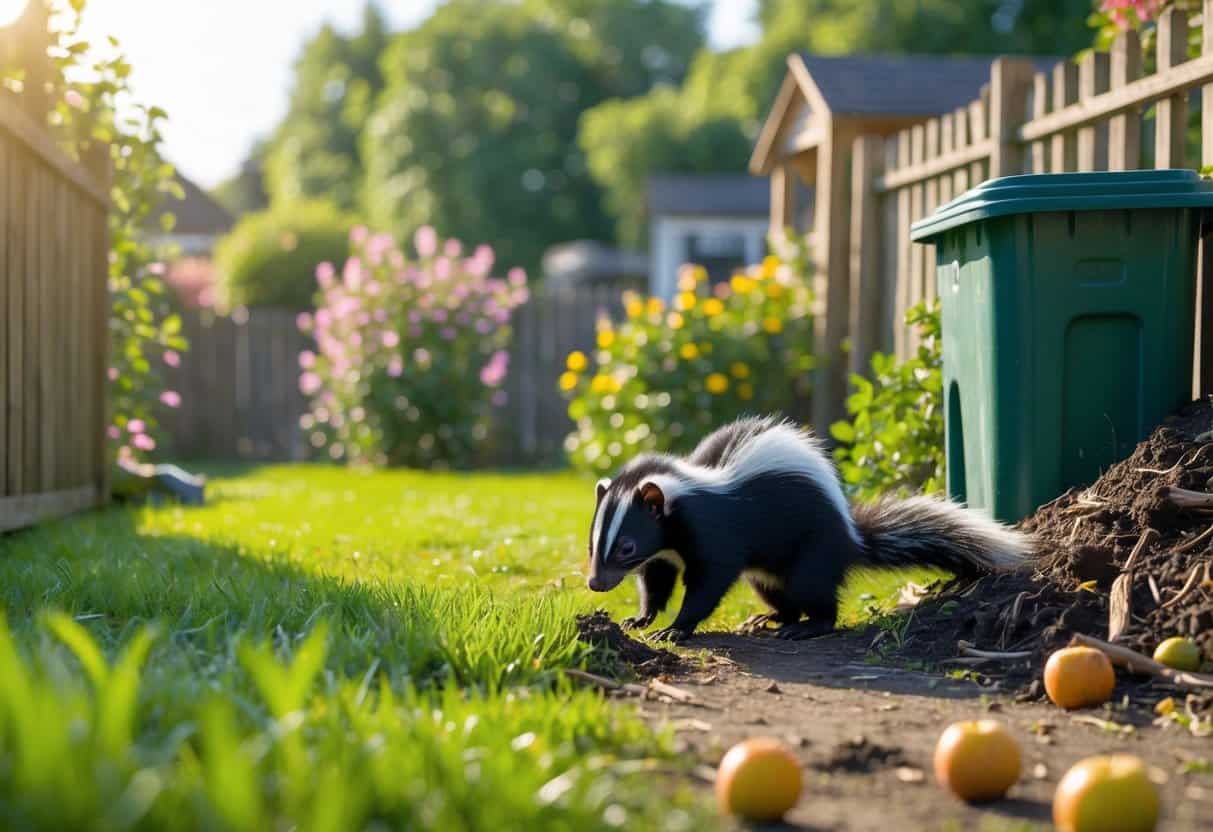
Understanding what draws skunks in can really help you keep them out. In this article, you’ll find out why skunks show up and get some straightforward ideas to make your yard less appealing to them.
Key Reasons Skunks Are Drawn to Your Yard
Skunks seem to seek out places where they can easily find food, water, and shelter. If your yard checks any of those boxes, don’t be surprised if you get a furry, striped visitor or two.
Food Sources That Skunks Love
Skunks go for easy meals. They dig for grubs, earthworms, and larvae hiding in your lawn.
Besides bugs, they’ll eat pet food left outside, birdseed on the ground, open garbage, and even fallen fruit. Honestly, it’s like a buffet for them.
Keep pet food inside at night and use sealed trash bins. That simple switch makes a big difference.
Shelter and Hiding Spots
Skunks really like quiet, tucked-away spots for dens. Small gaps under porches, decks, or sheds are perfect for them.
Woodpiles, rocks, or overgrown plants also give them great hiding places during the day. If you’ve got open spaces under your porch or steps, skunks might move right in.
Block those gaps with chicken wire or sturdy barriers to keep them out. Clearing away debris and clutter helps, too—it makes your yard a lot less cozy for a skunk.
Easy Access to Water
Skunks need water, especially when it’s dry out. They’ll visit yards with birdbaths, pet water bowls, ponds, or even a leaky faucet.
Standing water or damp patches make your yard a reliable spot for a thirsty skunk. Fix leaks and get rid of standing water to make your yard less tempting.
If you don’t offer open water, skunks are less likely to stick around.
Want more details? Check out what attracts skunks to your yard.
How to Prevent Skunks from Visiting
You can make your yard less appealing to skunks by focusing on a few things: food, shelter, and barriers. These steps really do help keep skunks away without much fuss.
Securing Food and Garbage
Skunks can’t resist easy food. Use garbage cans with tight lids and keep them in a garage or shed at night.
Don’t leave pet food outside after dark. Skunks will eat birdseed that hits the ground, so try not to overfill your feeders.
Clean up fallen seeds often. Compost piles and food scraps are big draws for skunks, so keep compost bins sealed and don’t toss scraps in the yard.
Removing Denning Sites
Skunks look for quiet spots to nest, like under decks, porches, or sheds. Seal those areas by blocking gaps with hardware cloth or wood.
Clear out woodpiles, rocks, and thick brush where skunks might hide. Check your lawn for holes they could dig.
If you find a skunk den, wait until night when they’re out before sealing it up. Never trap animals inside—if you’re unsure, maybe call a wildlife removal pro who knows skunks.
Using Skunk Repellents and Barriers
Skunk repellents can help keep these critters away without hurting them. Try putting used kitty litter near places where skunks like to hide—it tricks them into thinking a predator is hanging around.
You can also soak some rags in ammonia and leave them near openings. Some folks even use bright lights or play a radio by their shelters to make the area less inviting.
Just be careful with commercial sprays or powders since a few of those can be risky for pets or kids. If you want to stop skunks from digging, put up a fence and bury it at least a foot deep.
Mixing repellents with barriers usually gives your yard the best shot at staying skunk-free. And if things get out of hand, you might want to call in a professional wildlife removal service—they know how to handle it safely and humanely.
For more tips, see how to deter skunks from entering your yard.


