
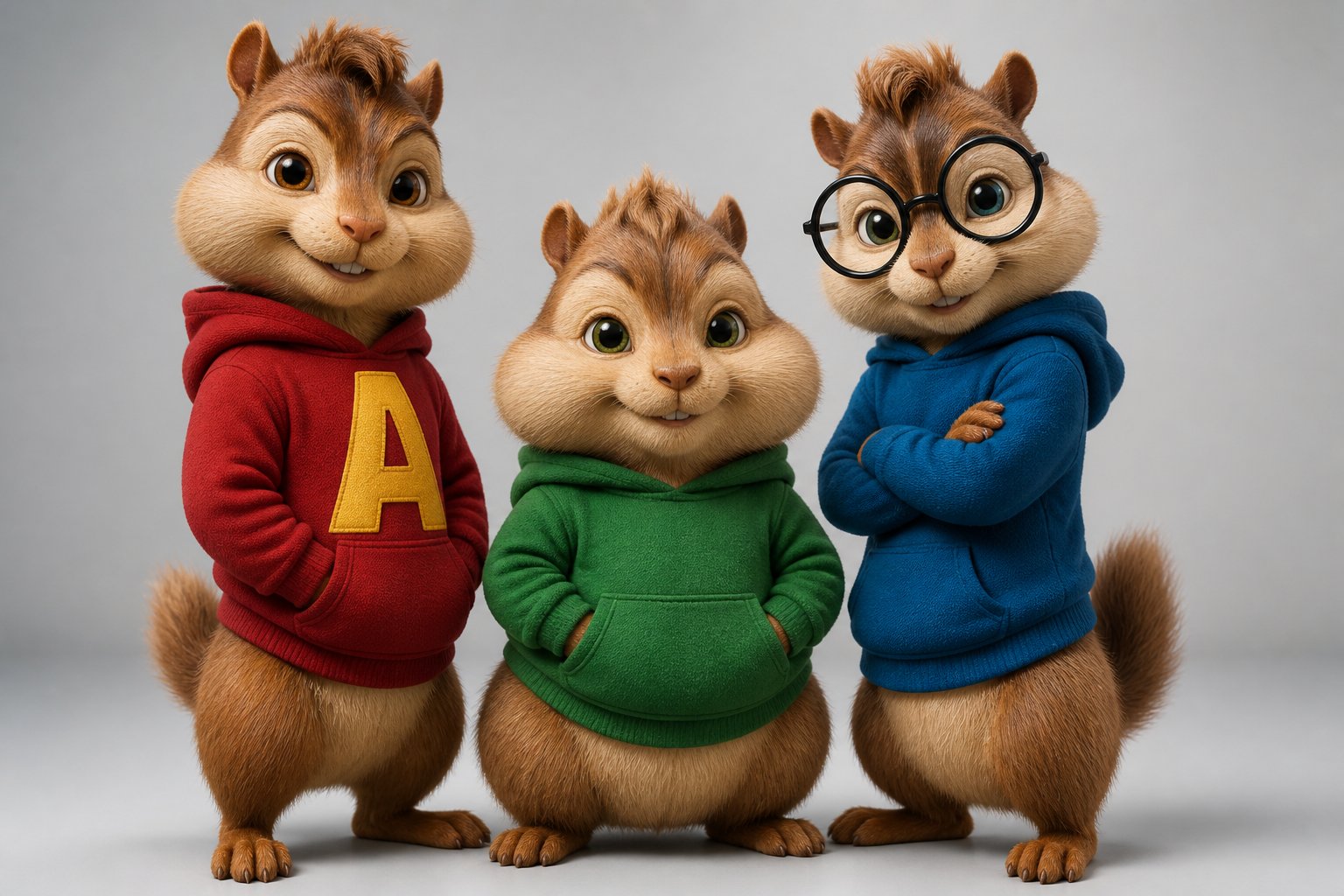
Alvin, Simon, Theodore, and the other chipmunk characters have worn a lot of different looks over the years. It is natural to ask if the chipmunks were CGI.
In some eras, they appeared as CGI, while in earlier versions, artists hand-drew or animated them in other ways. The chipmunks were CGI in the live-action movies and in the 2015 TV reboot. Earlier cartoons and specials did not use CGI.
Their appearance changed as animation style, technology, and audience expectations evolved.

The Short Answer: Which Versions Used CGI

The franchise used more than one animation approach. The biggest CGI shift came with the live-action films and with ALVINNN!!! and the Chipmunks on Nickelodeon, which featured fully computer-animated chipmunk characters.
The 2015 TV Reboot in CGI
The 2015 reboot, ALVINNN!!! and the Chipmunks, is a CGI series. Technicolor Animation Productions and PGS Entertainment made it with participation from M6, and broadcasters aired it in multiple markets, including Teletoon.
That version gave the chipmunks a more modern, stylized, and elastic look for TV comedy.
The Live-Action Movies and Digital Characters
The live-action films used CGI chipmunks placed into real sets. This made them feel like physical performers sharing scenes with human actors.
The 2007 film and The Squeakquel are clear examples. Jason Lee acted opposite digital characters that animators brought to life to move, emote, and sing.
The Earlier Animated Versions Were Not CGI
The original TV run and earlier specials used traditional animation. Artists hand-drew frames, so the chipmunks looked flatter and more cartoony, similar to classic Saturday morning animation.
How The Franchise Look Changed Over Time
The chipmunks did not start as polished screen stars. Their visual style moved from novelty-record artwork to classic TV animation, then into revival-era television, specials, and modern computer animation as each decade brought new tools and tastes.

From ‘Witch Doctor’ to the First Animated Era
Ross Bagdasarian Sr. first built the characters’ fame through recordings like “Witch Doctor” and the David Seville persona, later remembered as Dave Seville.
The early image was simpler and more novelty-driven. The Alvin Show gave the chipmunks their first major animated identity.
The 1980s Revival and TV Expansion
The 1980s brought a softer, more familiar Saturday morning version through DIC Entertainment and related TV production partners. That era expanded the world with projects such as A Chipmunk Christmas, Chipmunk Punk, Cartoon All-Stars to the Rescue, and the Hollywood Walk of Fame era of brand visibility.
From Hand-Drawn Specials to Computer Animation
By the time The Chipmunks Go to the Movies specials and later film-era projects appeared, the franchise had a long visual history to draw from.
The character designs became more expressive and standardized. This made the jump to CGI feel less abrupt, since the chipmunks had already evolved several times before.
Who Made The CGI Era Different
CGI changed more than the texture of the chipmunks. It also changed pacing, facial acting, and how closely the characters could interact with human settings.
This gave the reboot and films a more contemporary sitcom rhythm.
Janice Karman and Ross Bagdasarian Jr.’s Creative Role
Janice Karman and Ross Bagdasarian Jr. helped shape the modern identity of the characters. They kept the core personalities recognizable.
Their stewardship preserved the family dynamic tied to David Seville, Dave Seville, Alvin Seville, Simon Seville, and Theodore Seville.
Bagdasarian Productions and International Partners
Bagdasarian Productions worked with international partners to make the CGI series and keep the brand consistent across markets. That collaboration helped the chipmunks look polished on TV while staying faithful to their long-running personalities.
Why the CGI Reboot Felt More Like a Sitcom
The CGI reboot leaned into quick jokes, reaction shots, and domestic chaos. This made it feel less like a pure cartoon and more like a sitcom with animated leads.
CGI made fast expressions easier, so the chipmunks could play off each other like a family living in constant comic tension.
Characters, Spin-Offs, and What Fans Usually Mean
When you ask about CGI chipmunks, you may also think about the broader cast, spin-offs, and the versions fans remember most.
The franchise includes the core trio, the Chipettes, a pile of specials, and plenty of related products that shaped how people picture the characters.

The Core Trio and Their Family Dynamics
The heart of the franchise is still the trio, with Alvin, Simon, and Theodore balancing troublemaking, logic, and sweetness. Fans usually connect them to Dave Seville as the stressed caretaker who keeps the whole group together.
The Chipettes Across Different Versions
The Chipettes brought a second family dynamic into the franchise, especially through Brittany, Jeanette, and Eleanor. In some versions, Brittany Miller and the group’s performance style added a polished pop contrast that changed how the stories played.
Movies, Specials, and Merchandise Tie-Ins
Titles like The Chipmunk Adventure, The Chipmunks Meet Frankenstein, The Chipmunks Meet the Wolfman, Alvin and the Chipmunks Meet Frankenstein, Alvin and the Chipmunks Meet the Wolfman, and Little Alvin and the Mini-Munks show how wide the franchise has spread.
The franchise also offers merchandise like toys, clothing, and even cookies. Many fans think of the chipmunks as more than one single version.


