
You’ve probably noticed small droppings in the attic or yard and wondered who left them behind. Squirrel poop usually looks larger, lighter, and more rounded, while rat poop tends to be smaller, darker, and kind of pointy at the ends—so you can often figure out which critter you’re dealing with just by looking.

Spotting the differences, knowing where droppings show up, and understanding the risks can help you act quickly to keep your home safe.
Let’s dig into how you can tell the droppings apart, where each animal usually leaves them, and why safe cleanup matters.
Squirrel Poop Compared to Rat Poop: Key Differences

You’ll notice some clear differences between squirrel droppings and rat droppings—look at the shape, color, and where you find them. These details can help you figure out which rodent left the mess and what you should do next.
Appearance and Size
Squirrel droppings look a bit bigger and rounder at the ends than rat poop. They remind me of small, chunky beans and often look thicker than what rats leave behind.
Rat droppings usually look slimmer and have those tapered or pointy ends.
If you want to measure, squirrel scat is often about 3/8 inch to 1/2 inch long and a little thicker. Rat scat usually measures around 1/4 inch to 3/8 inch and is more slender.
Squirrel poop can look a bit different depending on what they eat—seeds, nuts, fruit—while rat feces tend to look more the same.
Color and Texture
Fresh squirrel poop often shows up as lighter tan or brown, maybe a little rough or dull. Over time, it dries out and gets even lighter.
Sometimes, if squirrels eat lots of plants, their droppings get crumbly.
Rat poop, though, is usually much darker—think dark brown to almost black. It’s shiny and smooth when it’s fresh.
After a short while, rat scat feels harder and drier. Since rat droppings can spread disease, treat any dark, glossy pellets in your house as a bigger risk and don’t touch them directly.
Distribution Patterns
Where you find droppings really matters. Squirrels often leave their poop in attics, on decks, at the base of trees, or in piles near bird feeders.
You’ll see them grouped up where squirrels hang out or hide food.
Rats, on the other hand, leave droppings inside walls, along baseboards, near food storage, or along paths in basements and garages. Rats tend to scatter single pellets along their travel routes.
If you spot droppings inside living spaces or near your pantry, you’re probably dealing with rats and should act fast.
For more photos and tips, check out this squirrel droppings vs rat droppings guide.
Identifying Droppings and Associated Health Risks
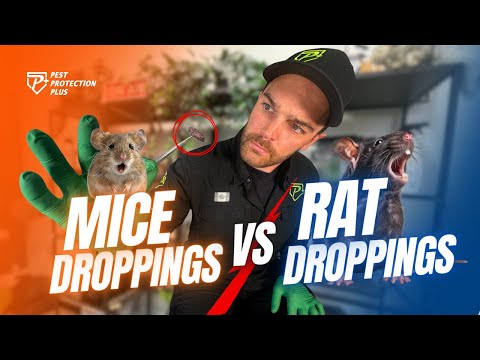
You can learn a lot just by checking the size, shape, and where the droppings show up. Get a close look, see where they pile up, and treat any droppings as a possible health risk until you know more.
Pest Identification Tips
Start with size and shape. Squirrel droppings usually look bean-shaped, about 3/8 inch long, and might crumble if you press them.
Rat droppings look more like little sausages, are denser, and usually range from 1/4 to 1/2 inch long.
Color and texture can help too. Fresh droppings are dark brown to black, but old ones lighten up and might flake apart.
Look at the number of pellets. Rats tend to leave a trail of small droppings, while squirrels drop fewer pellets in one spot.
Check for other clues nearby. Chew marks on wood, shredded nesting stuff, or greasy streaks along walls often mean rats.
Chewed insulation, nut shells, or damage near vents point to squirrels. If you’re unsure, call a pro; this guide on squirrel vs rat droppings can help too.
Common Locations: Attics and Beyond
Both pests love attics, but their habits differ. Squirrels like high, dry places—think attics, chimneys, soffits.
You’ll find their droppings near entry holes, under rafters, or next to insulation they’ve chewed up.
Rats use basements, crawl spaces, and ground-level spots more. Norway rats leave droppings along walls and behind appliances.
Roof rats can reach attics too, so not every attic dropping comes from a squirrel.
Outside, check under eaves, near bird feeders, or around garages. Inside walls, you might see piles or streaks that show where the pests travel.
Take photos and note locations before you clean up so a pest pro can see how big the problem is.
Diseases Linked to Rodent Droppings
Always treat droppings as potentially infectious. Hantavirus comes from rodent urine and feces, and it can go airborne when you disturb dry droppings in small, enclosed spaces.
This virus can lead to severe respiratory illness. Leptospirosis spreads when you touch contaminated droppings or urine, and it can damage your kidneys and liver.
Tularemia doesn’t show up often, but it can happen if certain wildlife or rodent secretions get on surfaces.
Before you start cleaning, put on gloves and an N95 mask. Wet the droppings with a bleach or disinfectant solution so you don’t kick up dust.
Ventilate the area for at least 30 minutes before you do anything else. If you find a lot of pellets or think your attic might be contaminated, call a local removal service or wildlife control pro to handle the cleanup and testing safely.


