
Ever spotted a critter that looks like a chipmunk and a squirrel rolled into one? You might wonder if those two can actually crossbreed.
Here’s the short version: nope, they can’t. Their genetics and species differences keep them apart, so any “squirmunk” you see is probably just a case of mistaken identity.

Family ties can get confusing, I’ll admit. But genetics and a few key traits help you tell these animals apart without much trouble.
Let’s break down the facts so you can spot the differences at a glance.
Can Chipmunks and Squirrels Crossbreed?

Chipmunks and squirrels can’t have true offspring together. They’re just too different—genetically, behaviorally, and even down to their chromosomes.
These differences stop reproduction before it can really get started.
Genetic Barriers and Chromosomal Incompatibility
Chipmunks (genus Tamias) and most tree squirrels (genus Sciurus) both belong to the Sciuridae family. But their chromosome numbers and gene patterns don’t line up.
Those mismatched chromosomes mean their eggs and sperm can’t really work together. If they do meet, they almost never form a stable zygote.
Even if a zygote somehow forms, the embryo usually doesn’t make it. Chromosomes don’t match up, so cell division fails, and development stops early. Scientists call that hybrid inviability.
Here’s what matters:
- Different genera show they split off a long time ago.
- Chromosome mismatch makes normal development impossible.
- Genetic incompatibility blocks healthy, fertile offspring.
Reproductive Isolation and Mating Behaviors
Chipmunks and squirrels basically ignore each other during mating season. Their behaviors, habitats, and even timing don’t match up.
Chipmunks stick to the ground and have their own courtship style. Tree squirrels, on the other hand, spend more time in trees and use different signals.
They usually nest in different places and keep different schedules. Even if they meet, their mating signals and pheromones don’t match, so nothing happens.
Some common reproductive barriers:
- Behavioral: unique courtship and calls.
- Ecological: different habitats and nesting spots.
- Temporal: breeding at different times. All of these things stop mating before it starts.
Hybridization Myths and Popular Misconceptions
You might come across stories or photos of a supposed chipmunk-squirrel hybrid. Most of these are just misidentified animals or altered images.
Sometimes, a young squirrel or another Sciuridae species looks “in-between.” But it’s not a hybrid.
Wildlife guides and local experts agree—hybrids between these distant genera are almost unheard of. If something seems off, check for stripes, tail shape, and size. Field guides or trusted wildlife sites can help, like this article explaining why they can’t interbreed (https://www.ewash.org/can-a-squirrel-and-a-chipmunk-crossbreed/).
Family Ties and Key Differences
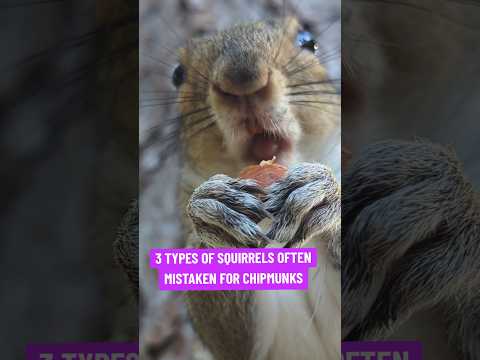
Let’s look at who’s actually in the squirrel family, where chipmunks fit, and what sets them apart. I’ll share the basics on species, habitats, and behavior—enough to help you tell them apart next time you’re out.
Squirrel Species and Their Diversity
Squirrels belong to the Sciuridae family. That includes tree squirrels, ground squirrels, marmots, and flying squirrels.
You’ll see tree squirrels like the eastern gray, red, and fox squirrels in parks and backyards. They have bushy tails, strong hind legs, and sharp claws for climbing.
Ground squirrels and marmots spend most of their lives on the ground. Marmots, the biggest of the bunch, can weigh several pounds. They dig burrows and hibernate in winter.
Flying squirrels, mostly nocturnal, glide using a skin flap between their limbs. Squirrel species come in all sizes and colors, but they all have gnawing incisors, cheek teeth for seeds, and a love of nuts.
Chipmunk Species and the Tamias Genus
Chipmunks fall under the Tamias genus, right in the Sciuridae family. The eastern chipmunk and least chipmunk are two common types.
You’ll spot eastern chipmunks in eastern North America. They have five dark stripes on their back and big cheek pouches for hauling food.
The least chipmunk is smaller and slimmer, found out west, and its stripes are easy to see. Chipmunks mostly live in burrows and spend lots of time on the ground.
They stash food underground for winter and defend small patches of territory. Unlike tree squirrels, chipmunks go solo and build complex tunnels for sleeping and storing food. Their size, stripes, and ground habits make them easy to pick out from other squirrels.
Comparing Tree Squirrels, Ground Squirrels, and Chipmunks
Tree squirrels hang out in nests called dreys or in tree cavities. You’ll see eastern gray and fox squirrels leaping through trees or raiding bird feeders.
Ground squirrels and marmots stick to open fields or rocky spots. They often live in colonies and dig big burrow systems with obvious entrances.
Chipmunks dig complicated burrows with several rooms and usually go it alone. Here’s a quick cheat sheet: tree squirrels don’t have stripes, ground squirrels might have body stripes but not on their heads, and chipmunks have stripes from head to tail.
Watch how they act, too. Tree squirrels are always climbing, ground squirrels sun themselves by burrows, and chipmunks zip to their tunnels with stuffed cheeks.
Physical and Behavioral Contrasts
Chipmunks are the smallest—you’ll usually spot them at under 10 inches, tail included. Tree squirrels look bigger, often stretching out to about 15 inches, and their tails? Way bushier, almost comically so.
Ground squirrels and marmots show up chunkier, with thicker bodies and shorter tails. Their stripe patterns stand out too: chipmunks wear stripes on both their heads and bodies, while most tree squirrels skip the stripes entirely.
Chipmunks act territorial, and they stash their food underground. Tree squirrels, on the other hand, hide their food up in trees or scatter it all over.
Ground squirrels and marmots sometimes stick together in social groups. You might even hear them use alarm calls or sharp whistles.
Most tree and ground squirrels stay active during the day. Flying squirrels, though, sometimes flip the script and come out at night.
Spotting these quirks—whether it’s a stripe, a tail, or a sudden whistle—makes it a lot easier to tell if you’re looking at a chipmunk, a tree squirrel, or maybe even a marmot.


